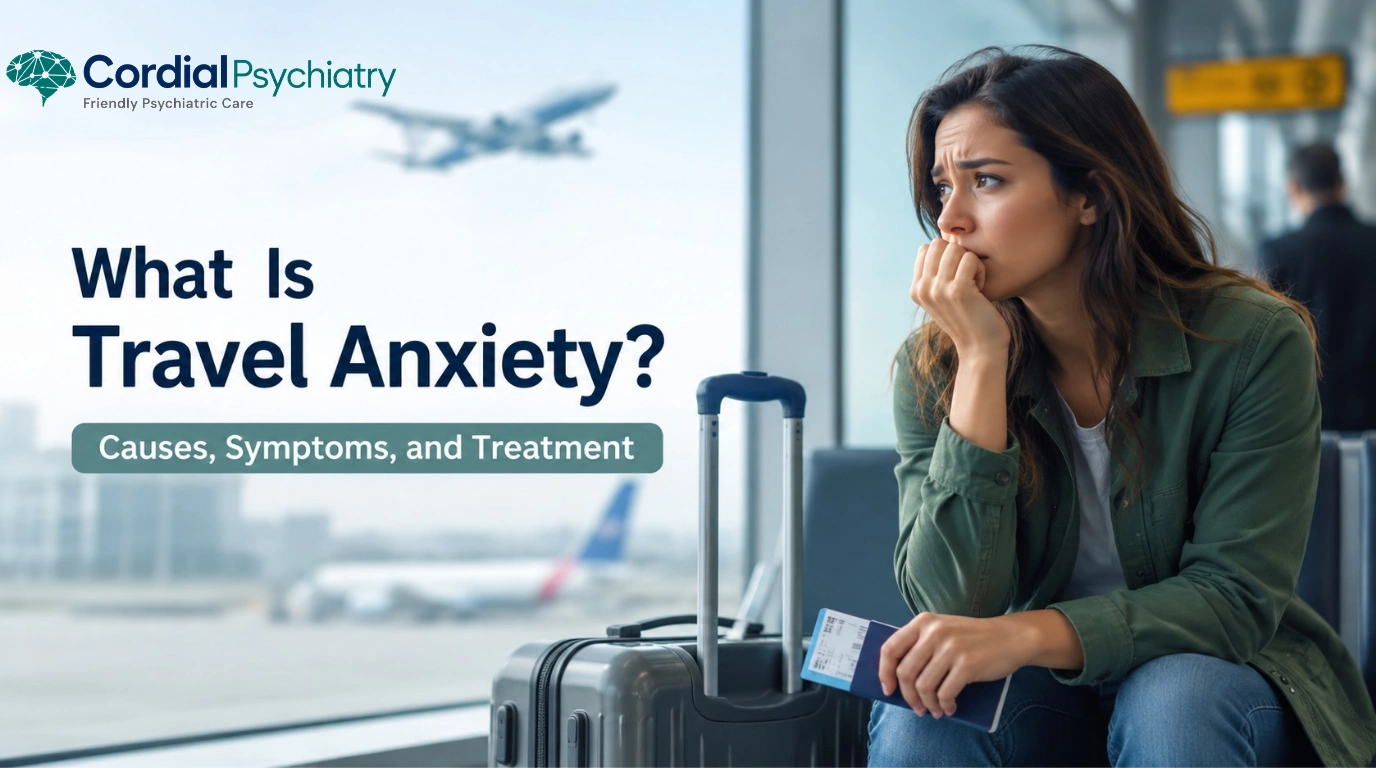
What Is Travel Anxiety? Causes, Symptoms, and Treatment
Travel can be exciting, but it can also cause worry, fear, or nervousness. For some people, these feelings may begin days before a trip. Others may experience anxiety at an airport, while driving, or after reaching an unfamiliar destination.
What is travel anxiety? Travel anxiety is a pattern of fear, worry, or uneasiness connected with traveling. It can involve concerns about transportation, being away from home, unfamiliar places, health problems, or unexpected situations.
Feeling nervous before a trip is common. However, travel-related anxiety can become a concern when it feels overwhelming, causes someone to avoid traveling, or interferes with work, relationships, or everyday activities.
Understanding the possible causes, symptoms, and treatment options can help people recognize when travel anxiety may need additional attention.
What Is Travel Anxiety?
What is travel anxiety? It refers to anxiety that develops before or during travel. The experience can be different for each person.
Someone may worry about flying, while another person may feel uncomfortable driving long distances. Some people may be concerned about getting sick, becoming lost, being far from family, or being unable to leave an unfamiliar location.
Travel anxiety is not necessarily a separate mental health diagnosis. Instead, it may occur alongside different anxiety-related conditions, specific fears, or panic symptoms.
Travel also involves changes in routine and uncertainty. These factors can make existing anxiety feel stronger.
For example, someone who already worries about unexpected situations may find airports, crowded transportation, unfamiliar hotels, or changes to a travel schedule particularly stressful.
Learning more about what anxiety is and how anxiety disorders can affect daily life can provide useful background for understanding travel-related anxiety.
What Causes Travel Anxiety?
The causes of travel anxiety can vary. A person’s experiences, thoughts, stress levels, and existing mental health concerns may all influence how they respond to travel.
Fear of Flying or Transportation
Airplanes, trains, buses, and long-distance driving can trigger anxiety in some people.
A person may fear an accident, turbulence, losing control, being trapped, or being unable to leave the vehicle.
For some people, this fear may be connected to a specific phobia. For others, transportation may simply increase existing worry.
Fear of the Unknown
Travel often means entering unfamiliar situations.
You may need to navigate a new airport, use unfamiliar public transportation, communicate with strangers, or find your way around a new location.
When someone has a strong need for predictability, uncertainty can increase anxious thoughts.
Previous Negative Experiences
Past experiences can affect future travel.
For example, someone who previously experienced severe turbulence, became ill during a trip, missed a flight, got lost, or experienced a panic attack while traveling may become worried that the same thing will happen again.
The brain may begin associating travel with danger even when there is no immediate threat.
Fear of Being Away From Home
Some people feel anxious when they are far from familiar surroundings.
They may worry about being unable to get help, becoming sick, or dealing with an emergency away from their usual support system.
This concern may make even short trips feel stressful.
Fear of Panic Attacks
People who have experienced panic attacks may become afraid of having another episode while traveling.
They may monitor their heartbeat, breathing, dizziness, or other physical sensations. This increased attention can make normal physical changes feel more threatening.
Understanding panic attacks and their common symptoms can help people recognize when anxiety may be affecting their daily activities.
Existing Stress or Anxiety
Travel can become more difficult when someone is already experiencing high levels of stress.
Work responsibilities, financial concerns, family issues, poor sleep, and major life changes may increase overall anxiety.
This means travel anxiety may not always be caused by travel itself. Instead, travel can become another situation that brings existing worries to the surface.
What Are the Symptoms of Travel Anxiety?
Travel anxiety symptoms can affect thoughts, emotions, behavior, and physical well-being.
Common symptoms include:
- Excessive worry about traveling
- Feeling restless or on edge
- Racing thoughts
- Difficulty concentrating
- Trouble sleeping
- Irritability
- Rapid heartbeat
- Sweating
- Trembling
- Shortness of breath
- Dizziness
- Nausea
- Stomach discomfort
- Muscle tension
- Feeling an urgent need to escape
Not everyone experiences all of these symptoms.
The severity can also change depending on the situation. Someone may feel calm while planning a trip but become highly anxious when entering an airport or boarding a plane.
Emotional Symptoms
Travel anxiety may involve persistent thoughts about what could go wrong.
A person may repeatedly imagine accidents, illness, delays, getting lost, or other negative outcomes.
These thoughts can make it difficult to focus on the positive aspects of travel.
Physical Symptoms
Anxiety can activate the body’s stress response.
This may cause physical sensations such as increased heart rate, sweating, trembling, dizziness, stomach discomfort, or changes in breathing.
Some people may become worried about these sensations themselves, creating a cycle in which physical symptoms increase fear and fear increases physical symptoms.
Readers who want to understand anxiety-related physical sensations can also explore information about whether anxiety can cause chest pain, especially when physical symptoms create additional worry.
Behavioral Symptoms
Travel anxiety can also change behavior.
Someone might repeatedly check travel information, seek reassurance, avoid certain forms of transportation, cancel plans, or refuse to travel altogether.
Avoidance may provide temporary relief, but repeatedly avoiding feared situations can sometimes reinforce anxiety.
When Does Travel Anxiety Become a Problem?
Feeling nervous before traveling does not automatically mean someone has an anxiety disorder.
It becomes more concerning when anxiety is intense, persistent, or interferes with important areas of life.
Consider seeking professional guidance if travel anxiety:
- Causes significant distress
- Leads to repeated travel avoidance
- Causes frequent panic symptoms
- Interferes with work or school
- Affects relationships
- Makes sleeping difficult
- Prevents important personal or professional travel
- Limits everyday activities
The key issue is not simply whether someone feels nervous. It is how strongly the anxiety affects their ability to function.
How Is Travel Anxiety Evaluated?
There is no single test that can determine whether someone has travel anxiety.
A mental health professional may ask about the person’s symptoms, triggers, thoughts, behaviors, previous experiences, and daily functioning.
An evaluation may explore:
- When anxiety began
- What situations trigger it
- How intense the symptoms become
- Whether panic attacks occur
- Whether the person avoids traveling
- Whether anxiety occurs outside of travel
- How anxiety affects daily activities
- Previous mental health treatment
- Current medications and relevant health information
This broader assessment matters because similar travel-related symptoms can have different causes.
For example, one person may have a specific fear of flying, while another may experience travel anxiety as part of a broader anxiety condition.
A proper evaluation helps identify the underlying concern and supports a more appropriate treatment plan.
How Is Travel Anxiety Treated?
Treatment depends on the person’s symptoms, underlying concerns, medical history, preferences, and treatment goals.
Psychotherapy
Psychotherapy can help people understand anxious thoughts, identify triggers, and develop healthier ways of responding to fear.
Cognitive behavioral therapy, commonly called CBT, is often used for anxiety-related conditions. It can help people recognize unhelpful thought patterns and practice more balanced responses.
For certain fears, exposure-based approaches may also be considered. These approaches involve gradually facing feared situations in a structured and supportive manner.
The treatment approach should be personalized rather than assuming that the same method will work for everyone.
Medication
Medication may be considered when anxiety symptoms are significant or occur as part of an anxiety-related condition.
A psychiatrist can review symptoms, medical history, current medications, possible side effects, and treatment goals before recommending medication.
Medication is not necessary or appropriate for everyone. Treatment decisions should be made with a qualified healthcare professional.
Combination Treatment
Some people may benefit from both psychotherapy and medication.
A combined approach may help address anxious thoughts and behaviors while also managing significant symptoms when medication is clinically appropriate.
The right treatment depends on the individual and the underlying cause of the anxiety.
How Can You Manage Travel Anxiety?
Professional support can be helpful for persistent anxiety, but practical strategies may also make travel feel more manageable.
Plan Ahead
Review your itinerary, transportation arrangements, accommodation details, and important documents before leaving.
Having a basic plan can reduce unnecessary uncertainty.
However, avoid checking every detail repeatedly. Too much checking can sometimes increase anxiety rather than reduce it.
Give Yourself Extra Time
Rushing through an airport, station, or unfamiliar area can increase stress.
Arriving early gives you more time to handle delays, find the correct location, and adjust to unexpected changes.
Practice Relaxation Techniques
Slow breathing, mindfulness, and other relaxation techniques may help reduce temporary physical tension.
It can be useful to practice these techniques before your trip so they feel familiar when anxiety increases.
Challenge Catastrophic Thoughts
Anxiety can make unlikely outcomes seem certain.
If you notice a thought such as “Something will definitely go wrong,” pause and consider whether there is evidence supporting that conclusion.
Try replacing extreme predictions with a more balanced thought.
For example:
“I may experience some stress, but I can handle problems if they occur.”
Maintain Healthy Routines
Adequate sleep, regular physical activity, balanced meals, and reasonable caffeine intake can support overall well-being.
These habits are not a replacement for professional treatment, but they may complement an appropriate mental health plan.
Is Travel Anxiety the Same as a Fear of Flying?
No. Fear of flying is specifically related to air travel, while travel anxiety can involve many different aspects of traveling.
A person may feel anxious about:
- Flying
- Driving
- Public transportation
- Airports
- Crowded places
- Being away from home
- Unfamiliar locations
- Getting sick while traveling
- Losing control
- Unexpected changes
Someone can therefore experience travel anxiety without having a specific fear of airplanes.
For example, a person may be comfortable flying but become anxious about navigating an unfamiliar city or being away from their usual support system.
Can Travel Anxiety Be Prevented?
Travel anxiety cannot always be prevented, particularly when it is connected to an underlying anxiety condition or specific fear.
However, recognizing triggers early and developing healthy coping strategies may reduce its impact.
Preparing realistically, maintaining healthy routines, learning relaxation techniques, and addressing anxiety before an important trip may help.
If anxiety repeatedly causes you to avoid traveling, professional support may be more effective than relying only on self-help strategies.
When Should You Seek Professional Help?
Consider speaking with a mental health professional when anxiety becomes difficult to control or starts limiting your life.
You do not have to wait until anxiety becomes severe before seeking help.
A psychiatrist can evaluate your symptoms and determine whether travel-related anxiety may be associated with a specific fear, panic symptoms, generalized anxiety, or another concern.
Treatment can then be tailored to your symptoms and goals.
If you are looking for professional support for anxiety-related concerns, Cordial Psychiatry provides individualized psychiatric care and treatment options based on each person’s needs.
Final Thoughts
What is travel anxiety? It is a pattern of fear, worry, or nervousness connected with traveling or situations surrounding travel.
While some nervousness before a trip is normal, persistent anxiety can become a problem when it causes significant distress, repeated avoidance, or interference with daily life.
The causes of travel anxiety can include fear of transportation, uncertainty, previous negative experiences, being away from home, fear of panic attacks, and existing stress or anxiety.
Recognizing travel anxiety symptoms can help you understand when your reactions may be more than ordinary pre-travel nervousness.
If travel anxiety repeatedly prevents you from traveling or affects important areas of your life, a professional evaluation can help identify the underlying concerns and guide an appropriate treatment approach.
Frequently Asked Questions
What are the most common travel anxiety symptoms?
Common travel anxiety symptoms include excessive worry, racing thoughts, restlessness, difficulty sleeping, rapid heartbeat, sweating, trembling, nausea, dizziness, and shortness of breath.
What are the main causes of travel anxiety?
The causes of travel anxiety can include fear of flying or transportation, uncertainty, previous negative experiences, fear of being away from home, panic concerns, and existing stress or anxiety.
Is travel anxiety an anxiety disorder?
Travel anxiety is not necessarily a separate diagnosis. It may occur as part of an anxiety disorder, specific phobia, panic-related condition, or another mental health concern. A professional evaluation can help identify the underlying issue.
Can travel anxiety cause panic attacks?
Travel-related stress can trigger panic symptoms in some people, particularly those who have experienced panic attacks before. Fear of having another attack may also increase travel-related avoidance.
How can I calm travel anxiety before a trip?
Planning ahead, allowing extra time, practicing relaxation techniques, maintaining healthy routines, and challenging catastrophic thoughts may help reduce travel-related anxiety.
Can therapy help with travel anxiety?
Yes. Psychotherapy can help people understand anxiety triggers and develop healthier responses to fear. CBT and certain exposure-based approaches may be considered depending on the person’s symptoms and needs.
When should I seek treatment for travel anxiety?
Professional support may be appropriate when travel anxiety causes significant distress, leads to repeated avoidance, triggers frequent panic symptoms, or interferes with work, relationships, or other important areas of life.