
How Anxiety Can Affect Your Everyday Life
Anxiety is a normal response to stress, change, or uncertainty. It can help you prepare for an important event or notice danger. However, anxiety becomes a concern when worry feels constant, hard to control, or much stronger than the situation requires.
The effects of anxiety on daily life may appear slowly. You may take longer to make choices, avoid calls, lose sleep, or feel tense around other people. Over time, these changes can affect work, school, relationships, health, and confidence. Anxiety disorders involve more than brief worry and can interfere with important daily activities.
So, how does anxiety affect daily life? It can change how you think, feel, act, and respond to normal demands. The impact differs from person to person, but several patterns are common.
For a clear overview of anxiety, read What Is Anxiety? A Complete Guide.
When Normal Worry Starts Taking Control
Not every anxious feeling means you have an anxiety disorder. Feeling nervous before an interview, medical visit, or difficult talk is common. The main concern is whether anxiety keeps returning and limits what you can do.
A mental health professional looks at the intensity, frequency, duration, and impact of symptoms. They may also review medical conditions, medicines, caffeine use, and other factors that can cause similar symptoms. Finding the pattern helps a clinician recommend suitable care.
The Most Common Effects of Anxiety on Daily Life
Focus and Decision-Making Become Harder
An anxious mind often stays busy looking for possible problems. You may replay conversations, expect the worst, or check your work again and again. This leaves less attention for the task in front of you.
You might read the same paragraph several times or struggle with simple choices. These problems do not mean you are careless. Worry may be using too much mental energy.
This is why the effects of anxiety on daily life can be misunderstood. Other people may see poor focus but not the fear behind it.
Work and School Can Feel Overwhelming
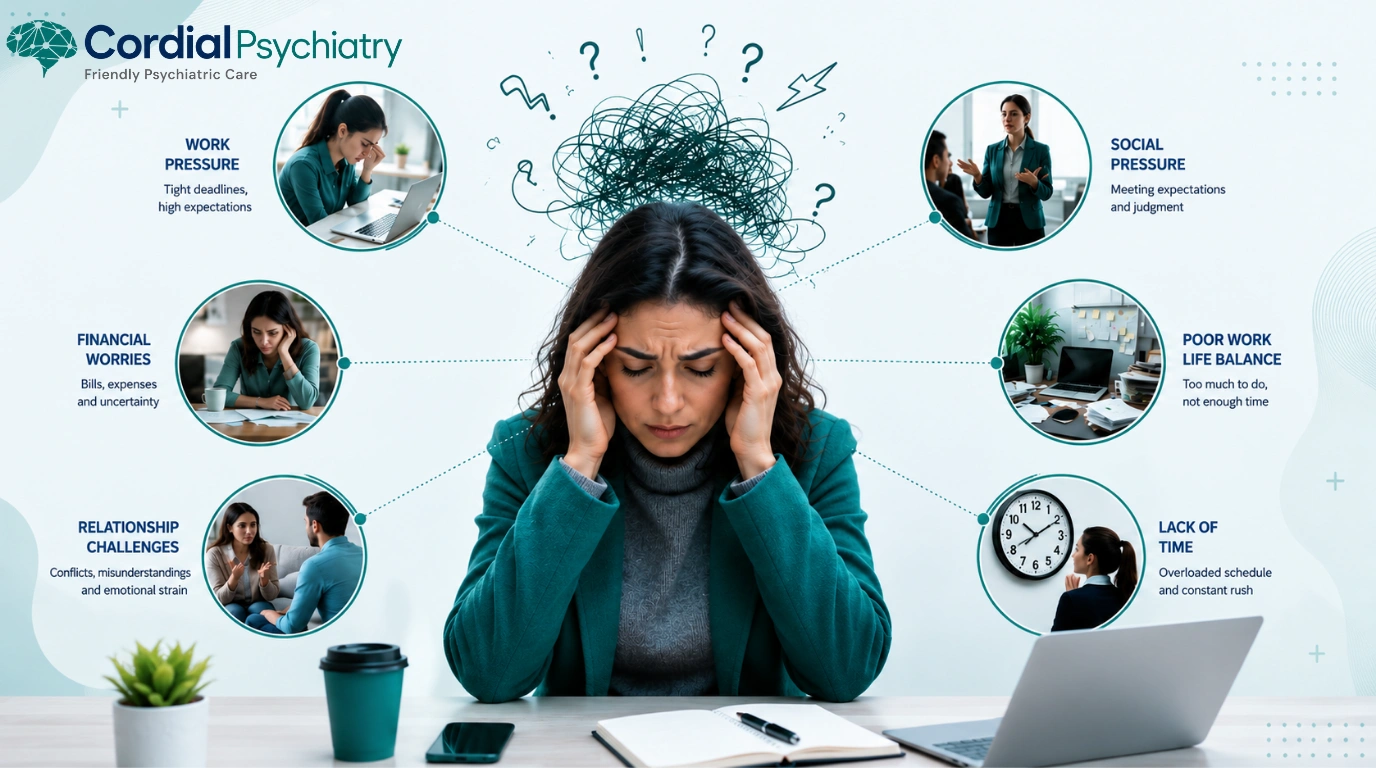
Anxiety can make normal duties feel much larger. You may delay tasks because you fear making a mistake. You may also avoid meetings, presentations, classes, or talks with a supervisor.
Perfectionism can add pressure. A person may spend too long checking one email or assignment, which can reduce productivity.
The question how does anxiety affect daily life often becomes clear at work or school. Anxiety may affect attendance, deadlines, teamwork, learning, and confidence.
Sleep and Energy May Suffer
Anxiety often feels stronger at night because there are fewer distractions. You may feel tired but unable to switch off your thoughts. Muscle tension, a fast heartbeat, or repeated worry can delay sleep.
Poor sleep then makes the next day harder. You may feel irritable, foggy, weak, or less able to handle stress. This creates a cycle: anxiety harms sleep, and poor sleep can make anxiety feel worse.
Learn more in How Anxiety Affects Sleep. Healthy sleep habits may reduce symptoms, but they do not replace treatment when anxiety is persistent or severe.
Relationships Can Become Strained
Anxiety can change how you connect with people. You may need repeated reassurance. You might cancel plans, avoid social events, or become quiet because you fear judgment.
Some people become irritable when overwhelmed. Others pull away because they do not want to burden anyone. Loved ones may read this as anger or rejection.
The effects of anxiety on daily life may also include trouble setting boundaries. Clear communication can help others understand that anxiety is affecting your reactions.
Physical Symptoms Can Disrupt Your Routine
Anxiety affects both the mind and body. Common physical symptoms can include a racing heart, sweating, shaking, dizziness, nausea, stomach problems, headaches, shortness of breath, and muscle tension.
These feelings can be frightening. They may cause a person to avoid driving, exercise, crowded places, or being far from home. Health worries can also lead to repeated body checking.
Do not assume every physical symptom comes from anxiety. New chest pain, severe breathing trouble, fainting, or other urgent symptoms need prompt medical care. A clinician can rule out physical causes and guide the next step.
Avoidance Can Make Life Smaller
When anxiety is high, simple tasks may feel difficult. Opening mail, making an appointment, shopping, cooking, or answering a call can take great effort.
Avoidance often brings quick relief. Canceling an appointment may reduce anxiety for a few hours. However, repeated avoidance can make the situation feel more dangerous the next time.
This pattern is one of the most limiting effects of anxiety on daily life. A person may slowly stop visiting places, meeting friends, trying new things, or handling tasks alone.
Confidence and Independence May Decline
Repeated worry can change how you see yourself. You may believe you cannot cope without help. You may doubt your judgment or depend on others to make choices.
Anxiety can also create shame. You may wonder why normal tasks seem easier for everyone else. In reality, anxiety disorders are common and treatable. Needing support is not a personal failure.
Anxiety disorders can affect job performance, schoolwork, and relationships, but effective care is available.
Why Anxiety Can Become a Repeating Cycle
Anxiety often follows a cycle. First, a trigger appears. It may be an email, body feeling, social event, deadline, or uncertain thought. The mind reads it as a threat.
The body responds with tension, faster breathing, or a racing heart. The person may then escape, check, delay, or ask for reassurance.
That response may reduce fear briefly, but it can keep the cycle going. This explains how anxiety affect daily life even when there is no clear danger. Treatment can help change this pattern.
Practical Ways to Reduce Anxiety’s Daily Impact
Small, steady changes often work better than trying to fix everything at once.
Notice patterns by writing down the situation, your thoughts, body symptoms, and what you did next. This can reveal triggers and habits.
Break tasks into smaller steps. Choose one action that takes ten minutes. A small success can build confidence and reduce avoidance.
Keep regular sleep and meal times. Reduce caffeine if it makes you shaky or harms sleep. Regular movement can also support stress control.
Use slow breathing when your body feels activated. Try breathing in for four seconds and out for six. Stop if you feel lightheaded.
Talk to someone you trust. Support can reduce isolation, but reassurance should not become your only coping tool.
Professional care may be needed when anxiety keeps limiting your life. Psychotherapy, including cognitive behavioral therapy, can help change anxious thinking and avoidance. Medication may also help some people. Treatment should follow a full evaluation and fit the person’s needs.
When Should You Seek Professional Help?
You do not need to wait until anxiety becomes severe. Consider speaking with a mental health professional when worry is hard to control, keeps returning, or affects sleep, work, school, relationships, or daily tasks.
Seek help if you are avoiding more places, relying heavily on reassurance, using alcohol or substances to cope, or having frequent panic symptoms. Get urgent help if you feel unsafe or may harm yourself or someone else.
A psychiatrist can review symptoms, medical history, and treatment options. For Port Chester-area patients, Cordial Psychiatry provides psychiatric evaluations, psychotherapy, medication management, and personalized anxiety care.
Final Thoughts
The effects of anxiety on daily life go beyond feeling nervous. Anxiety may affect focus, sleep, energy, work, relationships, physical comfort, and independence. It can also create avoidance that makes everyday life feel smaller.
The good news is that anxiety is treatable. Early support can help you understand symptoms, rebuild confidence, and return to activities that matter.
If you keep asking, how does anxiety affect daily life, look at what worry is stopping you from doing. That impact may be a sign that it is time to seek help.
FAQS
Can Anxiety Affect Daily Life Without Panic Attacks?
Yes. Anxiety may appear as constant worry, poor focus, muscle tension, sleep trouble, irritability, or avoidance. A person can have serious daily problems without panic attacks.
Can Anxiety Make You Feel Tired Every Day?
Yes. Ongoing worry keeps the mind and body alert. It may also disturb sleep, leading to fatigue, low motivation, and difficulty finishing tasks.
Can Anxiety Affect Memory and Concentration?
Yes. Worry can take up much of your attention. This may make it harder to remember details, follow conversations, learn information, or complete work.
Can Anxiety Cause Physical Symptoms?
Yes. Anxiety may cause a fast heartbeat, sweating, dizziness, nausea, stomach upset, headaches, shortness of breath, or muscle tension. New or severe symptoms should be medically assessed.
What Happens If Anxiety Is Left Untreated?
Untreated anxiety may become more limiting. Avoidance can grow, sleep may worsen, and work or relationships may suffer. Some people may also develop depression or unhealthy coping habits.
When Should I See a Psychiatrist for Anxiety?
Consider seeing a psychiatrist when symptoms are frequent, hard to control, or interfering with daily life. A psychiatrist can assess possible causes and discuss therapy, medication, lifestyle support, or a combined plan.
