
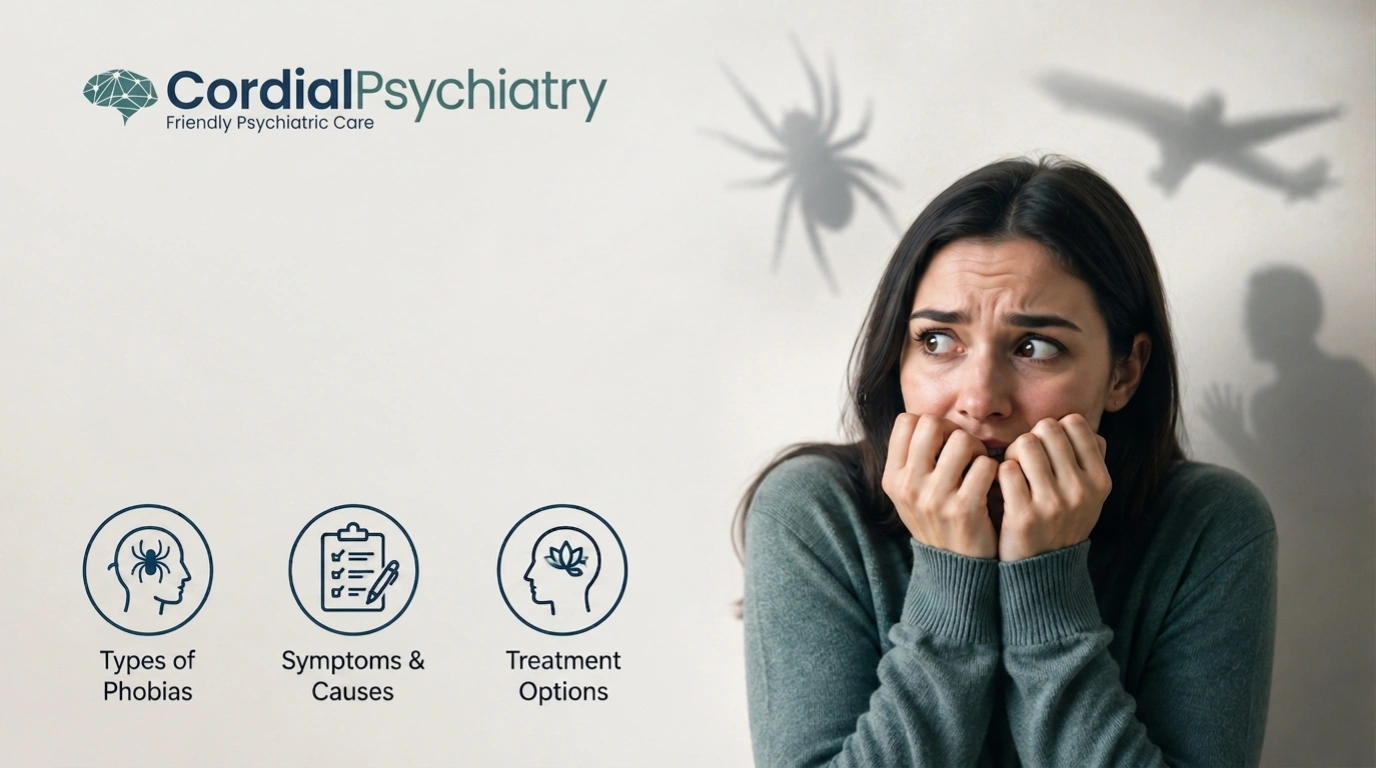
What are Phobias? Types & Treatment Options
Phobias are more than just fear—they are intense, persistent, and often irrational fears of specific objects, situations, or activities. In simple terms, phobias meaning refers to an anxiety disorder where a person experiences extreme fear that is disproportionate to the actual danger.
In this article, we will explore what are phobias, their types of phobias, symptoms, causes, and effective phobia treatment options including modern therapies like exposure therapy for phobias. The information shared here is based on established psychological research and clinical practice used by mental health professionals worldwide.
Understanding What are Phobias
To clearly answer what are phobias, they are classified as anxiety disorders that trigger strong fear responses even when there is no real threat. Unlike normal fear, phobias can interfere with daily life, relationships, work, and overall well-being.
For example, someone with a spider phobia may panic just by seeing a picture of a spider, even if there is no physical danger. This response is automatic and often difficult to control without treatment.
Clinically, phobias are recognized in psychology and psychiatry as treatable conditions. Mental health professionals use structured assessments and evidence-based approaches to diagnose and manage them effectively.
Types of Phobias
There are several types of phobias, and they are generally categorized into three main groups:
1. Specific Phobias
These involve fear of particular objects or situations. Examples include:
- Fear of heights (acrophobia)
- Fear of flying (aviophobia)
- Fear of animals like snakes or spiders
- Fear of injections or blood
2. Social Phobia (Social Anxiety Disorder)
This involves intense fear of social situations where a person may feel judged or embarrassed. It can affect speaking in public, meeting new people, or attending events.
3. Agoraphobia
This is the fear of being in situations where escape might be difficult, such as crowded places or open spaces.
Understanding the types of phobias helps in choosing the right phobia treatment approach because each type may respond differently to therapy techniques.
Symptoms of Phobias
The symptoms of phobias can be both physical and psychological. They often appear immediately when a person is exposed to the feared object or situation.
Physical symptoms:
- Rapid heartbeat
- Sweating
- Shortness of breath
- Trembling or shaking
- Dizziness or nausea
Emotional and psychological symptoms:
- Intense fear or panic
- Feeling of losing control
- Strong urge to escape
- Anticipatory anxiety (fear before encountering the trigger)
These symptoms can become severe enough to disrupt normal life, making early recognition important.
Causes of Phobias
The causes of phobias are usually a combination of biological, psychological, and environmental factors.
1. Traumatic experiences
A negative or frightening experience can trigger long-term fear responses.
2. Learned behavior
Children may develop phobias by observing fearful reactions from parents or caregivers.
3. Genetic and brain factors
Research shows that anxiety disorders, including phobias, may run in families. Brain chemistry also plays a role in how fear is processed.
4. Environmental influences
Stressful life events or overprotective environments can increase vulnerability.
Mental health professionals emphasize that phobias are not a sign of weakness but a recognized psychological condition with identifiable causes.
Phobia Treatment Options
Effective phobia treatment is available and highly successful in most cases. Treatment depends on the severity and type of phobia.
Cognitive Behavioral Therapy (CBT)
CBT is one of the most effective treatments. It helps individuals identify negative thought patterns and replace them with healthier responses. It is widely recommended in clinical psychology.
Exposure Therapy for Phobias
One of the most powerful approaches is exposure therapy for phobias. This method gradually exposes a person to the feared object or situation in a controlled and safe environment.
For example:
- Step 1: Talking about the fear
- Step 2: Looking at pictures
- Step 3: Being near the object
- Step 4: Direct interaction
Over time, the brain learns that the fear response is unnecessary, reducing anxiety significantly. This technique is supported by extensive clinical research and is commonly used by licensed therapists.
Medication (in some cases)
In severe cases, doctors may prescribe anti-anxiety medications or antidepressants. However, medication is usually combined with therapy for long-term results.
Professional Support and Clinical Expertise
Mental health professionals such as psychologists and psychiatrists use evidence-based frameworks to ensure safe and effective treatment. Their expertise ensures that treatment is tailored to each individual’s condition, making recovery more structured and reliable.
How to Overcome Phobias
If you are looking for ways on how to overcome phobias, the process requires patience and consistent effort. Here are some effective strategies:
Gradual exposure
Facing fears step-by-step helps reduce sensitivity over time.
Relaxation techniques
Deep breathing, meditation, and mindfulness can help control anxiety symptoms.
Education about fear
Understanding your phobia reduces uncertainty and helps you regain control.
Professional therapy
Working with a trained therapist is one of the most effective ways to recover.
Self-help practice
Journaling thoughts and tracking progress can also support emotional improvement.
Combining these methods with professional phobia treatment increases the chances of long-term recovery.
Living with Phobias: A Clinical Perspective
From a clinical standpoint, phobias are highly treatable. Most individuals show significant improvement with structured therapy. Evidence-based practices like CBT and exposure therapy for phobias have been studied extensively in psychological research and are widely used in mental health institutions.
Experienced clinicians emphasize that recovery is not about eliminating fear completely but learning how to manage and respond to it in a healthy way. This practical approach makes treatment realistic and sustainable.
Conclusion
Phobias are common yet manageable anxiety disorders that can significantly affect quality of life if left untreated. Understanding what are phobias, recognizing the symptoms of phobias, and identifying the causes of phobias are the first steps toward recovery.
With effective phobia treatment, especially CBT and exposure therapy for phobias, individuals can regain control over their fears and lead a normal, fulfilling life. If you or someone you know is struggling, seeking professional help is a strong and positive step forward.
FAQs
1. What are the most common types of phobias?
Common types of phobias include fear of heights, flying, spiders, enclosed spaces, and social situations.
2. What are the main symptoms of phobias?
The symptoms of phobias include rapid heartbeat, sweating, panic, dizziness, and intense fear responses.
3. What causes phobias in a person?
The causes of phobias may include traumatic experiences, genetics, learned behavior, and environmental factors.
4. Can phobias be treated completely?
Yes, with proper phobia treatment like CBT and exposure therapy for phobias, many people recover successfully.
5. How long does exposure therapy take?
It depends on the severity, but many people see improvement within a few weeks to months of consistent therapy.
6. How to overcome phobias naturally?
You can manage them through gradual exposure, relaxation techniques, education, and professional support.
