

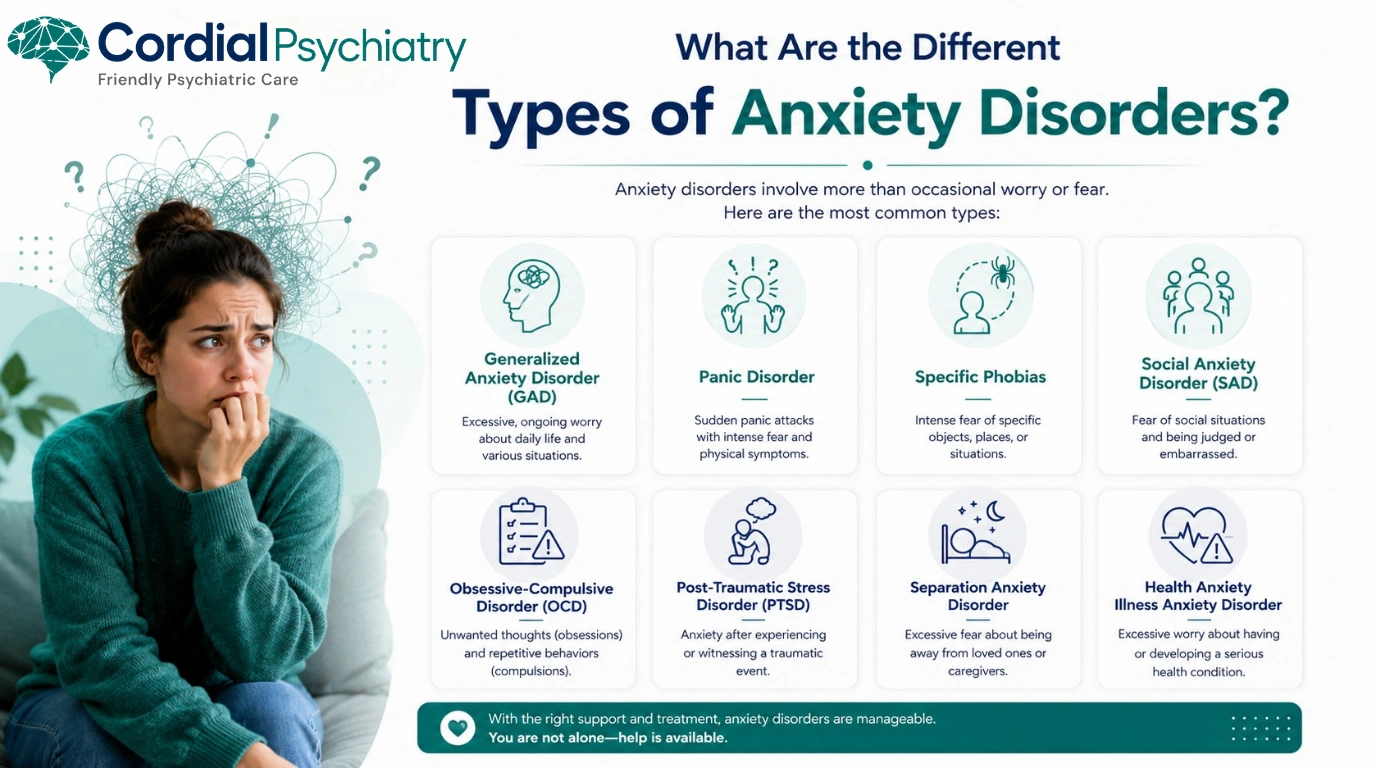
Types of Anxiety Disorders: A Complete Guide
Anxiety is a normal emotional response that helps people deal with challenges, danger, and uncertainty. However, when anxiety becomes intense, persistent, or difficult to control, it may develop into an anxiety disorder. Understanding the different types of anxiety disorders can help people recognize symptoms, seek appropriate support, and understand available treatment options.
This anxiety disorders list explains the major conditions recognized by mental health professionals, including how they differ, what symptoms they may cause, and when professional help may be needed. While occasional worry is a normal part of life, all anxiety disorders involve anxiety that significantly affects daily activities, relationships, work, school, or overall well-being.
Before exploring the different types of anxiety disorders, it is helpful to understand the basics of anxiety, including What Is Anxiety? A Complete Guide, because anxiety exists on a wide spectrum and does not always mean someone has a mental health condition.
What Are Anxiety Disorders?
Anxiety disorders are a group of mental health conditions where fear, worry, or nervousness becomes excessive and continues over time. People with anxiety disorders may experience emotional symptoms such as constant worry, fear, or difficulty relaxing, along with physical symptoms like rapid heartbeat, muscle tension, dizziness, or breathing changes.
Unlike temporary stress, anxiety disorders can interfere with everyday life. Learning What Are the Signs and Symptoms of Anxiety? can help identify when normal anxiety may have developed into a condition requiring support.
Mental health professionals diagnose anxiety disorders by looking at symptoms, their duration, and how much they affect a person’s daily functioning. Factors such as genetics, brain chemistry, life experiences, and ongoing stress can all contribute, which is why understanding What Causes Anxiety? and Why Does Anxiety Happen? is important.
Different Types of Anxiety Disorders
There are several recognized anxiety disorders, each with different symptoms and triggers. Although they share common features such as fear and worry, each condition affects people in different ways.
1. Generalized Anxiety Disorder (GAD)
Generalized Anxiety Disorder (GAD) is one of the most common anxiety disorders. People with GAD experience excessive and ongoing worry about everyday situations, often even when there is little or no immediate reason for concern.
Someone with GAD may worry about health, finances, family, work, or future events. The anxiety is often difficult to control and may continue for months or longer.
Common symptoms of GAD include:
- Constant worrying
- Restlessness or feeling on edge
- Difficulty concentrating
- Sleep problems
- Muscle tension
- Fatigue
You can learn more about this condition through What Is Generalized Anxiety Disorder (GAD)?
2. Social Anxiety Disorder
Social Anxiety Disorder involves intense fear or anxiety in social situations where a person feels they may be judged, embarrassed, or criticized.
People with social anxiety may avoid conversations, public speaking, meetings, social gatherings, or other situations involving attention from others. This condition is more than simple shyness and can affect relationships, education, and career opportunities.
Common signs include:
- Fear of being negatively evaluated
- Avoiding social situations
- Excessive self-consciousness
- Physical symptoms such as sweating or trembling
For a deeper understanding, read What Is Social Anxiety Disorder?
3. Panic Disorder
Panic Disorder is characterized by repeated and unexpected panic attacks. A panic attack is a sudden episode of intense fear that can happen even when there is no immediate danger.
Symptoms may include:
- Racing heartbeat
- Chest discomfort
- Shortness of breath
- Dizziness
- Feeling of losing control
- Fear of something terrible happening
Many people confuse panic attacks with other health issues, so understanding Anxiety vs Panic Attacks can help explain the difference.
4. Specific Phobias
Specific phobias involve an intense fear of a particular object, situation, or activity. The fear is usually much stronger than the actual danger involved.
Examples include fear of:
- Flying
- Animals
- Heights
- Medical procedures
- Certain environments
People with specific phobias may avoid situations that trigger their fear, which can limit daily activities. Learn more about What Are Specific Phobias?
5. Agoraphobia
Agoraphobia is an anxiety disorder involving fear of situations where escape may feel difficult or help may not be available.
A person with agoraphobia may fear:
- Crowded places
- Public transportation
- Open spaces
- Being outside alone
Severe cases may cause someone to avoid leaving home. More details are available in What Is Agoraphobia?
6. Separation Anxiety Disorder
Although often associated with children, Separation Anxiety Disorder can also affect adults. It involves excessive fear or distress related to being separated from important people.
Symptoms may include:
- Extreme worry about loved ones
- Fear of losing someone close
- Difficulty being alone
- Problems with independence
Understanding Anxiety in Children: Signs Parents Should Know can help families recognize early concerns.
7. Health Anxiety
Health Anxiety involves excessive worry about having a serious illness despite medical reassurance. People experiencing health anxiety may frequently check their body for symptoms, search for health information repeatedly, or seek repeated medical reassurance.
Health anxiety can create real distress and may affect daily life. More information can be found in What Is Health Anxiety?
8. Performance Anxiety
Performance Anxiety occurs when someone experiences intense fear or nervousness before performing, presenting, competing, or being evaluated.
It can affect:
- Public speaking
- Exams
- Sports
- Work presentations
Performance anxiety is common, but when fear becomes overwhelming, it may require support. Related concerns include What Is Performance Anxiety? and What Is Test Anxiety?
9. Travel Anxiety
Travel Anxiety involves excessive fear or worry related to traveling. Some people may feel anxious about flying, unfamiliar locations, transportation, or being away from home.
Travel anxiety may cause people to avoid trips or experience significant distress before travel. Understanding What Is Travel Anxiety? can help identify coping strategies.
How Anxiety Disorders Affect Daily Life
Untreated anxiety disorders can influence many areas of life, including relationships, work, education, sleep, and physical health. Anxiety may affect concentration, decision-making, confidence, and social connections.
For example, ongoing anxiety can contribute to sleep difficulties, which is explained further in How Anxiety Affects Sleep. It can also create physical symptoms, including headaches, digestive issues, and muscle tension. Learn more about How Anxiety Affects the Body? and What Happens in the Brain During Anxiety?
Anxiety disorders can also overlap with other mental health conditions. Understanding differences such as Anxiety vs Depression, Anxiety vs OCD, and Anxiety vs ADHD can help people better understand their experiences.
How Anxiety Disorders Are Diagnosed and Treated
A mental health professional typically diagnoses anxiety disorders through discussions about symptoms, personal history, and how anxiety affects daily functioning. Diagnosis helps determine the most suitable treatment approach.
Treatment options may include:
- Cognitive behavioral therapy (CBT)
- Medication when appropriate
- Relaxation techniques
- Lifestyle changes
- Stress management strategies
Therapy is one of the most effective approaches for many anxiety disorders. Learn more about How CBT Helps Anxiety and Does Therapy Help Anxiety?
When Should You Seek Help for Anxiety?
It may be time to seek professional support if anxiety:
- Feels overwhelming or uncontrollable
- Interferes with daily responsibilities
- Affects relationships or work
- Causes frequent panic attacks
- Leads to avoidance of important activities
Knowing How to Know If You Need Professional Help for Anxiety? can help someone take the next step toward better mental health.
Anxiety disorders are common and treatable. With proper support, many people learn effective ways to manage symptoms and improve their quality of life.
FAQS
What are the main types of anxiety disorders?
The main types of anxiety disorders include generalized anxiety disorder, social anxiety disorder, panic disorder, specific phobias, agoraphobia, separation anxiety disorder, health anxiety, performance anxiety, test anxiety, and travel anxiety.
What is the most common anxiety disorder?
Generalized Anxiety Disorder (GAD) and social anxiety disorder are among the most commonly recognized anxiety disorders. However, prevalence can vary depending on age, population, and diagnostic criteria.
Can anxiety disorders go away on their own?
Some mild anxiety symptoms may improve with lifestyle changes, but persistent anxiety disorders often benefit from professional support. Read more about Can Anxiety Go Away on Its Own?
Are anxiety disorders mental illnesses?
Yes, anxiety disorders are considered mental health conditions. They involve patterns of excessive fear or worry that affect daily functioning. Learn more about Is Anxiety a Mental Illness?
Can anxiety disorders be treated?
Yes. Anxiety disorders can often be effectively managed through therapy, medication, lifestyle changes, or a combination of approaches. Explore How Is Anxiety Treated? for more information.
Can anxiety affect physical health?
Yes. Anxiety can create physical symptoms such as heart palpitations, dizziness, headaches, nausea, and muscle tension. Related topics include Can Anxiety Cause Chest Pain?, Can Anxiety Cause Dizziness?, and Can Anxiety Cause Heart Palpitations?
Is anxiety hereditary?
Research suggests that genetics can influence the risk of developing anxiety disorders, but environmental factors and life experiences also play an important role. Untreated anxiety may become more difficult to manage and can affect relationships, work, sleep, and overall health.
How can someone help a person with anxiety?
Supporting someone with anxiety involves listening without judgment, encouraging professional help when needed, and learning about their experiences.