

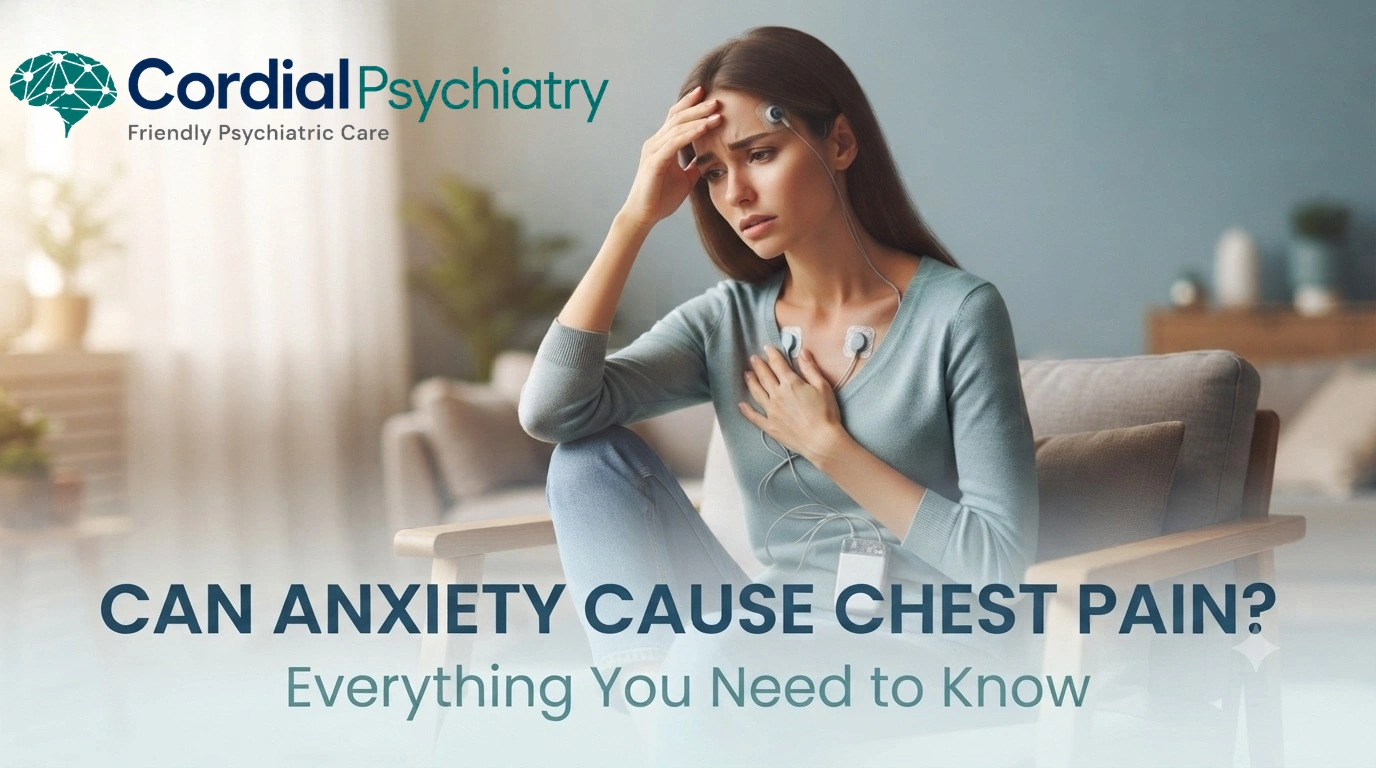
Can Anxiety Cause Chest Pain? Everything You Need to Know
Chest pain can feel frightening, especially when it appears suddenly or comes with a racing heartbeat. Many people ask, can anxiety cause chest pain? Yes, anxiety can cause pain, tightness, pressure, or discomfort in the chest. It may happen during a panic attack, after a stressful event, or during ongoing worry.
However, chest pain has many possible causes. Some are minor, while others require urgent care. Never assume that new, severe, persistent, or unexplained chest pain is “just anxiety.”
This guide explains why anxiety affects the chest, what the discomfort may feel like, how to respond safely, and when to seek medical help.
Can Anxiety Really Cause Chest Pain?
People also ask, does anxiety cause chest pain even without a panic attack? It can. Anxiety activates the body’s stress response. Your heartbeat may speed up, your breathing may change, and your muscles may tighten even when the threat is emotional rather than physical.
The NIMH lists chest pain, breathlessness, dizziness, nausea, sweating, and a faster heartbeat among the physical symptoms of anxiety and panic. Panic attacks may also cause chest pain with intense fear and a pounding heart.
Why Anxiety Can Make Your Chest Hurt
Fight-or-Flight Response
When the brain senses danger, the body releases stress hormones. The heart may beat faster, breathing becomes quicker, and muscles prepare for action. These changes can feel like pounding, pressure, or tightness in the chest.
Muscle Tension
Anxiety often tightens the chest, neck, shoulders, and upper back. Prolonged tension may cause soreness, aching, heaviness, or sharp pain. It can become more noticeable after poor sleep, long periods at a desk, or repeated shallow breathing.
Fast or Shallow Breathing
Some people breathe too quickly during anxiety. This may cause chest tightness, dizziness, tingling, light-headedness, and the feeling that they cannot take a full breath.
For more detail, read Can Anxiety Cause Shortness of Breath? It explains how anxiety can alter breathing patterns and increase panic.
Heart Palpitations
Anxiety may make the heartbeat feel faster, stronger, or irregular. These sensations are called palpitations and may occur with chest discomfort.
Read Can Anxiety Cause Heart Palpitations? for more detail. Palpitations with chest pain, fainting, or severe breathlessness need prompt medical attention.
Digestive Symptoms
Stress and anxiety can occur with indigestion, nausea, or reflux-like discomfort. Burning from the digestive system may be felt in the chest. Because heartburn and heart-related pain can feel similar, seek medical help when you are unsure.
What Does Anxiety Chest Pain Feel Like?
Anxiety-related chest discomfort may feel like:
- Tightness or pressure
- Sharp or stabbing pain
- A dull ache or soreness
- Burning or heaviness
- Brief pain that comes and goes
- Discomfort with a pounding heartbeat
- Difficulty taking a full breath
So, can anxiety give you chest discomfort without severe pain? Yes. Some people feel mild pressure, unusual awareness of the chest, or a closed-in sensation.
Panic symptoms may rise quickly and include chest pain, sweating, trembling, nausea, dizziness, breathlessness, and fear of losing control.
Anxiety Chest Pain vs Heart-Related Chest Pain
There is no safe home test that can always separate anxiety chest pain from a heart problem. Symptoms overlap, and clinicians may need an examination, medical history, electrocardiogram, blood tests, or other investigations.
Anxiety discomfort may appear during emotional stress and ease as the person calms down. It may occur with tingling, trembling, rapid breathing, or panic.
Heart-related discomfort may feel like pressure, squeezing, fullness, or pain. It may spread to the arms, back, neck, jaw, or stomach and occur with sweating, nausea, light-headedness, or shortness of breath.
These are patterns, not rules. Seek urgent evaluation when there is doubt.
When Chest Pain Is an Emergency
Call your local emergency number when chest pain is sudden, severe, worsening, persistent, or accompanied by:
- Pressure, squeezing, fullness, or intense pain
- Pain spreading to an arm, back, neck, jaw, or stomach
- Severe shortness of breath
- Fainting or near-fainting
- Cold sweating
- Nausea or vomiting
- New weakness or confusion
- A very fast or irregular heartbeat
- Symptoms during physical effort
Do not drive yourself during a possible medical emergency. New or unexplained chest pain should not be ignored.
Why Does Chest Pain Cause Anxiety?
The question why does chest pain cause anxiety describes a common fear cycle. Chest discomfort may trigger the thought, “What if something is wrong with my heart?” That fear increases adrenaline, muscle tension, breathing speed, and awareness of the heartbeat.
Those changes may make the discomfort stronger, creating more fear. Health anxiety may also lead to repeated pulse checking, symptom searching, avoiding exercise, or constantly seeking reassurance.
Our guide to Physical Anxiety Symptoms explains how anxiety can affect several body systems at once.
How Long Can Anxiety Chest Pain Last?
Anxiety-related chest discomfort may last for a few minutes or continue longer during a panic episode. According to the NIMH, a panic attack can last from a few minutes to an hour or sometimes longer.
Duration alone cannot confirm the cause. Seek medical advice if pain keeps returning, occurs during exercise, wakes you from sleep, or has never been evaluated.
How to Get Rid of Anxiety Chest Discomfort
People searching how to get rid of anxiety chest discomfort should begin with safety. Seek urgent care for new, severe, unexplained, or worsening pain.
Slow Your Breathing
Sit in a supported position, relax your shoulders, and breathe gently through your nose. Exhale slowly without forcing very deep breaths. The NIMH recommends slow breathing techniques for stress, anxiety, and panic.
Release Muscle Tension
Unclench your jaw and lower your shoulders. Gently stretch the neck and upper body if movement is comfortable and your symptoms have already been assessed.
Ground Yourself
Focus on what you can see, hear, and feel. Use a calm statement such as:
“I am noticing anxiety symptoms. I will slow my breathing and watch for warning signs.”
Reduce Common Triggers
Caffeine, nicotine, alcohol, poor sleep, and skipped meals may worsen anxiety or make physical sensations more noticeable.
Balanced meals, hydration, regular sleep, and appropriate exercise may help. Speak with a clinician before exercising if physical activity causes chest pain.
Track the Pattern
Record when the discomfort happens, how long it lasts, and which other symptoms appear. This information may help a healthcare professional identify patterns.
Treat the Underlying Anxiety
Recurring anxiety-related chest pain often improves when the underlying anxiety is treated. Cognitive behavioral therapy can help people change unhelpful interpretations and reduce avoidance.
Treatment may include psychotherapy, medication, or both, depending on the person’s symptoms, diagnosis, medical history, and individual needs.
How Doctors Evaluate Chest Pain and Anxiety
A healthcare professional may ask when the pain started, where it is located, whether it spreads, and what makes it better or worse. They may also consider heart or lung risk factors, family history, medicines, caffeine use, panic attacks, and recent stress.
Testing depends on the symptoms and risk level. It may include a physical examination, heart monitoring, blood tests, or other investigations.
The goal is not simply to label the pain as anxiety. It is to rule out urgent causes, consider other physical explanations, and assess whether anxiety is contributing.
Final Thoughts
So, can anxiety cause chest pain? Yes. Anxiety may create real pain through muscle tension, breathing changes, a faster heartbeat, digestive discomfort, and increased attention to physical sensations.
The safest approach is balanced. Do not dismiss chest pain without appropriate medical assessment. Seek emergency help for sudden, severe, worsening, or unexplained pain, especially when it appears with breathlessness, sweating, faintness, nausea, or pain spreading to other areas.
After serious physical causes have been ruled out, breathing techniques, healthier daily routines, CBT, and other professional treatments may help reduce both anxiety and related chest discomfort.
Frequently Asked Questions
Can Anxiety Cause Chest Pain Every Day?
Yes, anxiety may contribute to recurring discomfort through stress, muscle tension, poor sleep, and altered breathing. Daily chest pain should still be medically assessed because anxiety is only one possible cause.
Does Anxiety Cause Left-Side Chest Pain?
It can, but location alone cannot identify the cause. Left-sided pain may come from muscles, digestion, the lungs, the heart, or another medical condition.
Can Anxiety Chest Pain Happen While Resting?
Yes. Anxiety symptoms may appear while sitting quietly or trying to sleep. Chest pain at rest can also have serious causes, so it should not be self-diagnosed as anxiety.
Can Anxiety Give You Chest Discomfort Without Panic?
Yes. Can anxiety give you chest discomfort during ongoing worry rather than a full panic attack? It can. Muscle tension, shallow breathing, poor sleep, and increased awareness of the body may contribute.
Can Anxiety Cause Chest Pain and Shortness of Breath?
Yes, chest pain and breathlessness may occur together during anxiety or a panic attack. However, they can also occur during heart or lung emergencies. Sudden, severe, or worsening symptoms require urgent help.
How Do I Know If Chest Pain Is Anxiety?
You cannot know with certainty from symptoms alone. A medical professional should assess new, severe, persistent, recurring, or unexplained chest pain before anxiety is considered the main cause.