What is Cognitive Behavioral Therapy (CBT)? Complete Guide
Mental health plays a major role in how we think, feel, and behave every day. Many people struggle with stress, anxiety, depression, and negative thoughts, and one of the most effective treatments for these challenges is Cognitive Behavioral Therapy (CBT).
This guide explains what is cognitive behavioral therapy, its CBT meaning, and answers common questions like what is CBT therapy and what cognitive therapy is in a simple way so anyone can understand how it works and why it is used.
While CBT is one of the most widely used approaches, it is also part of a broader field known as psychotherapy, which includes different treatment methods such as CBT, DBT, and psychodynamic therapy.
Understanding the Concept Behind CBT
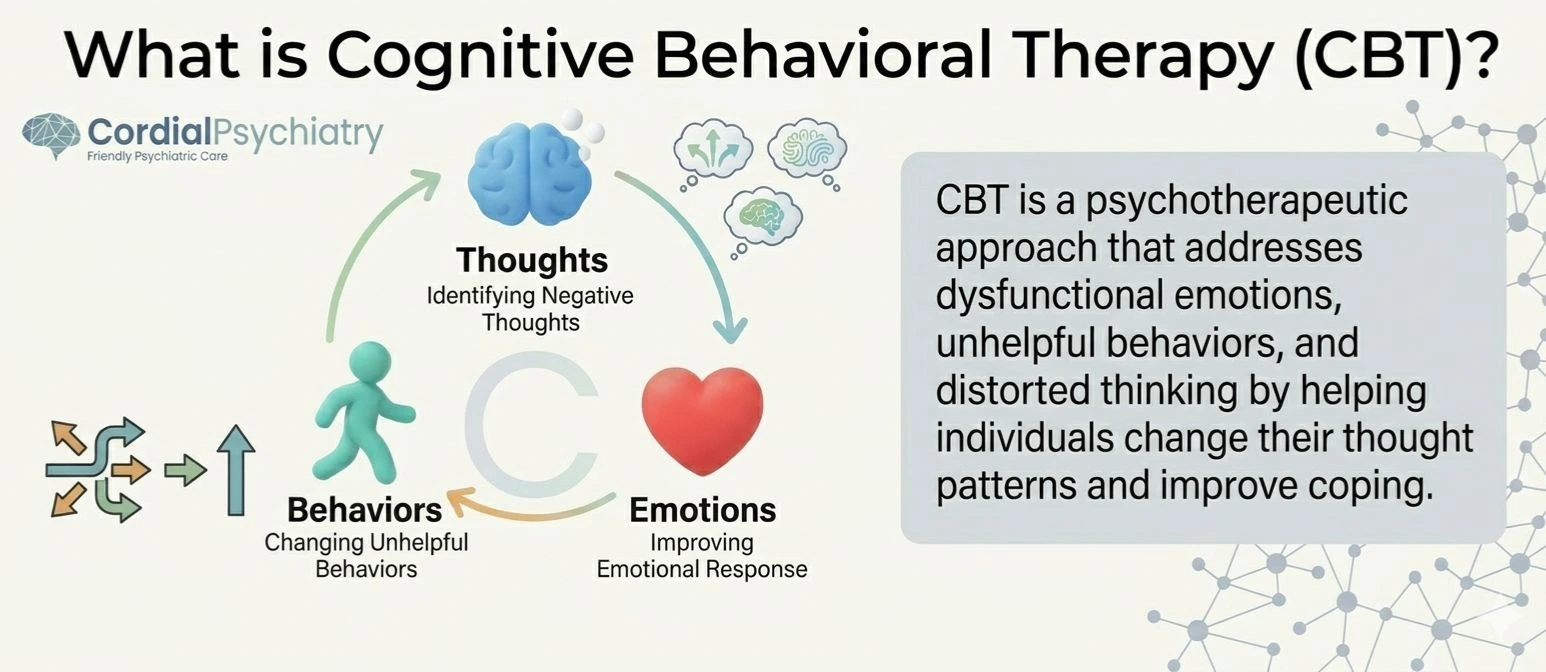
Cognitive Behavioral Therapy is a structured form of talk therapy that focuses on the connection between thoughts, emotions, and behavior. When people ask what cognitive behavioral therapy is, the simple answer is that it is a method that helps individuals change negative thinking patterns to improve emotional well-being.
The CBT meaning is based on the idea that our thoughts directly affect our feelings and actions.
A basic definition is:
CBT is a psychological approach that helps people change negative thinking patterns to improve emotional well-being and behavior.
How CBT Works
CBT works by breaking down the connection between thoughts, feelings, and actions and helping individuals replace negative cycles with healthier ones.
It follows a simple model:
Situation → Thoughts → Feelings → Behavior
Steps:
- A situation triggers a thought
- That thought creates an emotional response
- The emotion influences behavior
- The behavior reinforces the thought
Example:
- Situation: A friend doesn’t reply
- Thought: “They are ignoring me.”
- Feeling: Anxiety or sadness
- Behavior: Avoiding communication
CBT helps replace this with a balanced thought:
“They might be busy or unable to reply right now.”
This is the practical foundation of what is cognitive behavioral therapy.
How This Type of Therapy Works in Practice
CBT is based on a structured cycle:
Thoughts → Feelings → Actions
When explaining what CBT therapy is, it refers to this structured process used in sessions.
CBT works by identifying negative thoughts and replacing them with realistic ones, which improves emotional responses and behavior over time.
This approach is also commonly compared within psychotherapy, where different methods like CBT, DBT, and psychodynamic therapy each focus on different aspects of mental health treatment.
The Meaning Behind Cognitive and Behavioral Approaches
The term CBT combines two important psychological methods:
- Cognitive approach: focuses on thoughts and beliefs
- Behavioral approach: focuses on actions and habits
Together, they explain the CBT meaning, which is changing both thinking and behavior to improve mental health outcomes.
Origins of Modern CBT Practices
Cognitive Behavioral Therapy was developed by psychiatrist Aaron Beck in the 1960s.
He discovered that many emotional problems come from automatic negative thoughts. This became the foundation of CBT, which is now one of the most widely used therapies in psychotherapy, alongside approaches like DBT and psychodynamic therapy.
How Thoughts Influence Emotions and Actions
CBT is built on the idea that situations do not directly cause emotional reactions; instead, interpretation matters more.
Example:
- Situation: A friend doesn’t reply
- Thought: “They are ignoring me”
- Emotion: Anxiety or sadness
- Behavior: Avoiding communication
CBT helps replace this thought with:
“They might be busy.”
This is a core explanation of what is cognitive behavioral therapy in daily life.
Conditions That Can Improve with CBT
This therapy is widely used for different mental health conditions, including:
- Anxiety disorders
- Depression
- Panic attacks
- OCD
- PTSD
- Phobias
- Stress-related problems
- Sleep difficulties
- Eating-related concerns
Techniques Commonly Used in Sessions
CBT uses practical tools such as:
- Identifying thinking patterns
- Reframing thoughts
- Gradual exposure
- Activity planning
- Journaling
- Relaxation skills
What Happens During a Therapy Session
CBT sessions are structured and goal-focused. A therapist may:
- Discuss current problems
- Identify thought patterns
- Explore emotional reactions
- Teach coping strategies
- Assign practice exercises
This is how CBT therapy is applied in real clinical settings.
Expected Duration of Treatment
CBT is usually short-term therapy:
6 to 20 sessions
It depends on severity, goals, and progress.
Effectiveness of This Approach
CBT is scientifically supported and highly effective for emotional disorders.
It helps reduce:
- Anxiety
- Depression
- Stress
- Fear-based thinking
Who Can Benefit from It
CBT is suitable for:
- Children
- Teenagers
- Adults
- Older individuals
It is also used for personal growth, not only clinical treatment.
Digital and Online Therapy Options
CBT is available online through apps and video sessions, making it accessible, private, and flexible.
How It Differs from Other Therapies
Unlike therapies that focus on past experiences, CBT focuses on present thinking patterns and practical solutions.
Within psychotherapy, other approaches like DBT focus on emotional regulation, while psychodynamic therapy explores unconscious thoughts and past experiences. This broader understanding is explained in detail in Types of Psychotherapy: CBT, DBT, Psychodynamic & More Explained, where different therapy methods are compared.
Combining Therapy with Medical Treatment
In some cases, CBT is combined with medication for better results, especially in severe conditions like depression or OCD.
Challenges People May Experience
CBT can be challenging because it requires:
- Facing negative thoughts
- Practicing new behaviors
- Consistency
Helpful Tips for Better Results
- Be honest with your therapist
- Practice regularly
- Stay consistent
- Be patient with progress
Final Thoughts
Cognitive Behavioral Therapy is a powerful and practical approach to improving mental health by helping people understand the connection between their thoughts, emotions, and behaviors. It clearly explains what is cognitive behavioral therapy, the CBT meaning, and how changing negative thinking patterns can lead to healthier emotional responses and better daily functioning.
By focusing on present thoughts and actions, CBT gives individuals structured tools to manage stress, reduce anxiety, and improve overall mental well-being in a more active and solution-focused way.
It also fits within the broader field of psychotherapy, which includes different evidence-based approaches like CBT, DBT (Dialectical Behavior Therapy), and psychodynamic therapy. Each of these methods works in a different way, but all aim to support emotional healing, improve coping skills, and help individuals build a healthier mindset depending on their personal needs and experiences.
FAQs
What makes CBT different from other therapies?
It focuses on present thoughts and behaviors rather than deep analysis of the past.
How quickly does CBT show results?
Some people notice improvement within a few weeks, depending on consistency and condition.
Is CBT suitable for everyday stress?
Yes, CBT techniques are useful even for managing normal life stress.
Do I need a therapist for CBT?
While guided CBT is more effective, self-help CBT techniques can also be practiced.
Can CBT help with long-term anxiety?
Yes, it is one of the most effective treatments for anxiety disorders.