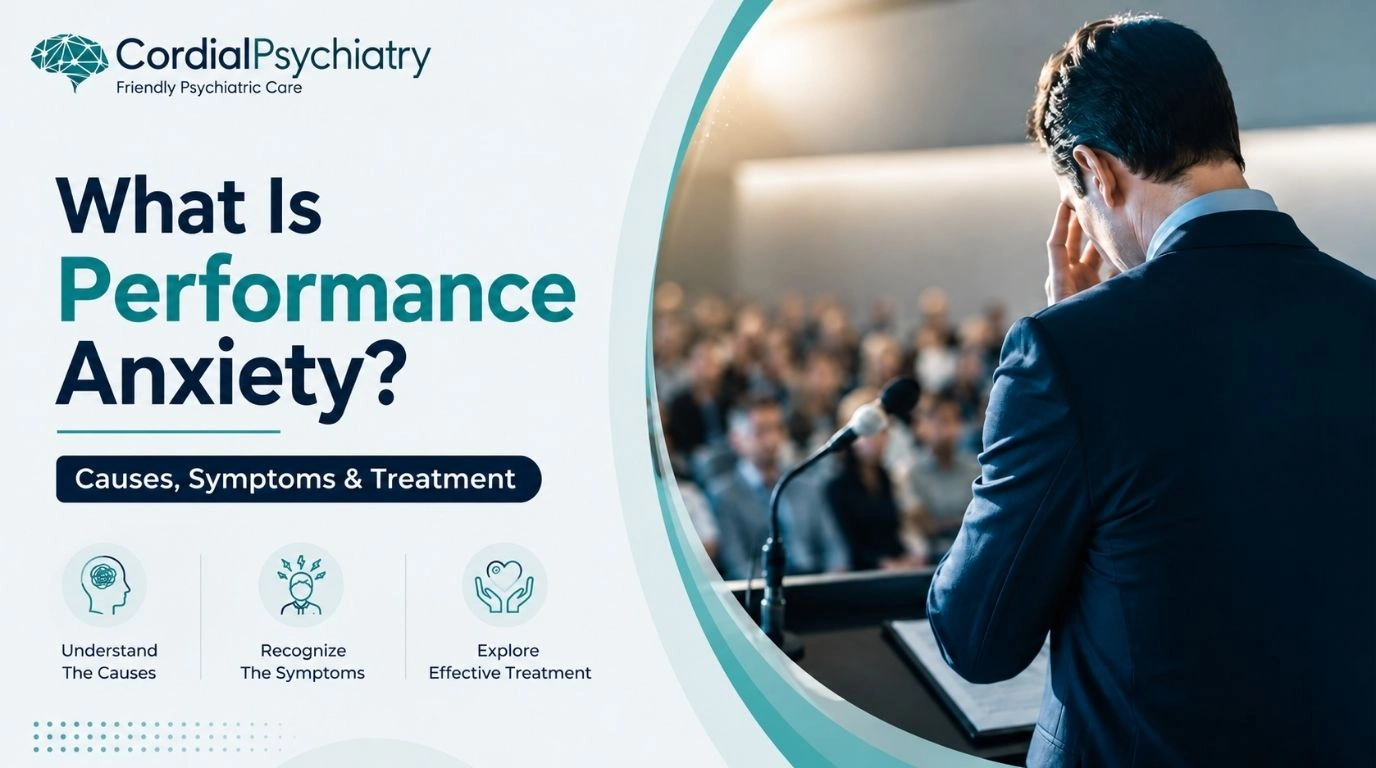
What Is Performance Anxiety? Causes, Symptoms & Treatment
Feeling nervous before a presentation, job interview, exam, performance, or important meeting is common. But sometimes that nervousness becomes so strong that it affects confidence, concentration, and the ability to perform.
So, what is performance anxiety? Performance anxiety is intense fear, worry, or nervousness that happens when a person feels they are being evaluated or expected to perform well. It can affect students, professionals, athletes, musicians, public speakers, and anyone facing an important performance situation.
Performance anxiety does not mean someone lacks ability. In many cases, the fear comes from worrying about making mistakes, being judged, or not meeting expectations. Understanding performance anxiety meaning, symptoms, causes, and treatment options can make it easier to recognize the problem and seek appropriate support.
What Is Performance Anxiety?
What is performance anxiety in simple terms? It is anxiety that occurs before or during a situation where you feel your performance is being watched, judged, or evaluated.
Common examples include:
- Giving a presentation
- Speaking in front of a group
- Taking an important exam
- Attending a job interview
- Performing on stage
- Playing in a sports competition
- Giving a speech
- Performing music
- Leading an important meeting
Some nervousness can be helpful. A small amount of stress may increase alertness and motivation. However, intense anxiety can interfere with concentration, memory, communication, and physical control.
Performance anxiety may occur by itself or alongside other anxiety concerns. For example, someone who frequently worries about being judged in social situations may also experience anxiety during public speaking.
If anxiety is affecting other areas of your life, learning about anxiety disorders and their symptoms and treatment can provide useful background.
Performance Anxiety Meaning: What Does It Feel Like?
The performance anxiety meaning is more than simply feeling nervous.
A person may experience strong worry before an event and repeatedly imagine something going wrong. They may think, “What if I make a mistake?” or “What will everyone think of me?”
These thoughts can increase physical symptoms, which may then create even more worry.
For example, a person preparing for a presentation may notice their heart beating faster. They may interpret this as a sign that they will lose control. That thought increases anxiety, making the physical symptoms stronger.
This can create a cycle:
Fear of failure → anxious thoughts → physical symptoms → reduced confidence → more fear
Recognizing this cycle is an important first step toward managing performance anxiety.
Performance Anxiety Symptoms
Performance anxiety symptoms can affect the body, thoughts, emotions, and behavior. Not everyone experiences the same symptoms, and their severity can vary.
Physical Symptoms
Common physical performance anxiety symptoms include:
- Rapid heartbeat
- Sweating
- Shaking or trembling
- Dry mouth
- Muscle tension
- Nausea or stomach discomfort
- Shortness of breath
- Blushing
- Feeling lightheaded
- Difficulty sleeping before an important event
These symptoms are related to the body’s stress response. When the brain perceives a situation as threatening, the body can become more alert and prepared to respond.
Emotional and Mental Symptoms
Performance anxiety can also affect how you think and feel.
You may experience:
- Excessive worry about making mistakes
- Fear of embarrassment
- Fear of being judged
- Difficulty concentrating
- Negative thoughts about your abilities
- Feeling overwhelmed
- Low confidence
- Strong fear of failure
In some cases, a person may spend days or weeks worrying about an upcoming event.
Behavioral Symptoms
Behavioral changes can be another important part of the problem.
Someone experiencing performance anxiety may:
- Avoid presentations or public speaking
- Procrastinate before an important task
- Cancel plans involving performance
- Avoid applying for jobs
- Refuse opportunities because of fear
- Repeatedly practice because they fear making mistakes
- Depend heavily on reassurance from others
Avoidance may provide temporary relief, but it can strengthen anxiety over time because the person never gets the opportunity to learn that they can manage the situation.
Signs of Performance Anxiety
The signs of performance anxiety are not always obvious. Some people appear confident while experiencing significant anxiety internally.
Common signs of performance anxiety include feeling extremely nervous before being evaluated, worrying repeatedly about mistakes, experiencing physical symptoms, avoiding opportunities, or feeling unable to perform at your usual level.
Another sign is spending excessive time thinking about an upcoming performance.
For example, a student may know the material well but become extremely anxious during an exam. Someone with strong presentation skills may suddenly struggle to speak when standing in front of an audience.
This is why performance anxiety should not be judged only by how someone appears from the outside.
What Causes Performance Anxiety?
What causes performance anxiety can differ from one person to another. Usually, there is not one single cause.
Fear of Failure
One of the most common performance anxiety causes is fear of failing or making mistakes.
When people believe that a mistake will have serious consequences, they may put excessive pressure on themselves.
Fear of Judgment
Concern about what other people think can also contribute. A person may worry about looking inexperienced, unintelligent, awkward, or unsuccessful.
This can be especially strong when the performance is public or highly important.
Perfectionism
Perfectionism is another possible factor. Someone may believe that anything less than perfect is unacceptable.
Instead of thinking, “I can make a mistake and continue,” they may think, “If I make one mistake, everything is ruined.”
Previous Negative Experiences
Past experiences can influence future reactions. Being embarrassed during a presentation, receiving harsh criticism, or performing poorly during an important event may increase fear the next time a similar situation occurs.
High Expectations and Pressure
Work, school, family, or personal expectations can increase pressure.
A person may feel that their performance determines their future success, reputation, or self-worth. This can make ordinary challenges feel much more threatening.
General Anxiety
People who already experience anxiety may be more vulnerable to anxiety in performance situations. Anxiety can involve excessive worry, physical tension, difficulty concentrating, and fear about future events.
Stress can also contribute. Understanding the difference between anxiety and stress can help explain why ongoing pressure may affect emotional well-being.
Who Can Experience Performance Anxiety?
Performance anxiety can affect people at almost any age and in many different situations.
Students
Students may experience anxiety before exams, presentations, interviews, or academic competitions. Test anxiety is one specific form of performance-related anxiety that can affect concentration and test performance.
Professionals
Employees may experience anxiety before presentations, interviews, meetings, or major work projects.
Performers
Actors, musicians, dancers, and public speakers may experience intense anxiety before going on stage.
Athletes
Athletes may become anxious before competitions because they fear making mistakes or failing to meet expectations.
How Is Performance Anxiety Diagnosed?
There is no single test that can determine whether someone has performance anxiety.
A mental health professional may ask about:
- When symptoms occur
- What situations trigger anxiety
- Physical and emotional symptoms
- How long symptoms have been present
- Avoidance behaviors
- Previous experiences
- Work, school, and relationship effects
- Other mental health concerns
A professional may also consider whether symptoms are related to another anxiety condition, such as social anxiety disorder.
This distinction matters because treatment should be based on the individual’s symptoms and overall situation rather than a single symptom.
Performance Anxiety Treatment
The good news is that performance anxiety can often be managed with appropriate support and treatment.
Cognitive Behavioral Therapy
Cognitive Behavioral Therapy (CBT) is commonly used to help people understand the connection between thoughts, feelings, and behaviors.
For example, CBT may help someone identify thoughts such as “Everyone will think I am incompetent” and replace them with more realistic ways of thinking.
Cordial Psychiatry describes CBT as an evidence-based approach that can help people identify and change unhelpful thought patterns related to anxiety.
Exposure-Based Approaches
Gradually facing feared situations can help reduce avoidance and build confidence.
Instead of avoiding public speaking completely, a person may gradually work toward speaking in increasingly challenging situations.
The process should be appropriate for the individual’s needs and guided by a qualified professional when symptoms are significant.
Medication
In some situations, medication may be considered as part of treatment. The appropriate option depends on the individual’s symptoms, diagnosis, medical history, and treatment goals.
A psychiatrist can evaluate these factors and determine whether medication may be appropriate.
Relaxation and Coping Strategies
Some people benefit from practical techniques such as:
- Slow breathing
- Mindfulness
- Regular physical activity
- Adequate sleep
- Preparing without excessive repetition
- Reducing excessive caffeine
- Practicing realistic self-talk
These strategies may support anxiety management, but persistent or severe symptoms may require professional evaluation.
When Should You Seek Professional Help?
Occasional nervousness before an important event is normal. It may be time to consider professional support when anxiety becomes intense, persistent, or disruptive.
Consider speaking with a mental health professional if you:
- Frequently avoid important opportunities
- Experience severe physical symptoms
- Cannot concentrate because of anxiety
- Spend excessive time worrying about performance
- Have difficulty sleeping before events
- Feel your anxiety prevents you from performing normally
- Experience anxiety in many areas of daily life
- Feel significant distress because of your symptoms
You do not need to wait until anxiety becomes severe before seeking help.
Cordial Psychiatry provides personalized mental health care and anxiety-focused treatment based on an individual’s symptoms, history, and needs. You can learn more about Cordial Psychiatry’s mental health services.
Can Performance Anxiety Be Overcome?
Yes. Performance anxiety can improve with the right strategies and professional support.
The goal is not necessarily to eliminate every feeling of nervousness. Instead, treatment can help you respond to anxiety without allowing it to control your choices or prevent you from participating in important activities.
Learning to recognize anxious thoughts, reduce avoidance, build confidence, and develop healthier coping skills can make performance situations more manageable.
It is also important to remember that experiencing anxiety does not mean you are incapable or unprepared. Anxiety is a common human response, and effective treatment can help you regain confidence and function more comfortably.
Final Thoughts
Understanding what is performance anxiety can help you recognize when normal nervousness has become more difficult to manage. Performance anxiety can affect students, professionals, athletes, performers, and anyone who feels pressure to succeed.
The most common performance anxiety symptoms include physical tension, rapid heartbeat, sweating, shaking, excessive worry, fear of judgment, and difficulty concentrating. Performance anxiety causes may include perfectionism, fear of failure, previous experiences, high expectations, and broader anxiety.
With appropriate treatment and support, many people can learn to manage these symptoms and approach challenging situations with greater confidence. If performance anxiety is interfering with your work, education, relationships, or daily life, consider speaking with a qualified mental health professional for an individualized evaluation.
Frequently Asked Questions
What is performance anxiety?
Performance anxiety is intense nervousness, fear, or worry that occurs when someone feels their performance is being evaluated. It may happen during presentations, exams, interviews, sports, public speaking, or performances.
What are the most common performance anxiety symptoms?
Common performance anxiety symptoms include rapid heartbeat, sweating, shaking, dry mouth, muscle tension, difficulty concentrating, fear of failure, negative thoughts, and avoidance of performance situations.
What causes performance anxiety?
What causes performance anxiety varies between individuals. Common performance anxiety causes include fear of failure, fear of judgment, perfectionism, previous negative experiences, high expectations, pressure, and existing anxiety.
What are the signs of performance anxiety?
Common signs of performance anxiety include intense worry before an event, physical symptoms such as shaking or sweating, fear of embarrassment, difficulty concentrating, avoidance, and feeling unable to perform at your normal level.
Is performance anxiety the same as social anxiety?
They can overlap, but they are not always the same. Performance anxiety is usually focused on situations where someone expects to be evaluated, while social anxiety can involve fear across a broader range of social interactions.
Can performance anxiety affect students?
Yes. Students may experience performance anxiety during exams, presentations, interviews, and other academic situations. Test anxiety is one example of performance-related anxiety and may affect concentration, confidence, and performance.
How is performance anxiety treated?
Treatment may include CBT, exposure-based approaches, coping strategies, relaxation techniques, and medication when clinically appropriate. The best approach depends on the individual’s symptoms and needs.
When should I see a psychiatrist for performance anxiety?
Consider professional help when anxiety is severe, persistent, difficult to control, or causes you to avoid important activities. A psychiatrist can evaluate your symptoms and discuss appropriate treatment options.