

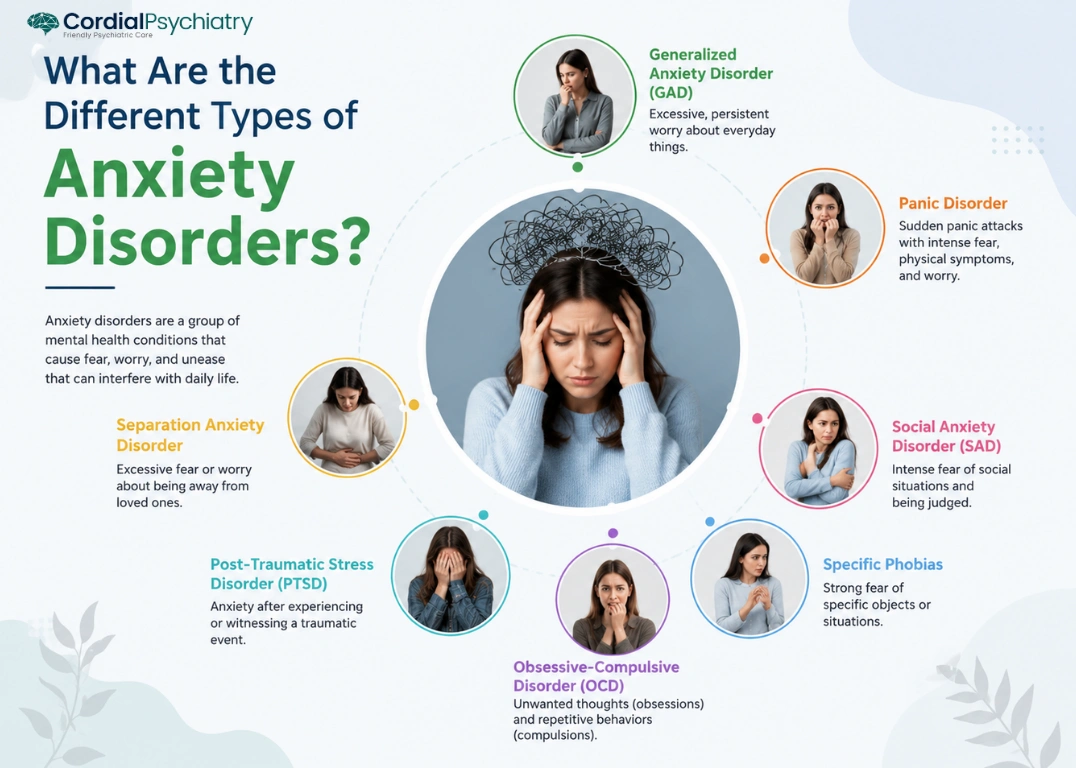
What Are the Different Types of Anxiety Disorders?
Anxiety is a normal human response to stress, uncertainty, or danger. You may feel anxious before an interview, medical appointment, examination, or important life decision. This temporary anxiety can help you stay alert and prepare for a difficult situation.
An anxiety disorder is different. It causes fear, worry, or nervousness that may continue even when there is no immediate threat. These feelings can become difficult to control and may interfere with work, education, sleep, relationships, and everyday responsibilities.
There are several types of anxiety disorders, and each one can affect people differently. Some involve constant worry, while others cause sudden panic attacks or intense fear of particular objects and situations. Understanding the differences can make it easier to recognize when professional support may be needed.
This guide explains the main types of anxiety, their symptoms, possible causes, diagnosis, and available treatments. It is intended for general education and should not replace advice from a qualified mental health professional.
What Is an Anxiety Disorder?
An anxiety disorder is a mental health condition in which fear or worry becomes excessive, persistent, or difficult to manage. The symptoms are usually stronger than the actual level of danger involved.
For example, feeling nervous before speaking in public is common. However, someone with social anxiety disorder may avoid meetings, presentations, restaurants, phone calls, or social events because they fear embarrassment or negative judgment.
Anxiety disorders can cause emotional and physical symptoms, including:
- Constant worry or a sense of danger
- Restlessness or irritability
- Difficulty concentrating
- Muscle tension
- Rapid heartbeat
- Sweating or trembling
- Shortness of breath
- Stomach discomfort
- Dizziness
- Trouble sleeping
- Avoidance of feared situations
Occasional anxiety does not automatically mean that someone has a disorder. A mental health professional considers how long the symptoms have been present, how severe they are, and how much they affect the person’s daily life. The National Institute of Mental Health explains that anxiety disorders involve more than temporary worry and may become worse without appropriate support.
Learning why mental health awareness is important can also help families recognize symptoms early and respond without judgment.
Anxiety Disorders List: The Main Conditions
The following anxiety disorders list covers the main conditions recognized by mental health professionals:
| Anxiety disorder | Main characteristic |
| Generalized anxiety disorder | Ongoing and difficult-to-control worry about different areas of life |
| Panic disorder | Repeated and unexpected panic attacks |
| Social anxiety disorder | Intense fear of judgment or embarrassment in social situations |
| Specific phobia | Extreme fear of a particular object, animal, activity, or situation |
| Agoraphobia | Fear of situations where escape or help may feel difficult |
| Separation anxiety disorder | Excessive fear about being separated from an attachment figure |
| Selective mutism | Inability to speak in certain social settings despite speaking elsewhere |
| Substance-induced anxiety disorder | Anxiety caused by medication, drugs, alcohol, or withdrawal |
| Anxiety due to a medical condition | Anxiety directly associated with a physical health condition |
The symptoms of these conditions may overlap. A person may also experience more than one anxiety disorder at the same time.
1. Generalized Anxiety Disorder
Generalized anxiety disorder, commonly called GAD, involves frequent and excessive worry about several areas of life. A person may worry about work, finances, health, family, education, appointments, household tasks, or events that have not happened.
The worry can feel difficult to stop. Even when one concern is resolved, another may quickly replace it.
Common symptoms include:
- Feeling nervous or restless
- Becoming tired easily
- Difficulty concentrating
- Irritability
- Muscle tension
- Headaches or stomach discomfort
- Poor sleep
- Feeling unable to control worrying thoughts
For a clinical diagnosis, symptoms are assessed according to specific criteria, including their duration and effect on daily functioning. GAD is generally associated with excessive worry occurring on most days over a prolonged period, rather than anxiety that appears briefly during a stressful week.
Someone with GAD may still attend work, care for family members, and complete normal tasks. However, doing so can require significant emotional energy. This is why the condition is not always obvious to other people.
2. Panic Disorder
Panic disorder causes repeated and unexpected panic attacks. A panic attack is a sudden period of intense fear or physical discomfort that can reach its highest level within minutes.
During an attack, a person may experience:
- A racing or pounding heartbeat
- Chest discomfort
- Sweating
- Shaking
- Shortness of breath
- Dizziness
- Nausea
- Chills or hot flashes
- Numbness or tingling
- Fear of losing control
- Fear of dying
Panic attacks can feel like a heart attack or another serious medical emergency. Because chest pain and breathing difficulty can also have physical causes, new or severe symptoms should be medically evaluated.
Not everyone who has a panic attack develops panic disorder. The disorder usually involves recurring attacks followed by ongoing fear of another attack or changes in behavior intended to prevent one. Someone might stop exercising, driving, shopping, or visiting unfamiliar places because they fear experiencing symptoms again.
3. Social Anxiety Disorder
Social anxiety disorder is more than ordinary shyness. It involves a strong fear of being judged, criticized, rejected, watched, or embarrassed in front of other people.
Difficult situations may include:
- Meeting unfamiliar people
- Speaking in public
- Participating in meetings
- Eating in front of others
- Attending parties
- Making phone calls
- Asking for help
- Answering questions in class
- Going on a date
- Using public facilities
A person may understand that the level of fear is excessive but still feel unable to control it. They may avoid social situations completely or endure them with extreme distress.
Physical symptoms can include blushing, sweating, trembling, nausea, muscle tension, and a shaky voice. Children may cry, freeze, cling to a caregiver, or refuse to speak.
Social anxiety can affect academic progress, career opportunities, friendships, and intimate relationships. Professional treatment can help people gradually challenge fearful thoughts and safely return to avoided situations.
4. Specific Phobias
A specific phobia is an intense fear of a particular object, activity, animal, or situation. The fear is much stronger than the actual level of danger.
Common examples include fear of:
- Spiders, snakes, or dogs
- Heights
- Flying
- Needles or blood
- Storms
- Enclosed spaces
- Water
- Vomiting
- Dental procedures
A person may experience immediate anxiety when facing the feared object. In some cases, simply looking at a photograph or thinking about the situation can trigger distress.
People often arrange their lives around avoiding the trigger. Someone with a fear of flying may reject work opportunities or family visits. A person afraid of needles may avoid essential medical tests.
Avoidance can provide temporary relief, but it often strengthens the fear over time. Exposure-based cognitive behavioural therapy is commonly used to help people approach the feared situation gradually and safely.
5. Agoraphobia
Agoraphobia involves fear of situations where escape might feel difficult or where help may not be available if anxiety symptoms occur.
A person may fear:
- Public transport
- Crowded shops
- Open spaces
- Enclosed locations
- Standing in a queue
- Being outside alone
- Travelling far from home
Agoraphobia is sometimes misunderstood as simply being afraid to leave the house. In reality, the condition can range from mild avoidance to severe restriction. Some people can go outside when accompanied by a trusted person, while others may struggle to leave home at all.
Agoraphobia may develop after panic attacks, although it can also occur without a history of panic disorder. The central concern is usually that something distressing will happen in a place where leaving, receiving assistance, or managing symptoms could be difficult.
6. Separation Anxiety Disorder
Separation anxiety is a normal stage of early childhood. Separation anxiety disorder occurs when the fear is unusually intense, continues beyond the expected developmental stage, or seriously affects daily functioning.
It may involve excessive worry that:
- A parent, partner, or attachment figure will be harmed
- An accident will cause permanent separation
- The person will become lost
- Something bad will happen while they are apart
Children may refuse to attend school, sleep alone, visit relatives, or stay away from a parent. They may report headaches, stomachaches, or nausea before a separation.
Adults can also experience separation anxiety disorder. An adult may repeatedly contact a partner, avoid travelling alone, or struggle to concentrate when separated from someone important.
7. Selective Mutism
Selective mutism most often begins during childhood. A child with this condition can speak comfortably in some settings, such as at home, but consistently cannot speak in other situations, such as school.
The child is not simply refusing to cooperate. Anxiety can make speaking feel physically impossible.
Selective mutism may affect classroom participation, friendships, and educational progress. Some children communicate through gestures, facial expressions, writing, or whispering to a trusted person.
The condition is often connected with social anxiety. Early support from parents, teachers, paediatric professionals, and mental health specialists may prevent the speaking difficulty from becoming more deeply established.
Other Recognized Types of Anxiety
Some types of anxiety disorders are linked to substances, medications, or medical conditions.
Substance- or medication-induced anxiety may occur after:
- Using stimulants or recreational drugs
- Consuming very high amounts of caffeine
- Starting or stopping certain medications
- Alcohol or drug withdrawal
Anxiety due to another medical condition may be associated with thyroid problems, heart conditions, breathing disorders, neurological illnesses, or hormonal changes. This does not mean every anxious feeling has a physical cause. It means clinicians may need to examine both physical and psychological possibilities before making a diagnosis.
Other specified and unspecified anxiety disorders may be diagnosed when symptoms cause significant distress but do not fully match the criteria for one particular condition.
Are OCD and PTSD Anxiety Disorders?
Obsessive-compulsive disorder and post-traumatic stress disorder can both involve severe fear, distress, and avoidance. However, the current DSM classification places them in separate diagnostic categories.
OCD appears under obsessive-compulsive and related disorders. PTSD appears under trauma- and stressor-related disorders. They were included with anxiety disorders in older classification systems, which is why some older articles still place them on an anxiety disorders list.
This distinction is important because the conditions can require different assessment and treatment approaches.
What Causes Anxiety Disorders?
There is rarely one single cause. Anxiety disorders may develop through a combination of biological, psychological, social, and environmental factors.
Possible risk factors include:
- A family history of anxiety or other mental health conditions
- Differences in how the brain responds to stress and danger
- Difficult childhood experiences
- Trauma or major life changes
- Long-term stress
- Chronic physical illness
- Certain personality traits
- Alcohol or drug use
- Medication side effects
- Limited social support
Having one or more risk factors does not guarantee that a person will develop an anxiety disorder. Likewise, someone can develop anxiety without an obvious cause.
How Are Anxiety Disorders Diagnosed?
There is no single blood test or brain scan that diagnoses every anxiety disorder. A qualified professional usually begins by discussing the person’s symptoms, health history, medications, lifestyle, and family history.
The assessment may cover:
- When the symptoms started
- How often they occur
- What triggers them
- Whether situations are being avoided
- How symptoms affect sleep, work, education, or relationships
- Whether alcohol, drugs, medication, or illness may be contributing
A physical examination or laboratory test may sometimes be recommended to rule out other causes. Honest information is important because similar symptoms can occur in different conditions.
Reading about common signs and symptoms of anxiety can help someone prepare for an appointment, but an online checklist cannot provide a complete diagnosis.
How Are Different Types of Anxiety Treated?
Treatment depends on the diagnosis, symptom severity, physical health, personal preferences, and any additional conditions.
Common options include:
Psychological Therapy
Cognitive behavioural therapy, or CBT, is frequently used for anxiety disorders. It helps people identify unhelpful thinking patterns, develop coping strategies, and change avoidance behaviors.
Exposure therapy is a form of treatment that involves gradually facing feared situations in a controlled and supportive way. It is commonly used for phobias, social anxiety, panic disorder, and agoraphobia.
Medication
A clinician may recommend medication when symptoms are persistent or significantly affect daily life. Certain antidepressants are commonly prescribed for anxiety disorders. Other medicines may be used in specific circumstances.
Medication should be taken only under professional supervision. Benefits, side effects, other health conditions, and possible interactions must be considered.
Supportive Lifestyle Habits
Healthy routines may support professional treatment. Helpful steps can include:
- Maintaining a regular sleep schedule
- Reducing excessive caffeine
- Exercising regularly
- Eating consistent, balanced meals
- Limiting alcohol
- Practising relaxation techniques
- Staying connected with supportive people
These habits can improve general wellbeing, but they are not a replacement for treatment when anxiety is severe. Our practical guide on how to manage stress and anxiety provides additional everyday strategies.
Talking therapies and medication are widely used treatments, with the most suitable approach depending on the individual and the particular disorder.
When Should You Seek Professional Help?
Consider speaking with a healthcare or mental health professional when anxiety:
- Continues for weeks or months
- Feels difficult to control
- Causes frequent panic attacks
- Disrupts sleep
- Affects work or education
- Damages relationships
- Causes avoidance of important activities
- Leads to alcohol or drug use
- Creates feelings of hopelessness
Seek urgent help when someone is at immediate risk of harming themselves or another person, cannot stay safe, or is experiencing severe physical symptoms. Contact local emergency services or a crisis service in the person’s country.
Final Thoughts
The main types of anxiety include generalized anxiety disorder, panic disorder, social anxiety disorder, specific phobias, agoraphobia, separation anxiety disorder, and selective mutism. Other anxiety conditions may be caused by substances, medication, or physical illness.
Symptoms may look different from one person to another. Some people experience constant worry, while others have sudden panic attacks or avoid specific situations. A professional assessment is the safest way to understand what is happening.
Anxiety disorders are treatable. With appropriate therapy, medical support, healthy routines, and understanding from others, many people learn to manage their symptoms and improve their quality of life.
Frequently Asked Questions
What are the most common types of anxiety disorders?
The most widely recognized types of anxiety disorders include generalized anxiety disorder, panic disorder, social anxiety disorder, specific phobias, agoraphobia, separation anxiety disorder, and selective mutism.
Can a person have more than one anxiety disorder?
Yes. Someone may experience more than one anxiety disorder at the same time. Anxiety can also occur alongside depression, ADHD, substance use problems, or other mental health conditions.
What is the difference between normal anxiety and an anxiety disorder?
Normal anxiety usually has a clear cause and improves once the stressful situation has passed. An anxiety disorder tends to be persistent, excessive, difficult to control, or disruptive to everyday life.
Is overthinking always a sign of an anxiety disorder?
No. Most people overthink occasionally. It may become a concern when worrying happens frequently, feels uncontrollable, causes physical symptoms, or interferes with sleep and daily responsibilities.
What is the most severe type of anxiety?
There is no single type that is always the most severe. Any anxiety disorder can become disabling depending on its intensity, duration, available support, and effect on the person’s life.
Can anxiety disorders be completely treated?
Many people experience major improvement with appropriate treatment. Some recover fully, while others learn to manage occasional or ongoing symptoms successfully. Early assessment and a personalized treatment plan can improve the chances of recovery.
Can children develop anxiety disorders?
Yes. Children can experience separation anxiety disorder, specific phobias, social anxiety, generalized anxiety, panic symptoms, and selective mutism. Persistent changes in school attendance, sleep, physical complaints, behavior, or social interaction should be discussed with a qualified professional.
Which doctor treats anxiety disorders?
A primary care doctor can conduct an initial assessment and rule out possible physical causes. Psychologists, psychiatrists, licensed therapists, counsellors, and other trained mental health professionals may provide specialized diagnosis and treatment.