

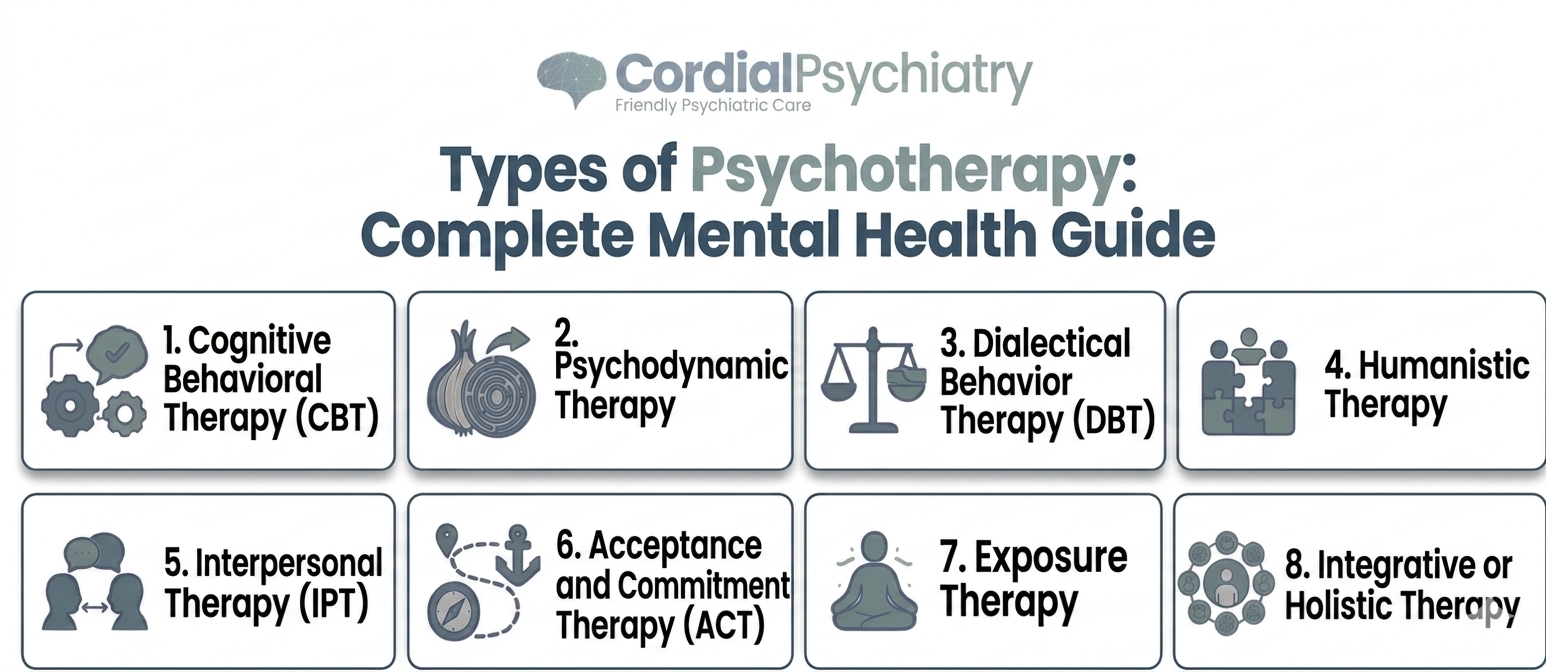
Types of Psychotherapy: Complete Mental Health Guide
Psicoterapia is one of the most effective treatments for mental health conditions such as anxiety, depression, ADHD, trauma, and stress-related disorders. It involves talking with a trained mental health professional to understand emotions, thoughts, and behaviors and to develop healthier coping strategies. Psicoterapia is widely recommended by psychiatrists and psychologists because it is evidence-based and focuses on long-term emotional healing rather than just symptom control.
There are several types of Psicoterapia, each designed to address different psychological needs. Understanding these types can help individuals choose the right treatment and improve their mental well-being. In clinical practice, the choice of therapy depends on the patient’s condition, personality, and treatment goals.
In this article, we will explore the main types of Psicoterapia, how they work, and their benefits in a simple and professional way.
1. Cognitive Behavioral Therapy (CBT)
Cognitive Behavioral Therapy (CBT) is one of the most widely used and evidence-based forms of Psicoterapia. It focuses on identifying and changing negative thought patterns that affect emotions and behavior. CBT is structured, goal-oriented, and supported by strong clinical research.
CBT helps patients understand how their thoughts influence their feelings and actions. By changing negative thinking patterns, individuals can improve emotional responses and daily functioning. Therapists often use practical exercises, journaling, and behavioral tasks to reinforce learning.
CBT is commonly used for:
- Anxiety disorders
- Depresión
- ADHD-related behavioral issues
- Phobias
- Stress management
CBT is structured, goal-oriented, and usually short-term, making it highly effective for many individuals. Many mental health professionals consider CBT one of the first-line treatments in modern Psicoterapia practice.
2. Psychodynamic Therapy
Psychodynamic therapy focuses on understanding unconscious thoughts and past experiences that influence current behavior. It is based on the idea that unresolved childhood conflicts or emotional experiences may affect mental health in adulthood.
In this type of Psicoterapia, patients explore deep emotional patterns and gain insight into their feelings and behaviors. The therapist helps identify hidden emotional conflicts that may be affecting current life decisions.
It is commonly used for:
- Long-term emotional issues
- Depresión
- Relationship difficulties
- Personality-related concerns
This therapy is often longer in duration and helps individuals develop deeper self-awareness. Unlike structured therapies, psychodynamic Psicoterapia focuses more on emotional exploration and insight development.
3. Dialectical Behavior Therapy (DBT)
Dialectical Behavior Therapy (DBT) is a specialized form of Psicoterapia that combines cognitive-behavioral techniques with mindfulness strategies. It was originally developed for emotional instability but is now widely used in multiple conditions.
DBT teaches emotional regulation, distress tolerance, and interpersonal effectiveness. Patients learn how to manage intense emotions without self-destructive behavior.
DBT is commonly used for:
- Borderline personality disorder (BPD)
- Self-harm behaviors
- Severe mood swings
- Emotional instability
It focuses on balancing acceptance and change in emotional experiences. DBT is considered a highly structured and skills-based approach within modern Psicoterapia.
4. Humanistic Therapy
Humanistic therapy focuses on self-growth, personal responsibility, and achieving full potential. It emphasizes a positive view of human nature and encourages individuals to find meaning in life.
The therapist provides a supportive environment where patients feel accepted and understood. This form of Psicoterapia is more client-centered, meaning the patient plays an active role in their healing process.
It is commonly used for:
- Self-esteem issues
- Life transitions
- Emotional growth
- Stress and anxiety
This therapy helps individuals build confidence and improve self-awareness. Humanistic Psicoterapia is especially useful for personal development and emotional healing.
5. Interpersonal Therapy (IPT)
Interpersonal Therapy focuses on improving communication skills and relationships with others. It helps individuals understand how their relationships affect emotional well-being.
IPT is a short-term but structured form of Psicoterapia that targets current relationship issues rather than past experiences.
It is commonly used for:
- Depresión
- Social anxiety
- Relationship conflicts
- Grief and loss
This therapy helps patients develop healthier communication patterns and improve social functioning, which is essential in emotional recovery.
6. Exposure Therapy
Exposure therapy is designed to help individuals gradually face their fears in a safe and controlled environment. Over time, repeated exposure reduces fear and anxiety responses.
This type of Psicoterapia is highly effective for anxiety-related disorders because it helps retrain the brain’s fear response system.
It is commonly used for:
- Phobias
- Post-traumatic stress disorder (PTSD)
- Obsessive-compulsive disorder (OCD)
- Panic disorders
This method helps patients build confidence and reduce avoidance behavior. It is often used in combination with CBT for better results.
7. Integrative or Holistic Therapy
Integrative therapy combines multiple therapeutic approaches based on the needs of the patient. The therapist selects techniques from different methods like CBT, psychodynamic therapy, and mindfulness.
This flexible form of Psicoterapia ensures personalized treatment, which is tailored to each individual’s mental health condition and personality.
Instead of using one fixed method, the therapist adapts strategies depending on progress and patient response. This makes integrative Psicoterapia highly effective for complex mental health conditions.
Importance of Psychotherapy in Mental Health
Psicoterapia plays a vital role in improving emotional health and overall well-being. It helps individuals understand their emotions and develop healthier coping mechanisms.
It helps individuals:
- Understand their emotions
- Manage stress and anxiety
- Improve relationships
- Build coping skills
- Increase self-awareness
When combined with medication (if needed), psychotherapy becomes even more effective. Many clinical studies show that combined treatment produces better long-term outcomes.
Role of Psychotherapists
A psychotherapist is a trained mental health professional who guides individuals through emotional and psychological challenges. They provide a safe and confidential environment where patients can express themselves freely.
Qualified professionals use evidence-based techniques to ensure effective treatment and recovery. A skilled psychotherapist tailors each Psicoterapia session according to the patient’s emotional needs and progress.
Conclusion
Psychotherapy is a powerful and flexible treatment approach that offers multiple methods to support mental health. From CBT to psychodynamic therapy, each type has its own benefits depending on the individual’s condition and goals.
Choosing the right type of Psychotherapy can lead to improved emotional stability, better relationships, and a healthier life. Seeking help from a qualified mental health professional is the first step toward recovery and long-term well-being.
For compassionate and evidence-based care, Cordial Psychiatry provides personalized psychotherapy and psychiatric support tailored to each individual’s needs, helping patients achieve lasting mental wellness and a better quality of life.
Frequently Asked Questions (FAQs)
1. What is the most effective type of psychotherapy?
Cognitive Behavioral Therapy (CBT) is considered one of the most effective and evidence-based therapies for anxiety, depression, and stress-related conditions.
2. How long does psychotherapy take to work?
The duration depends on the condition and type of therapy. Some people see improvement in a few weeks, while others may need several months.
3. Can psychotherapy be done online?
Yes, online Psicoterapia (teletherapy) is effective and widely used today. It allows patients to receive treatment from home through video sessions.
4. Is psychotherapy better than medication?
Psicoterapia and medication serve different purposes. In many cases, a combination of both provides the best results.
5. Who should consider psychotherapy?
Anyone experiencing stress, anxiety, depression, trauma, relationship issues, or emotional difficulties can benefit from Psicoterapia.