


What Is Psychodynamic Therapy? Meaning, Process, and Benefits

Mental health treatment has evolved significantly over the years, offering individuals a variety of therapeutic approaches to improve emotional well-being. Among the most respected and evidence-based methods is psychodynamic therapy. This form of therapy focuses on understanding how unconscious thoughts, emotions, and past experiences influence present behaviors and relationships. If you have ever wondered what is psychodynamic therapy, how it works, and whether it may benefit you, this guide provides a comprehensive overview. We will explore the psychodynamic therapy definition, common psychodynamic therapy techniques, real-world psychodynamic therapy examples, and the overall therapeutic process. What Is Psychodynamic Therapy? One of the most common questions people ask is, what is psychodynamic therapy? Psychodynamic therapy is a form of talk therapy that helps individuals gain insight into unconscious thoughts, feelings, and behavioral patterns. It is based on the idea that unresolved experiences from childhood and past relationships can influence current emotions, decision-making, and interpersonal interactions. Unlike short-term problem-solving therapies that focus primarily on current symptoms, psychodynamic therapy explores the deeper psychological roots of emotional difficulties. By increasing self-awareness and understanding unconscious motivations, individuals can develop healthier ways of coping with life’s challenges. Today, psychodynamic therapy is widely used to treat depression, anxiety disorders, relationship issues, trauma, personality disorders, and emotional distress. Psychodynamic Therapy Definition The formal psychodynamic therapy definition refers to a therapeutic approach that examines unconscious processes and how they affect present behavior. The goal is to help individuals understand recurring emotional patterns, unresolved conflicts, and hidden motivations that may contribute to psychological distress. Psychodynamic therapy originated from the work of Austrian neurologist and psychoanalyst Sigmund Freud. While modern psychodynamic therapy has evolved significantly from traditional psychoanalysis, it still incorporates many core principles, including the importance of unconscious thoughts and early life experiences. Modern practitioners use evidence-based psychodynamic methods that are more collaborative, structured, and adaptable to contemporary mental health needs. How Does Psychodynamic Therapy Work? Psychodynamic therapy works by creating a safe and supportive environment where individuals can openly discuss their thoughts, feelings, experiences, and relationships. During therapy sessions, a mental health professional helps patients identify patterns that may not be immediately obvious. Over time, individuals begin to recognize how past experiences influence their current emotional reactions and behaviors. The therapeutic process typically involves: Exploring personal history Examining recurring relationship patterns Identifying emotional triggers Understanding unconscious beliefs Increasing self-awareness Developing healthier coping strategies As insight grows, individuals often experience meaningful emotional and behavioral changes that improve their overall quality of life. Core Principles of Psychodynamic Therapy Several key principles form the foundation of psychodynamic therapy. The Unconscious Mind Many thoughts, feelings, and motivations operate outside conscious awareness. These unconscious factors can significantly influence behavior and emotional responses. Early Life Experiences Childhood experiences often shape how individuals view themselves and others. Understanding these experiences can provide valuable insight into current challenges. Emotional Patterns People frequently repeat emotional and behavioral patterns without realizing it. Therapy helps identify and modify these recurring patterns. Relationships Matter Relationships are central to psychodynamic therapy. The way individuals interact with family members, friends, coworkers, and romantic partners often reflects deeper emotional dynamics. Self-Awareness Promotes Change Greater self-understanding can lead to healthier choices, improved relationships, and enhanced emotional well-being. Common Psychodynamic Therapy Techniques Understanding various psychodynamic therapy techniques can help individuals know what to expect during treatment. Free Association Free association encourages patients to speak openly about whatever comes to mind without filtering their thoughts. This process can reveal unconscious feelings and hidden concerns. Exploration of Past Experiences Therapists often explore significant childhood experiences and past relationships to identify patterns that continue to affect present functioning. Identifying Defense Mechanisms Defense mechanisms are unconscious strategies people use to protect themselves from emotional discomfort. Examples include denial, repression, projection, and avoidance. Recognizing these defenses helps individuals better understand their emotional responses. Interpretation Therapists may offer interpretations of recurring themes, behaviors, dreams, or emotional reactions. These insights can help uncover unconscious conflicts. Examining Relationship Patterns Patients often discuss recurring issues in relationships. Identifying these patterns can lead to healthier interpersonal interactions. Transference Analysis Transference occurs when individuals unconsciously project feelings about important people from their past onto the therapist. Exploring these reactions can provide valuable therapeutic insights. These psychodynamic therapy techniques work together to increase self-awareness and promote long-term emotional growth. Psychodynamic Therapy Examples Real-world psychodynamic therapy examples can help illustrate how this therapeutic approach works. Example 1: Anxiety Related to Childhood Expectations A patient struggles with chronic anxiety and perfectionism. During therapy, they discover that they grew up in an environment where achievement was heavily emphasized. As they gain insight into these early experiences, they begin to challenge unrealistic expectations and reduce anxiety. Example 2: Repeated Relationship Difficulties An individual repeatedly experiences conflict in romantic relationships. Through therapy, they recognize a pattern of fearing abandonment due to childhood experiences. Understanding this pattern helps them build healthier and more secure relationships. Example 3: Workplace Stress A professional constantly feels criticized at work, even when receiving constructive feedback. Therapy reveals unresolved feelings related to a highly critical parent. Increased awareness allows them to respond more objectively to workplace situations. Example 4: Depression Following Life Changes A person experiences depression after a major life transition. Psychodynamic therapy helps uncover unresolved grief and emotional conflicts that contribute to their symptoms. Addressing these underlying issues supports recovery and emotional resilience. These psychodynamic therapy examples demonstrate how deeper insight can lead to meaningful and lasting change. Conditions Treated with Psychodynamic Therapy Psychodynamic therapy can be beneficial for a wide range of mental health concerns. Common conditions treated include: Depression Anxiety disorders Panic disorder Trauma-related conditions Personality disorders Relationship difficulties Grief and loss Low self-esteem Emotional regulation challenges Stress-related disorders Research continues to support the effectiveness of psychodynamic therapy for many psychological conditions, particularly when individuals seek long-term emotional growth rather than symptom relief alone. Benefits of Psychodynamic Therapy Many people choose psychodynamic therapy because it focuses on lasting personal transformation rather than temporary symptom management. Potential benefits include: Improved Self-Awareness Individuals gain a deeper understanding of

What Is Dialectical Behavior Therapy (DBT) and How Does It Work?

Dialectical Behavior Therapy (DBT) is a structured type of psychotherapy that helps people manage intense emotions, improve relationships, and build healthier coping skills. If you are searching for what is dialectical behavior therapy, this guide will explain everything in simple terms so you can clearly understand how it works and who it helps. DBT therapy is widely used in mental health treatment and is especially helpful for people struggling with emotional instability, anxiety, depression, and self-destructive behaviors. Understanding the different Types of Psychotherapy can help individuals choose the treatment approach that best fits their mental health needs. In this article, we will explore what is DBT therapy, how it works, and what is dialectical behavior therapy used for in real-life treatment. What Is Dialectical Behavior Therapy (DBT)? Dialectical Behavior Therapy, often called DBT therapy, is a type of talk therapy developed to help individuals regulate emotions and change harmful behavior patterns. When people ask what is dialectical behavior therapy, they are usually trying to understand the core principles behind this evidence-based treatment approach. DBT is based on two main concepts: Acceptance (accepting yourself and your emotions) Change (learning new skills to improve your life) This balance between acceptance and change is what makes DBT different from many other therapies. Simply put, dialectical behavior therapy is a skill-based psychological treatment that teaches people how to handle stress, control emotions, and improve relationships in a healthy way. How Does DBT Therapy Help?  If we explain DBT therapy in the simplest way, it is a form of therapy that helps people who experience emotions very intensely or struggle to manage their reactions. DBT teaches practical life skills such as: How to stay calm during emotional stress How to control impulsive behavior How to communicate better with others How to accept difficult situations without self-destructive actions In short, DBT therapy treatment focuses on improving emotional balance and building a better quality of life. What Is Dialectical Behavior Therapy Used For? Many people search for what is dialectical behavior therapy used for because DBT is effective in treating a variety of mental health conditions. 1. Borderline Personality Disorder (BPD) DBT was originally developed to treat Borderline Personality Disorder. It helps reduce mood swings, self-harm behaviors, and unstable relationships. 2. Depression and Anxiety DBT helps people manage overwhelming sadness and anxious thoughts by teaching emotional regulation skills. 3. Self-Harm and Suicidal Thoughts DBT provides coping strategies that help reduce harmful behaviors and encourage healthier responses to distress. 4. Eating Disorders It helps individuals build a healthier relationship with food while learning how to manage emotions more effectively. 5. Substance Abuse DBT is often used in addiction recovery programs to improve impulse control and emotional awareness. The answer to what is dialectical behavior therapy used for is simple: it helps people manage emotional and behavioral challenges across many different mental health conditions. How Does DBT Therapy Work? DBT therapy works through structured sessions and skill-building exercises. Rather than simply discussing problems, it focuses on teaching practical skills that can be applied in everyday life. DBT usually includes four key components: 1. Individual Therapy In one-on-one sessions, a therapist helps you understand your emotions and behaviors while teaching you how to apply DBT skills in daily situations. 2. Group Skills Training Group sessions focus on learning core DBT skills, including: Mindfulness Emotional regulation Distress tolerance Interpersonal effectiveness 3. Phone Coaching (Optional) Some therapists provide phone support to help clients use DBT skills during challenging real-life situations. 4. Therapist Consultation Team DBT therapists often work as part of a consultation team to ensure clients receive the highest quality care. Core Skills in DBT Therapy To fully understand DBT therapy, it is important to know its four primary skill areas. Mindfulness Mindfulness helps individuals stay present in the moment instead of focusing on past regrets or future worries. Distress Tolerance This skill teaches people how to cope with difficult situations without making them worse. Emotional Regulation Emotional regulation helps individuals recognize, understand, and manage strong emotions effectively. Interpersonal Effectiveness This skill improves communication, relationship management, and healthy boundary-setting. These four skills form the foundation of DBT therapy treatment and are practiced throughout the therapeutic process. Why DBT Is Effective DBT is effective because it combines acceptance with practical action. Instead of focusing only on discussing problems, it teaches people how to create meaningful changes in their lives. Benefits of DBT include: Reduced emotional outbursts Improved self-control Stronger relationships Greater emotional awareness Reduced self-destructive behavior This combination of acceptance and change has made DBT one of the most effective therapies for emotional regulation difficulties. Who Should Consider DBT Therapy? DBT may be beneficial for individuals who: Struggle with intense emotions Have difficulty maintaining healthy relationships Experience impulsive behaviors Feel overwhelmed by stress, anxiety, or sadness Engage in self-harming behaviors If you are still wondering what is dialectical behavior therapy, think of it as a structured support system designed to help you develop emotional strength and healthier coping skills over time. Benefits of DBT Therapy Some key benefits of DBT therapy include: Better emotional control Improved communication skills Reduced symptoms of anxiety and depression Healthier coping mechanisms Increased self-awareness Improved overall quality of life DBT therapy treatment focuses not only on reducing symptoms but also on helping people build a more fulfilling life. Challenges in DBT Therapy Although DBT is highly effective, it requires commitment and active participation. Some common challenges include: Time commitment Consistent practice of skills Willingness to change long-standing habits Regular attendance in therapy sessions While progress may take time, the long-term benefits are often significant for those who stay engaged in treatment. Conclusion Dialectical Behavior Therapy (DBT) is an evidence-based psychotherapy designed to help individuals manage intense emotions, improve relationships, and develop healthier coping strategies. Through structured skill-building in mindfulness, emotional regulation, distress tolerance, and interpersonal effectiveness, DBT empowers people to create lasting positive changes in their daily lives. Whether you are struggling with anxiety, depression, emotional dysregulation, self-harming behaviors, or relationship challenges, DBT therapy can provide

What is Cognitive Behavioral Therapy (CBT)? Complete Guide

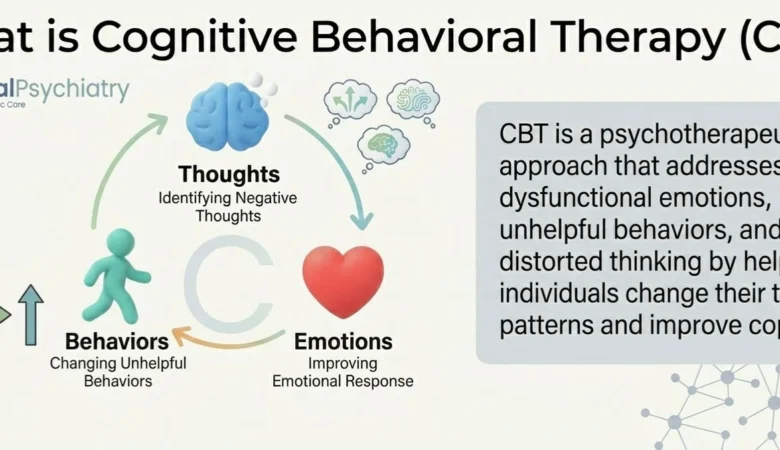
Mental health plays a major role in how we think, feel, and behave every day. Many people struggle with stress, anxiety, depression, and negative thoughts, and one of the most effective treatments for these challenges is Cognitive Behavioral Therapy (CBT). This guide explains what is cognitive behavioral therapy, its CBT meaning, and answers common questions like what is CBT therapy and what cognitive therapy is in a simple way so anyone can understand how it works and why it is used. While CBT is one of the most widely used approaches, it is also part of a broader field known as psychotherapy, which includes different treatment methods such as CBT, DBT, and psychodynamic therapy. Understanding the Concept Behind CBT Cognitive Behavioral Therapy is a structured form of talk therapy that focuses on the connection between thoughts, emotions, and behavior. When people ask what cognitive behavioral therapy is, the simple answer is that it is a method that helps individuals change negative thinking patterns to improve emotional well-being. The CBT meaning is based on the idea that our thoughts directly affect our feelings and actions. A basic definition is: CBT is a psychological approach that helps people change negative thinking patterns to improve emotional well-being and behavior. How CBT Works CBT works by breaking down the connection between thoughts, feelings, and actions and helping individuals replace negative cycles with healthier ones. It follows a simple model: Situation → Thoughts → Feelings → Behavior Steps: A situation triggers a thought That thought creates an emotional response The emotion influences behavior The behavior reinforces the thought Example: Situation: A friend doesn’t reply Thought: “They are ignoring me.” Feeling: Anxiety or sadness Behavior: Avoiding communication CBT helps replace this with a balanced thought: “They might be busy or unable to reply right now.” This is the practical foundation of what is cognitive behavioral therapy. How This Type of Therapy Works in Practice CBT is based on a structured cycle: Thoughts → Feelings → Actions When explaining what CBT therapy is, it refers to this structured process used in sessions. CBT works by identifying negative thoughts and replacing them with realistic ones, which improves emotional responses and behavior over time. This approach is also commonly compared within psychotherapy, where different methods like CBT, DBT, and psychodynamic therapy each focus on different aspects of mental health treatment. The Meaning Behind Cognitive and Behavioral Approaches The term CBT combines two important psychological methods: Cognitive approach: focuses on thoughts and beliefs Behavioral approach: focuses on actions and habits Together, they explain the CBT meaning, which is changing both thinking and behavior to improve mental health outcomes. Origins of Modern CBT Practices Cognitive Behavioral Therapy was developed by psychiatrist Aaron Beck in the 1960s. He discovered that many emotional problems come from automatic negative thoughts. This became the foundation of CBT, which is now one of the most widely used therapies in psychotherapy, alongside approaches like DBT and psychodynamic therapy. How Thoughts Influence Emotions and Actions CBT is built on the idea that situations do not directly cause emotional reactions; instead, interpretation matters more. Example: Situation: A friend doesn’t reply Thought: “They are ignoring me” Emotion: Anxiety or sadness Behavior: Avoiding communication CBT helps replace this thought with: “They might be busy.” This is a core explanation of what is cognitive behavioral therapy in daily life. Conditions That Can Improve with CBT This therapy is widely used for different mental health conditions, including: Anxiety disorders Depression Panic attacks OCD PTSD Phobias Stress-related problems Sleep difficulties Eating-related concerns Techniques Commonly Used in Sessions CBT uses practical tools such as: Identifying thinking patterns Reframing thoughts Gradual exposure Activity planning Journaling Relaxation skills What Happens During a Therapy Session CBT sessions are structured and goal-focused. A therapist may: Discuss current problems Identify thought patterns Explore emotional reactions Teach coping strategies Assign practice exercises This is how CBT therapy is applied in real clinical settings. Expected Duration of Treatment CBT is usually short-term therapy: 6 to 20 sessions It depends on severity, goals, and progress. Effectiveness of This Approach CBT is scientifically supported and highly effective for emotional disorders. It helps reduce: Anxiety Depression Stress Fear-based thinking Who Can Benefit from It CBT is suitable for: Children Teenagers Adults Older individuals It is also used for personal growth, not only clinical treatment. Digital and Online Therapy Options CBT is available online through apps and video sessions, making it accessible, private, and flexible. How It Differs from Other Therapies Unlike therapies that focus on past experiences, CBT focuses on present thinking patterns and practical solutions. Within psychotherapy, other approaches like DBT focus on emotional regulation, while psychodynamic therapy explores unconscious thoughts and past experiences. This broader understanding is explained in detail in Types of Psychotherapy: CBT, DBT, Psychodynamic & More Explained, where different therapy methods are compared. Combining Therapy with Medical Treatment In some cases, CBT is combined with medication for better results, especially in severe conditions like depression or OCD. Challenges People May Experience CBT can be challenging because it requires: Facing negative thoughts Practicing new behaviors Consistency Helpful Tips for Better Results Be honest with your therapist Practice regularly Stay consistent Be patient with progress Final Thoughts Cognitive Behavioral Therapy is a powerful and practical approach to improving mental health by helping people understand the connection between their thoughts, emotions, and behaviors. It clearly explains what is cognitive behavioral therapy, the CBT meaning, and how changing negative thinking patterns can lead to healthier emotional responses and better daily functioning. By focusing on present thoughts and actions, CBT gives individuals structured tools to manage stress, reduce anxiety, and improve overall mental well-being in a more active and solution-focused way. It also fits within the broader field of psychotherapy, which includes different evidence-based approaches like CBT, DBT (Dialectical Behavior Therapy), and psychodynamic therapy. Each of these methods works in a different way, but all aim to support emotional healing, improve coping skills, and help individuals build a healthier mindset depending on their personal

What is Psychotherapy? Complete Guide to Mental Health Therapy

  📞 Call Us Today: 914 570 9000 Psychotherapy is a professional way of helping people improve their mental and emotional well-being through guided conversations with a trained therapist. It focuses on understanding how a person thinks, feels, and behaves in different situations and helps them find healthier ways to deal with life challenges. In simple terms, psychotherapy is a healing process for the mind. Just like doctors treat physical illness, therapists help people take care of their mental health. It is based on communication, trust, and scientific techniques that support emotional recovery and personal growth. Many people today struggle with stress, anxiety, depression, or emotional confusion. Psychotherapy gives them a safe place where they can talk openly without fear of judgment. It helps people understand themselves better and improve their quality of life step by step. Understanding Psychotherapy in Simple Terms Mental health is just as important as physical health, but it is often ignored. Psychotherapy focuses on this area by helping individuals explore their inner thoughts and emotions. Instead of only focusing on symptoms, it tries to understand the root cause of emotional problems. For example, if someone feels constant sadness or stress, therapy helps explore why these feelings exist and how they can be managed in a healthy way. At this point, many people start asking what is psychotherapy, and the answer always comes back to one idea: it is a structured way of understanding the mind and improving emotional health through guided support. This process is not about giving advice only; it is about guiding a person to discover their own answers with professional support. Meaning and Purpose The idea behind psychotherapy is simple: every person goes through emotional difficulties at some point in life. These difficulties can affect thinking, behavior, relationships, and daily routine. Psychotherapy helps in organizing these thoughts and emotions. It allows a person to see their problems more clearly and respond to them in a balanced way instead of reacting emotionally or negatively. It is a structured process that uses psychological techniques to improve mental clarity and emotional stability. The main purpose is to help people live a more peaceful and meaningful life. Many experts describe psychotherapy as a bridge between emotional struggle and mental stability, helping people rebuild control over their thoughts and feelings. How It Works in Real Life In a typical therapy setting, a person talks with a trained mental health professional in a private and safe environment. The therapist listens carefully and helps the person understand their emotions and behavior patterns. Over time, the therapist and individual work together to identify negative thinking habits and replace them with healthier thoughts. This process also helps in improving self-awareness, which means understanding your own feelings and reactions better. For example, someone who feels anxious in social situations may slowly learn why this happens and how to manage it using practical techniques. This can lead to improved confidence and reduced fear over time. When people first explore what is psychotherapy, they often realize it is not about quick fixes, but about long-term mental growth and emotional balance. Why People Choose This Kind of Support People seek therapy for many different reasons. Some feel overwhelmed by stress at work or home, while others struggle with emotional pain from past experiences. Some simply want to understand themselves better. It is important to know that therapy is not only for serious mental illness. It is also useful for personal development and emotional balance. Many individuals use it to improve relationships, handle pressure, and build a more positive mindset. It gives them tools to deal with real-life challenges in a healthier way. Emotional Healing and Thinking Patterns One of the main goals of therapy is to improve how a person thinks and feels. Our thoughts have a strong impact on emotions and behavior. Negative thinking can lead to stress, sadness, or anxiety, while positive thinking can improve emotional well-being. Therapy helps people recognize harmful thought patterns and slowly change them. This does not happen instantly; it is a gradual process that requires time and effort. As a person learns to manage their thoughts better, they also begin to feel more stable and confident in their daily life. Confidential and Safe Environment A very important part of psychotherapy is privacy. Everything shared during sessions is kept confidential. This allows individuals to speak freely without fear. This safe environment helps people open up about their true feelings, which is often the first step toward healing. Many people find it easier to talk to a therapist than to friends or family because there is no judgment involved. Impact on Daily Life The benefits of therapy are not limited to emotional support. It also has a positive effect on everyday life. People often notice improvements in how they handle stress, communicate with others, and make decisions. They become more patient, calm, and emotionally balanced. Relationships also improve because individuals learn better communication skills and emotional understanding. Over time, these changes create a more stable and healthy lifestyle. Misunderstandings People Have There are many wrong beliefs about therapy that stop people from seeking help. Some think it is only for people who are “mentally weak,” but that is not true. Seeking help actually shows strength and self-awareness. Others believe talking cannot solve problems. However, guided conversation can change the way a person thinks and reacts to situations, which can have a powerful impact on mental health. Another common misunderstanding is that therapy gives instant solutions. In reality, it is a gradual process that takes time and consistency. Who Can Benefit from It Anyone can benefit from therapy, regardless of age or background. It is helpful for people who are dealing with stress, emotional pressure, or personal challenges. It is also useful for those who simply want to understand themselves better and improve their life skills. Whether someone is facing a major life difficulty or small emotional struggles, therapy can provide valuable support and guidance. What a Typical Session Feels

Suscríbase a nuestro Boletín

Formulario de suscripción

No sufra en silencio: póngase en contacto con nosotros hoy mismo para iniciar su camino hacia una vida más sana y feliz.

Información de contacto