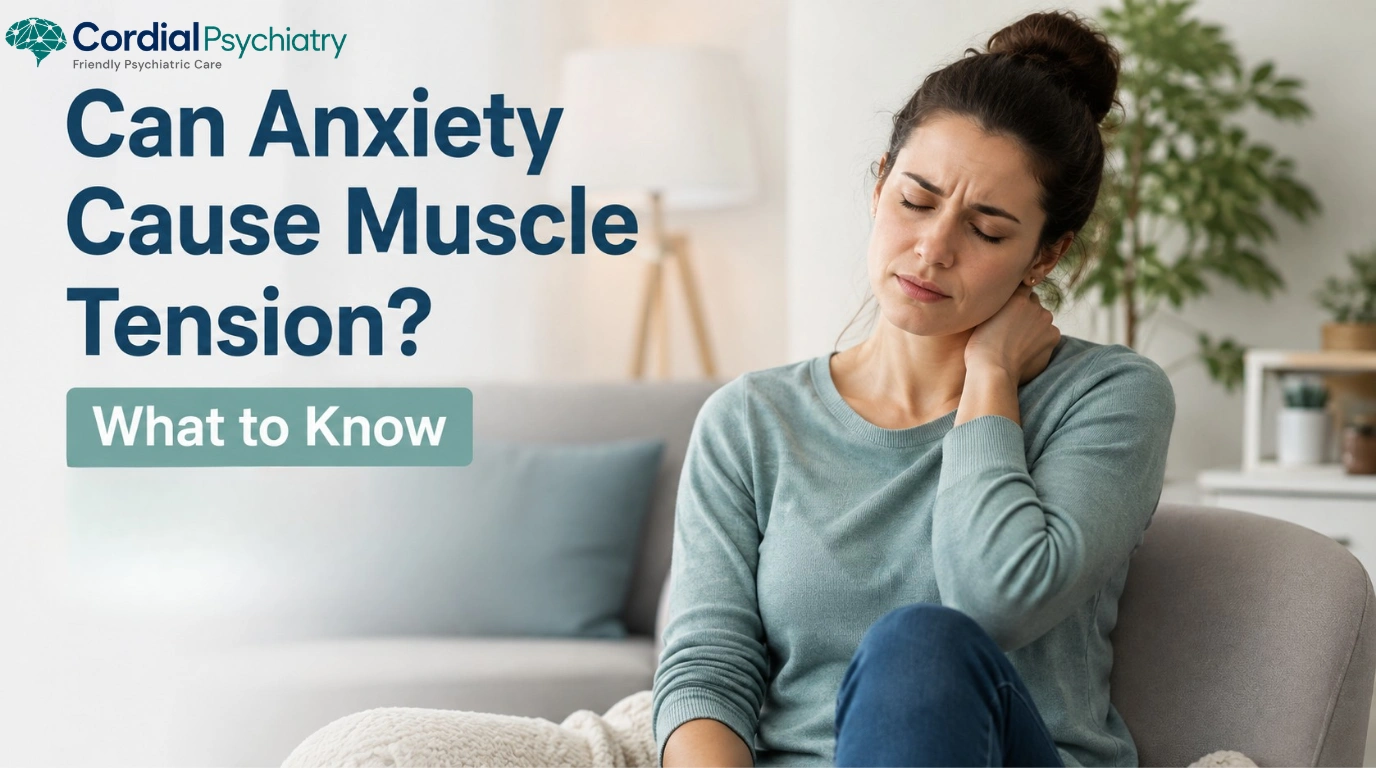
Can Anxiety Cause Muscle Tension? What to Know
Anxiety is often described as a feeling of worry, fear, or nervousness, but its effects are not limited to the mind. Anxiety can also create noticeable physical symptoms. Tight shoulders, a stiff neck, an aching back, and a clenched jaw are common examples.
So, can anxiety cause muscle tension? Yes. Anxiety can contribute to muscle tension because the body’s stress response prepares your muscles to react to a possible threat. This reaction can be helpful for a short time. However, when stress or anxiety continues, some muscles may remain tense even when there is no immediate danger.
The Mayo Clinic includes muscle tension and muscle aches among the possible physical symptoms of generalized anxiety disorder. Research on the body’s stress response also shows that psychological stress can activate nervous system and hormonal processes that prepare the body for action.
Understanding why this happens can make physical anxiety symptoms feel less confusing. It can also help you recognize when simple stress-management strategies may be useful and when persistent pain or tension should be evaluated by a healthcare professional.
Why Does Anxiety Cause Muscle Tension?
To understand muscle tension from anxiety, it helps to understand the body’s stress response.
When your brain believes that something may be threatening or stressful, it can activate the sympathetic nervous system. This is often called the “fight or flight” response. Your heart rate may increase, your breathing may become quicker, and your muscles may tighten because your body is preparing to respond.
This reaction does not only occur during physical danger. Difficult conversations, financial worries, work pressure, health concerns, relationship problems, or repeated worrying can also activate the stress response.
Research shows that the stress response involves several systems in the body, including the sympathetic nervous system and the hypothalamic-pituitary-adrenal, or HPA, axis. These systems help the body respond to a perceived challenge.
The problem develops when the body repeatedly enters this state without getting enough time to relax.
If you are constantly worried, you may unknowingly keep your shoulders raised, tighten your abdominal muscles, clench your teeth, or maintain tension in your back. Over time, anxiety causing muscle tension may lead to stiffness, soreness, headaches, or general discomfort.
This is one reason anxiety can feel like a physical condition rather than only an emotional one.
For a broader explanation of how anxiety can affect both emotional and physical health, Cordial Psychiatry also explains the symptoms and treatment options in Understanding Anxiety Disorders: Symptoms and Treatment.
What Does Muscle Tension From Anxiety Feel Like?
Muscle tension from anxiety does not feel exactly the same for everyone. Some people experience mild tightness, while others notice ongoing soreness or stiffness.
The discomfort may come and go depending on your stress level. You may notice that your muscles become tighter during stressful situations and feel better when you are relaxed, distracted, sleeping well, or taking time away from stressful activities.
Common sensations can include:
- Tight or stiff muscles
- Aching muscles
- Neck and shoulder discomfort
- Jaw clenching
- Back tightness
- Tension-type headaches
- Muscle fatigue
- Feeling unable to fully relax
- General body stiffness
Sometimes people do not realize they are tightening their muscles. For example, someone working under pressure may keep their shoulders slightly raised for several hours. Another person may clench their jaw while concentrating or worrying.
Studies examining anxiety and muscle activity have found links between anxiety, stress, and increased or prolonged muscle tension in some people, although the relationship is complex and does not occur identically in everyone.
This distinction matters. Anxiety can contribute to tension, but muscle pain should not automatically be blamed on anxiety.
Where Does Anxiety-Related Muscle Tension Usually Occur?
If you are wondering does anxiety cause muscle tension throughout the entire body, it can, but some areas tend to feel tense more often than others.
Neck and Shoulders
The neck and shoulders are common areas for stress-related tightness. People may unconsciously raise or tighten their shoulders when they feel worried.
Long periods of sitting, poor posture, computer use, and phone use can also contribute to discomfort in this area. Anxiety may make existing tension feel more noticeable.
Jaw and Face
Anxiety may lead to jaw clenching or tightening the muscles around the face.
Some people notice this mainly during stressful situations. Others may clench their jaw without realizing it, particularly while concentrating or sleeping.
Back
The upper and lower back may also become uncomfortable when muscles remain tense.
Stress can combine with long periods of sitting, poor posture, limited movement, or physical strain, making it difficult to determine whether anxiety is the only cause.
Chest and Abdominal Muscles
Anxiety may cause people to tighten the muscles around the chest or stomach.
At the same time, anxiety may change breathing patterns. Faster or shallower breathing can make the chest feel uncomfortable or tight.
However, new, severe, or unexplained chest symptoms should not automatically be assumed to be anxiety. A healthcare professional can help determine the cause.
Can Anxiety Cause Muscle Tension Every Day?
Yes, anxiety causing muscle tension can become frequent when anxiety itself is persistent.
A stressful event may create temporary muscle tightness that disappears once the event is over. Chronic anxiety can be different because the nervous system may repeatedly respond to worries throughout the day.
The cycle can look like this:
Worry or stress → physical tension → discomfort → concern about the discomfort → more anxiety → additional tension
This can become particularly noticeable for people who pay close attention to physical sensations.
For example, tight neck muscles may cause discomfort. The person may then worry that something serious is wrong. That worry increases anxiety, which creates more physical tension.
Recognizing this pattern does not mean the physical discomfort is imaginary. The tension and pain can be real even when anxiety is contributing to them.
Cordial Psychiatry discusses this wider connection between emotional and bodily health in How Mental Health Affects Physical Wellness.
How Long Can Muscle Tension From Anxiety Last?
There is no single timeline for muscle tension from anxiety.
For some people, tightness lasts only during a stressful situation. For others, it may continue for hours or return repeatedly throughout the day.
Persistent anxiety can make tension feel more constant because muscles may not fully return to a relaxed state between periods of stress.
Your daily habits also matter. Poor sleep, limited physical activity, long periods at a desk, dehydration, repetitive movements, and posture problems can contribute to muscle discomfort alongside anxiety.
This is why treating every muscle ache as an anxiety symptom can be misleading.
If your tension continues for a long time, becomes worse, limits movement, interrupts sleep, follows an injury, or occurs with other concerning symptoms, consider discussing it with a qualified healthcare professional.
How Can You Reduce Muscle Tension Caused by Anxiety?
If anxiety appears to be contributing to muscle tension, addressing both your physical tension and your anxiety may help.
Practice Slow, Controlled Breathing
Anxiety can make breathing faster and shallower.
Taking slower, comfortable breaths can help signal that the immediate stress has passed. Rather than forcing very deep breaths, focus on breathing gently and steadily.
Notice When You Are Tensing Your Body
Body awareness can be surprisingly useful.
Several times during the day, check your:
- Jaw
- Shoulders
- Hands
- Forehead
- Stomach
- Neck
Ask yourself whether these muscles need to be as tight as they currently are.
Simply noticing unconscious tension may help you relax muscles that have been contracted for a long period.
Try Progressive Muscle Relaxation
Progressive muscle relaxation involves intentionally tightening and then relaxing different muscle groups.
The goal is to become better at recognizing the difference between tension and relaxation.
Research has examined muscle relaxation techniques as an approach for reducing tension and anxiety symptoms.
Stay Physically Active
Regular movement can help prevent stiffness caused by sitting in one position for long periods.
Walking, gentle stretching, and other appropriate physical activities may also provide a healthy way to manage everyday stress.
Choose movement that feels comfortable rather than trying to exercise through unexplained or significant pain.
Improve Your Sleep Routine
Poor sleep can make emotional and physical stress harder to manage.
Try to keep a reasonably consistent sleep schedule, reduce unnecessary screen exposure before bed, and create a comfortable sleep environment.
Better sleep will not solve every anxiety problem, but it can support both physical recovery and emotional regulation.
When Should You Talk to a Mental Health Professional?
Occasional anxiety is a normal part of life. However, professional support may be helpful when anxiety becomes difficult to control or begins interfering with everyday activities.
Consider speaking with a qualified mental health professional if worry regularly affects your sleep, concentration, relationships, school, work, or ability to enjoy normal activities.
A clinician can look at the complete picture rather than focusing on one symptom.
This is particularly important because anxiety causing muscle tension may occur alongside other anxiety symptoms such as restlessness, irritability, difficulty concentrating, sleep problems, and feeling unable to relax. Muscle tension and aches are also recognized physical symptoms that may occur with generalized anxiety disorder.
Treatment depends on the individual. Depending on the situation, a professional may recommend psychotherapy, lifestyle changes, medication, or a combination of approaches.
When Muscle Tension May Have Another Cause
Although the answer to can anxiety cause muscle tension is yes, anxiety is only one possible explanation.
Muscle tension or pain may also be related to posture, physical activity, repetitive movements, injuries, sleep position, certain medical conditions, or other factors.
This is why self-diagnosing persistent physical symptoms based only on internet information is not a good approach.
Speak with a healthcare professional if the discomfort is severe, unexplained, continues despite reducing stress, becomes progressively worse, follows an injury, or significantly limits normal movement.
A medical evaluation can help rule out other causes while also considering whether stress or anxiety may be contributing.
Final Thoughts
So, does anxiety cause muscle tension? It certainly can.
The body’s stress response prepares muscles for action, which can create temporary tightness. When anxiety becomes frequent or persistent, muscles may stay tense for longer periods, contributing to stiffness, soreness, headaches, jaw tension, or neck and back discomfort.
However, muscle tension from anxiety should not become an automatic explanation for every physical symptom. Anxiety, posture, activity, sleep, injuries, and medical conditions can overlap.
Pay attention to patterns. If tension appears during periods of worry and improves when stress decreases, anxiety may be contributing. If symptoms continue, worsen, or interfere with normal life, professional evaluation is the safer next step.
Managing anxiety is not simply about making muscles relax. It involves understanding the thoughts, behaviors, physical reactions, and daily circumstances that may be keeping the body’s stress response active.
Frequently Asked Questions
Can anxiety really make your muscles hurt?
Yes. Anxiety causing muscle tension may leave muscles feeling tight, tired, stiff, or sore. Anxiety activates the body’s stress response, and muscles can tighten as part of that reaction. Persistent discomfort, however, should be evaluated rather than automatically attributed to anxiety.
Which muscles are most affected by anxiety?
The neck, shoulders, jaw, face, back, and abdominal area are commonly reported areas of tension. The location varies from person to person depending on posture, habits, stress patterns, and other physical factors.
Does anxiety cause muscle tension even when I do not feel anxious?
It can. Some people become so used to ongoing stress that they notice the physical symptoms before recognizing emotional anxiety. You may also unconsciously clench your jaw, raise your shoulders, or tighten other muscles during concentration or worry.
How do I know if my muscle tension is from anxiety?
There is no single test you can use at home to confirm the cause. Muscle tension from anxiety may become stronger during stressful periods and improve as you relax. Persistent, severe, unusual, or worsening symptoms should be discussed with a healthcare professional.
Can anxiety cause neck and shoulder tension?
Yes. If you are asking can anxiety cause muscle tension specifically in the neck and shoulders, these are among the areas where people commonly notice stress-related tightness. Posture, computer use, and other physical factors can contribute at the same time.
Can reducing anxiety help muscle tension?
It may. When anxiety contributes to the problem, strategies such as relaxation exercises, appropriate physical activity, better sleep habits, psychotherapy, and other professionally recommended treatments may reduce both emotional stress and physical tension.
Should I see a doctor for anxiety-related muscle tension?
Consider professional evaluation if the symptoms are persistent, severe, worsening, unexplained, limiting your movement, disturbing your sleep, or affecting your daily activities. A healthcare professional can assess both physical and psychological factors rather than assuming anxiety is the only cause.