
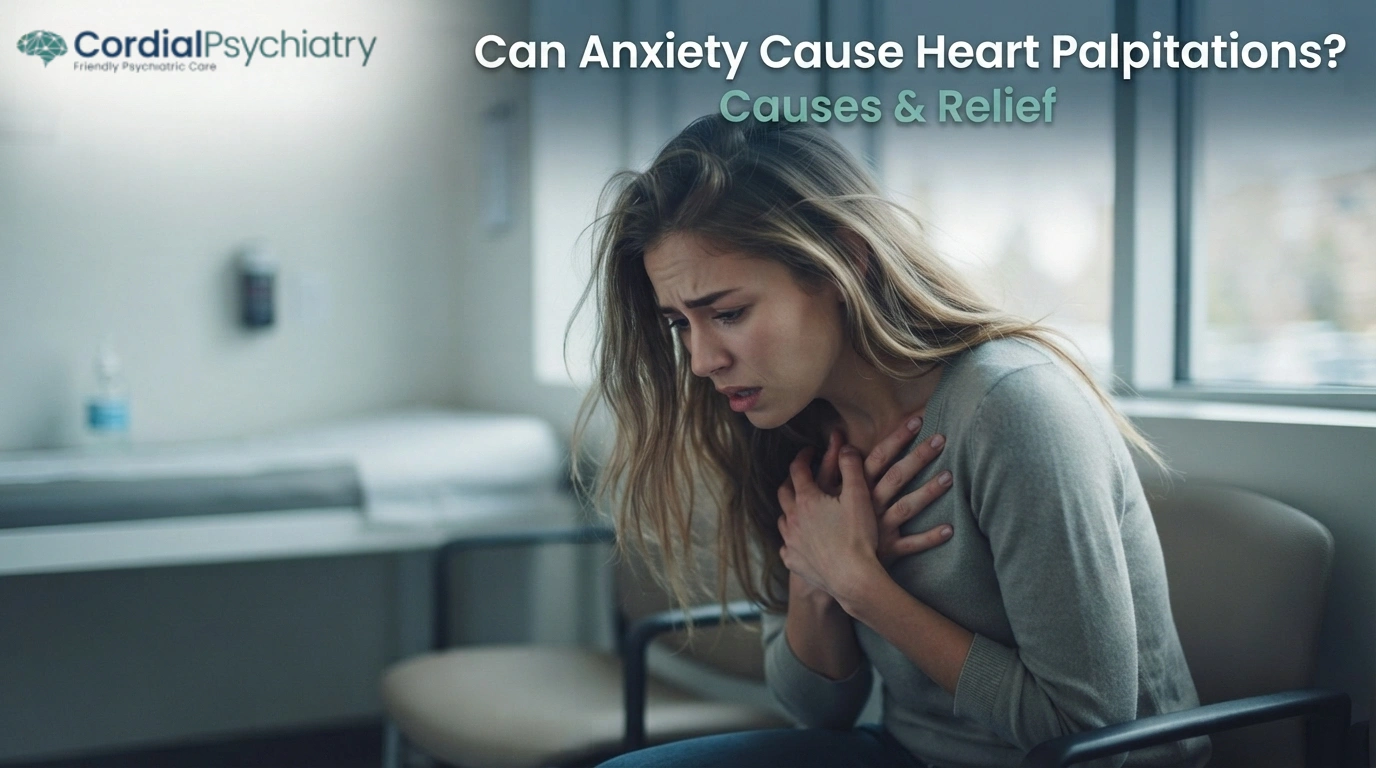
Can Anxiety Cause Heart Palpitations? Causes & Relief
Feeling your heart suddenly race, pound, flutter, or skip a beat can be frightening. The sensation may appear during a stressful moment, while you are resting, or even when you are trying to sleep. It can quickly make you wonder whether something is wrong with your heart.
So, can anxiety cause heart palpitations? Yes. Anxiety can activate the body’s stress response, increase your heart rate, and make each heartbeat feel stronger or more noticeable. Stress, panic attacks, poor sleep, caffeine, and constant worry may all contribute to these sensations.
Anxiety-related palpitations are often temporary and not dangerous. However, you should not automatically assume that every unusual heartbeat is caused by anxiety. Heart rhythm disorders, thyroid conditions, anemia, medication side effects, dehydration, and other health problems can produce similar symptoms.
Understanding what anxiety palpitations feel like, why they happen, and when to seek medical care can help you respond safely.
What Do Heart Palpitations Feel Like?
Heart palpitations are sensations that make you unusually aware of your heartbeat. They may occur in your chest, throat, or neck.
People commonly describe them as:
- A racing or fast heartbeat
- Pounding in the chest
- Fluttering or trembling
- A skipped heartbeat
- An extra or forceful beat
- A flip-flopping feeling
- An irregular heartbeat
- A brief pause followed by a strong beat
Palpitations may last only a few seconds, return several times, or continue for several minutes. They can happen while you are active, sitting quietly, lying in bed, or waking from sleep.
Some people also experience sweating, shakiness, dizziness, chest tightness, nausea, or shortness of breath. These symptoms can occur during anxiety or panic, but they may also have other medical causes.
Learning how anxiety can affect your everyday life can help you recognize how emotional stress may influence sleep, concentration, energy, physical comfort, and daily habits.
How Can Anxiety Cause Heart Palpitations?
When you feel anxious, your brain may interpret a thought, situation, or physical sensation as a possible threat. This activates the autonomic nervous system and prepares your body to protect itself.
This process is often called the fight-or-flight response.
Stress Hormones Increase Your Heart Rate
During the stress response, your body releases hormones such as adrenaline. These hormones prepare your muscles and organs for fast action.
As a result:
- Your heart may beat faster.
- Each contraction may feel stronger.
- Your breathing may become quicker.
- Your muscles may tighten.
- You may become more alert to physical sensations.
These changes are useful during real danger. However, they can also happen because of work stress, health worries, financial pressure, relationship problems, traumatic memories, or anxious thoughts.
Strong emotional reactions, including anxiety and panic attacks, are recognized causes of palpitations. Stimulants, hormonal changes, thyroid problems, fever, exercise, and certain medicines may also trigger them.
Anxiety Makes You More Aware of Your Heartbeat
Your heart beats throughout the day without normally demanding your attention. Anxiety can change that.
When you are worried about your health, you may repeatedly check your pulse, monitor your chest, or wait for the next unusual beat. This increased attention can make normal changes in heart rhythm feel much stronger.
A common cycle may develop:
- You notice a strong or skipped heartbeat.
- You worry that something is wrong.
- Your body releases more adrenaline.
- Your heartbeat becomes faster or stronger.
- You become even more frightened.
The symptom is real, but fear can intensify it.
Changes in Breathing Can Add to the Sensation
Anxiety may cause rapid, shallow, or irregular breathing. Some people begin overbreathing without realizing it.
Changes in breathing can lead to dizziness, tingling, chest discomfort, lightheadedness, and a feeling that you cannot get enough air. These sensations may then make the palpitations feel more dangerous.
People who experience both symptoms may find it useful to read Can Anxiety Cause Dizziness? for a clearer explanation of breathing changes, lightheadedness, and the stress response.
Can Heart Palpitations Be Caused by Anxiety or a Heart Problem?
Many people ask, can heart palpitations be caused by anxiety, or should they always be treated as a heart problem?
Anxiety is one possible cause, but it is not the only one. Palpitations may also be connected to:
- Caffeine or energy drinks
- Nicotine
- Alcohol
- Dehydration
- Poor sleep
- Fever
- Low blood sugar
- Anemia
- Thyroid disorders
- Hormonal changes
- Strenuous exercise
- Cold and cough medicines
- Asthma medicines
- Some psychiatric medications
- Abnormal heart rhythms
Anxiety-related palpitations often appear during stress, worry, fear, or panic. They may improve as you calm down, regulate your breathing, or move away from the trigger.
A heart rhythm problem may occur without an emotional trigger. It may begin abruptly, continue despite feeling emotionally calm, or happen during physical activity.
However, these are only general patterns. Symptoms alone cannot reliably confirm the cause. A healthcare professional may need to check your pulse, review your medicines, perform an electrocardiogram, or arrange longer heart monitoring.
Do not diagnose yourself based only on how the palpitations feel.
Can Anxiety Cause Heart Palpitations for Days?
Yes, can anxiety cause heart palpitations for days is a reasonable concern because ongoing anxiety can create repeated episodes over an extended period.
This does not always mean the heart is racing continuously for several days. More commonly, the sensations come and go throughout the day because the nervous system remains highly alert.
Persistent palpitations may be influenced by:
- Chronic stress
- Repeated panic symptoms
- Poor-quality sleep
- Excessive caffeine
- Dehydration
- Skipped meals
- Constant body checking
- Fear of another episode
- Ongoing emotional pressure
For example, one palpitation may cause you to worry about your heart. That fear keeps your body tense and makes you monitor each heartbeat. You may then notice more sensations, especially when lying quietly or trying to sleep.
Even when anxiety appears to be the likely trigger, palpitations that keep returning, become more frequent, or last longer than a few minutes should be discussed with a healthcare professional.
Can Anxiety Cause Heart Palpitations Every Day?
Ongoing stress or an anxiety disorder may cause some people to experience palpitations daily. Therefore, the answer to can anxiety cause heart palpitations everyday is yes, but daily symptoms still deserve proper assessment.
Frequent symptoms may indicate that your nervous system is repeatedly entering a heightened stress state. Your daily habits may also contribute.
Common factors include:
- Drinking several cups of coffee
- Using energy drinks or nicotine
- Sleeping fewer hours than your body needs
- Working without enough breaks
- Skipping meals
- Not drinking enough water
- Taking stimulant medications
- Living with untreated anxiety or panic disorder
Daily palpitations should not simply be accepted as “normal anxiety.” A clinician can help rule out physical causes and determine whether anxiety treatment may be appropriate.
Repeated, unexpected panic attacks accompanied by a racing heart, breathing difficulty, dizziness, sweating, and intense fear may be related to panic disorder. Read What Is Panic Disorder? Symptoms, Causes & Treatment to understand how panic attacks differ from ordinary stress.
How to Calm Heart Palpitations Caused by Anxiety
When palpitations begin, focus on calming your stress response rather than fighting the heartbeat.
Slow Your Breathing
Sit in a comfortable position and loosen tight clothing.
Breathe gently through your nose. Allow your stomach to expand instead of lifting your shoulders. Then breathe out slowly, making your exhale slightly longer than your inhale.
Avoid repeatedly taking large, forceful breaths. Over breathing may increase dizziness and chest discomfort.
Use a Grounding Exercise
Bring your attention away from your heartbeat and toward your surroundings.
Identify:
- Five things you can see
- Four things you can touch
- Three things you can hear
- Two things you can smell
- One thing you can taste
Grounding does not treat an abnormal heart rhythm, but it may interrupt the anxiety cycle when fear is making the sensation stronger.
Relax Physical Tension
Lower your shoulders, relax your jaw, and unclench your hands. Slowly release tension from your chest, neck, arms, and stomach.
A tense body can continue sending danger signals to the brain. Relaxing your muscles may help your nervous system settle.
Reduce Common Triggers
Pay attention to whether your palpitations worsen after caffeine, energy drinks, alcohol, nicotine, poor sleep, dehydration, or skipped meals.
Consider keeping a simple symptom diary. Record:
- When the episode started
- How long it lasted
- What you were doing
- Your stress level
- Foods and drinks consumed
- Medicines or supplements taken
- Other symptoms you noticed
This information can help a clinician identify patterns.
Address the Underlying Anxiety
Immediate calming exercises may help during an episode, but recurring symptoms often require a longer-term plan.
Treatment may include psychotherapy, cognitive behavioral therapy, stress-management training, better sleep habits, regular physical activity, or medication prescribed by a qualified professional.
Cognitive behavioral therapy can help you challenge catastrophic thoughts, reduce constant body checking, and respond differently to uncomfortable physical sensations. The American Heart Association also recommends regular activity, adequate sleep, social connection, and relaxation practices as part of healthy stress management.
Do not stop a prescribed medicine because you suspect it is causing palpitations without speaking to the professional who prescribed it.
When Should You Seek Medical Help?
Arrange a medical appointment if your palpitations:
- Keep returning
- Are happening more frequently
- Last longer than a few minutes
- Continue when you feel calm
- Wake you repeatedly from sleep
- Occur during exercise
- Began after starting a new medicine
- Affect your normal activities
- Are accompanied by unusual weakness
- Occur with a personal or family history of heart disease
Call 911 or seek emergency medical care if palpitations occur with:
- Chest pain or pressure
- Severe shortness of breath
- Fainting or loss of consciousness
- Severe dizziness or confusion
- Sudden weakness
- Heavy sweating with chest discomfort
- Pain spreading to the arm, back, neck, or jaw
Palpitations accompanied by chest pain, breathing difficulty, dizziness, confusion, or fainting require urgent medical evaluation because these symptoms may indicate a serious heart problem.
How Are Frequent Palpitations Evaluated?
A healthcare professional may ask when the palpitations started, how frequently they occur, how long they last, and whether they happen during stress, rest, sleep, or exercise.
The evaluation may include:
- Medical and family history
- Physical examination
- Pulse and blood pressure checks
- Electrocardiogram
- Blood tests
- Thyroid testing
- Review of medicines and supplements
- Holter or event monitoring
- Mental health assessment
A mental health assessment does not mean that the symptoms are being dismissed. Physical and psychological causes can overlap, and both should be considered.
The goal is to rule out urgent medical conditions and identify the most appropriate treatment.
Final Thoughts
So, can anxiety cause heart palpitations? Yes. Anxiety can activate the stress response, increase the strength or speed of your heartbeat, change your breathing, and make you highly aware of normal body sensations.
Anxiety-related palpitations often improve when the nervous system becomes calmer. Breathing exercises, grounding, adequate sleep, hydration, reduced caffeine, and professional anxiety treatment may help.
However, new, frequent, prolonged, or unexplained palpitations should be medically assessed. Never assume that chest pain, fainting, severe breathlessness, or persistent irregular heartbeats are caused only by anxiety.
FAQs
Can anxiety cause heart palpitations while resting?
Yes. Anxiety palpitations can occur while sitting, lying down, or trying to sleep. They may feel more noticeable during quiet moments because there are fewer distractions. However, recurring palpitations at rest should be discussed with a healthcare professional.
How long do anxiety heart palpitations last?
They may last a few seconds or several minutes. Some people experience repeated episodes throughout the day when stress remains high. Symptoms that are prolonged, frequent, or worsening need medical evaluation.
How do I know whether my palpitations are from anxiety?
Anxiety may be contributing if the palpitations appear during worry, fear, stress, or panic and improve when you become calmer. However, symptoms alone cannot confirm the cause. A medical examination may be needed to rule out heart rhythm problems and other conditions.
Can anxiety cause skipped heartbeats?
Anxiety may make skipped or extra beats more noticeable. Stress hormones, caffeine, dehydration, and poor sleep can also influence heartbeat awareness. Frequent skipped beats should be assessed by a healthcare professional.
Why are my heart palpitations worse at night?
Palpitations may feel stronger at night because you are lying quietly and paying more attention to your heartbeat. Evening caffeine, alcohol, poor sleep, stress, and certain sleeping positions may also contribute.
Can a panic attack cause a racing heart?
Yes. A racing or pounding heart is a common physical symptom of a panic attack. It may occur with sweating, trembling, dizziness, chest discomfort, nausea, breathlessness, and intense fear.
What is the fastest way to calm anxiety palpitations?
Sit somewhere safe, breathe slowly, relax your shoulders and jaw, and direct your attention toward your surroundings. Avoid caffeine and nicotine during the episode. Seek urgent medical help if you also have chest pain, fainting, severe breathlessness, or severe dizziness.
Should I see a psychiatrist for anxiety palpitations?
A psychiatrist or therapist may help when anxiety, panic attacks, health fears, or repeated body checking are contributing to the symptoms. You should also speak with a medical professional to rule out physical causes, particularly when the palpitations are new, frequent, prolonged, or unexplained.
