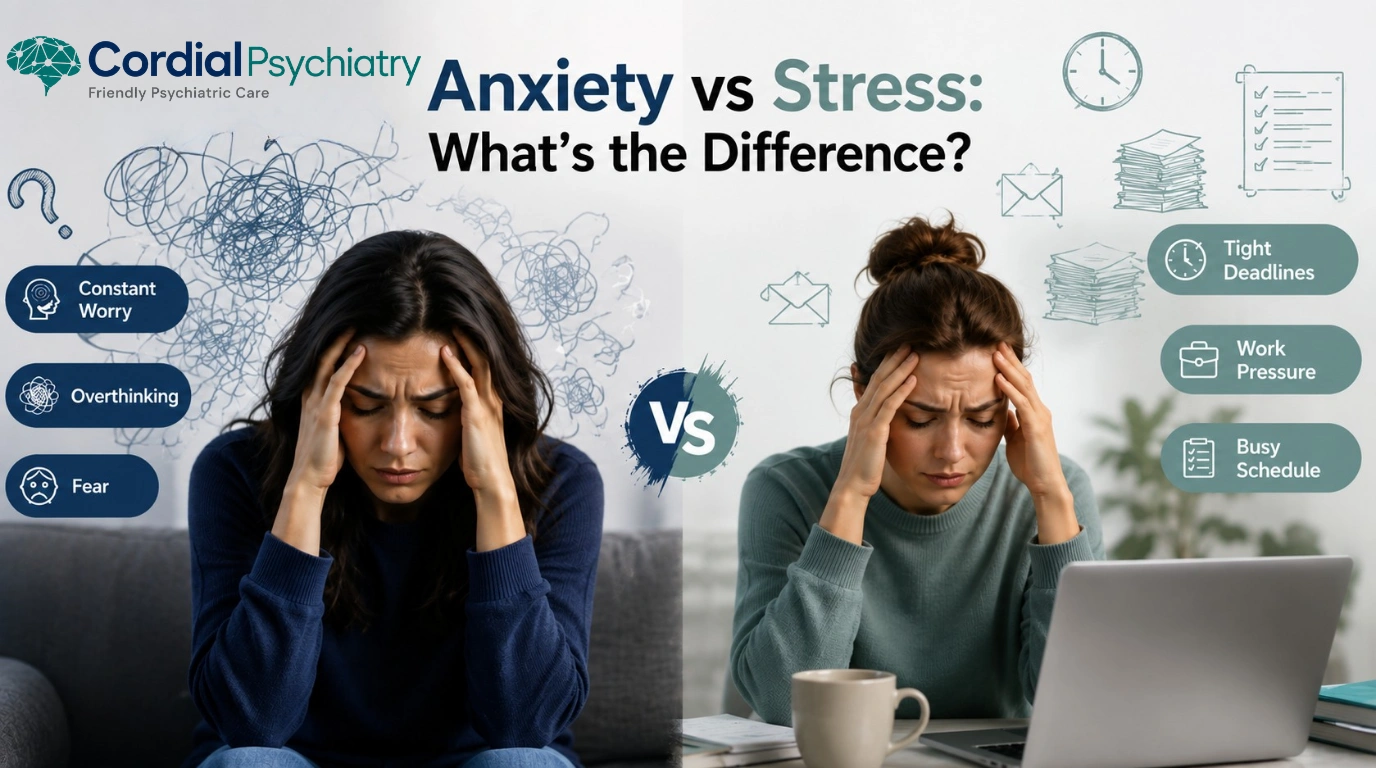
Anxiety vs Stress: What’s the Difference?
Everyone experiences difficult emotions at some point in life. Feeling overwhelmed before an important event, worrying about responsibilities, or dealing with pressure at work can all create emotional strain. Two terms that are often used interchangeably during these moments are stress and anxiety. However, anxiety vs stress: what’s the difference is an important question because these experiences affect the mind and body in different ways.
While stress is usually a response to an identifiable challenge or pressure, anxiety can continue even when there is no immediate threat or problem. Understanding these differences can help you recognize what you are experiencing and decide when professional support may be helpful.
At Cordial Psychiatry, mental health professionals evaluate symptoms, personal history, and daily challenges to help individuals understand their emotional well-being and find appropriate treatment approaches.
What Is the Difference Between Stress and Anxiety?
Many people ask, what is the difference between stress and anxiety because both conditions can cause similar physical and emotional symptoms. Stress and anxiety may both lead to racing thoughts, difficulty sleeping, muscle tension, irritability, and trouble concentrating. However, the main difference is usually the source and duration of these feelings.
Stress is commonly connected to an external situation. For example, a busy work schedule, financial concerns, relationship difficulties, or a major life change may trigger stress. Once the situation improves or the challenge is resolved, stress often decreases.
Anxiety is more related to persistent worry, fear, or nervousness that may continue even after the original stressor has ended. Anxiety can involve anticipating future problems, feeling unsafe without a clear reason, or experiencing intense fear that interferes with daily activities.
In simple terms:
- Stress is often a reaction to a current challenge.
- Anxiety may continue because of ongoing worry or fear about possible future events.
Understanding this difference is the first step toward finding the right coping strategies and treatment options.
Is Stress and Anxiety the Same Thing?
A common question is, is stress and anxiety the same thing? The answer is no. Although they share some symptoms, they are different mental health experiences.
Stress is a normal response that helps the body react to demanding situations. In short periods, stress can even be helpful because it can increase focus, motivation, and energy. For example, stress before an exam or presentation may encourage preparation and attention.
Anxiety becomes concerning when feelings of fear or worry become excessive, difficult to control, or continue without a clear reason. Persistent anxiety may affect relationships, work performance, sleep, and overall quality of life.
For some people, ongoing stress can contribute to anxiety symptoms. However, not everyone who experiences stress develops an anxiety disorder.
How Stress and Anxiety Affect the Brain and Body
Both stress and anxiety activate the body’s natural alarm system. When the brain senses danger or pressure, it can trigger physical responses such as increased heart rate, faster breathing, and muscle tension.
During anxiety, changes in brain activity can influence how a person processes fear and uncertainty. You can learn more about this connection in our guide on what happens in the brain during anxiety.
Common physical symptoms of stress and anxiety may include:
- Increased heart rate
- Headaches
- Muscle tension
- Fatigue
- Sleep problems
- Changes in appetite
- Difficulty concentrating
Although these symptoms overlap, anxiety often involves stronger emotional responses such as excessive fear, constant worry, or avoidance of certain situations.
Does Anxiety Cause Stress?
Another common question is, does anxiety cause stress? Anxiety and stress can influence each other. When someone experiences ongoing anxiety, everyday situations may feel more stressful. Constant worry can increase emotional pressure and make normal challenges feel overwhelming.
For example, someone with anxiety may worry about making mistakes at work. That worry can create stress, which may then increase anxiety symptoms further. This cycle can become difficult to manage without effective coping strategies.
Learning healthy ways to manage anxiety, such as therapy, relaxation techniques, lifestyle changes, and professional guidance, can help break this cycle.
Key Differences Between Anxiety and Stress
Understanding the main differences can make it easier to identify what you may be experiencing.
| Stress | Anxiety |
|---|---|
| Usually caused by an external situation | May occur without a clear trigger |
| Often improves when the problem is resolved | Can continue even after stress decreases |
| Short-term response is common | May become long-lasting |
| Can improve performance in some situations | May interfere with daily activities |
| Focuses on current challenges | Often involves future worries or fears |
Both stress and anxiety deserve attention, especially when symptoms begin affecting your personal or professional life.
Common Signs of Stress
Stress symptoms can affect emotions, thoughts, and physical health. Common signs include:
- Feeling overwhelmed
- Irritability or frustration
- Trouble relaxing
- Low energy
- Difficulty sleeping
- Feeling pressured by responsibilities
- Changes in mood
Temporary stress is a normal part of life. However, chronic stress may contribute to emotional exhaustion and increase the risk of other mental health concerns.
Common Signs of Anxiety
Anxiety symptoms may include:
- Excessive worrying
- Feeling restless or unable to relax
- Fear that feels difficult to control
- Avoiding certain situations
- Panic symptoms
- Difficulty concentrating
- Feeling constantly alert or on edge
Some anxiety experiences are connected to specific conditions, such as social anxiety disorder, panic disorder, phobias, OCD, or PTSD.
For example, people experiencing intense fear in social situations may benefit from learning about social anxiety disorder causes and CBT treatment.
Treatment Options for Stress and Anxiety
Understanding anxiety vs stress: what’s the difference is helpful, but knowing how to manage these experiences is equally important. The right approach depends on the severity of symptoms, how long they have been present, and how much they affect daily life.
For mild stress, lifestyle changes and self-care strategies may provide relief. However, persistent anxiety or overwhelming stress may require professional support from a mental health provider.
Ways to Manage Stress
Stress management focuses on reducing pressure, improving emotional balance, and developing healthier responses to challenges.
Helpful strategies may include:
1. Maintain Healthy Daily Habits
Regular sleep, balanced nutrition, physical activity, and relaxation practices can support better emotional regulation. Small lifestyle changes can improve the body’s ability to handle stressful situations.
2. Practice Relaxation Techniques
Deep breathing exercises, mindfulness, meditation, and grounding techniques can help calm the body’s stress response.
3. Improve Time Management
Feeling overloaded can increase stress levels. Creating realistic goals, prioritizing tasks, and setting healthy boundaries may reduce daily pressure.
4. Seek Support
Talking with trusted family members, friends, or a mental health professional can help individuals process difficult emotions and develop effective coping skills.
Treatment Options for Anxiety
When anxiety becomes persistent or begins interfering with daily life, professional treatment may be beneficial. Mental health providers may recommend therapy, lifestyle changes, medication management, or a combination of approaches.
Psychotherapy is one of the most common treatments for anxiety. It helps individuals understand thoughts, emotions, behaviors, and triggers that contribute to anxiety symptoms.
You can learn more about the process in our guide on what is psychotherapy and how it supports mental health.
Cognitive Behavioral Therapy (CBT)
Cognitive Behavioral Therapy (CBT) is a widely used approach for anxiety treatment. CBT helps people identify unhelpful thought patterns and replace them with healthier ways of thinking and responding.
Learn more about what is cognitive behavioral therapy (CBT) and how it can help manage anxiety-related concerns.
Exposure Therapy
For certain anxiety conditions, exposure therapy may help individuals gradually face fears in a safe and controlled environment. This approach is commonly used for phobias, panic symptoms, and some anxiety disorders.
Read more about what is exposure therapy, its benefits, and techniques.
Medication Support
In some cases, a psychiatrist may recommend medication as part of a comprehensive treatment plan. Medication decisions are based on individual symptoms, medical history, and treatment goals.
A psychiatrist can evaluate symptoms and discuss whether medication management or other treatment options may be appropriate.
When Should You Seek Help for Stress or Anxiety?
Occasional stress and worry are normal parts of life. However, professional support may be helpful when symptoms become difficult to manage or begin affecting everyday activities.
Consider reaching out to a mental health professional if you experience:
- Constant worry that feels difficult to control
- Anxiety that affects work, school, or relationships
- Problems sleeping because of stress or fear
- Avoidance of important activities or situations
- Frequent panic symptoms
- Feeling unable to cope with daily responsibilities
A mental health evaluation can help determine whether symptoms are related to normal stress, anxiety, or another underlying concern.
Can Stress Turn Into an Anxiety Disorder?
Many people wonder whether ongoing stress can develop into anxiety. While stress does not always cause an anxiety disorder, long-term stress can increase emotional strain and may contribute to anxiety symptoms in some individuals.
Factors such as genetics, personal experiences, trauma, environment, and coping skills can influence how someone responds to stress.
For individuals experiencing trauma-related anxiety, professional treatment approaches may help address underlying causes. Learn more about the impact of trauma on mental health.
How Therapy Helps With Anxiety and Stress
Therapy provides a structured environment where individuals can explore emotions, identify triggers, and develop healthier coping strategies.
Different therapy approaches may be recommended depending on a person’s needs, including:
- Cognitive Behavioral Therapy (CBT)
- Psychodynamic therapy
- Dialectical Behavior Therapy (DBT)
- Humanistic therapy
- Integrative psychotherapy
You can explore different approaches through our guide on types of psychotherapy and mental health treatment options.
Therapy is not only about managing symptoms. It can also help people understand patterns, improve emotional regulation, and build long-term mental wellness skills.
How Cordial Psychiatry Supports Anxiety and Stress Treatment
At Cordial Psychiatry, treatment begins with understanding each person’s unique experiences, symptoms, and goals. Mental health care is not one-size-fits-all, which is why providers consider personal history, lifestyle factors, and individual concerns when developing treatment plans.
A comprehensive approach may include psychiatric evaluation, psychotherapy recommendations, medication management when appropriate, and ongoing support.
If anxiety or stress is affecting your quality of life, working with a qualified mental health professional can provide guidance and support throughout your mental health journey.
Final Thoughts: Understanding Anxiety vs Stress
Knowing anxiety vs stress: what’s the difference can help you better understand your mental health needs. While stress is a common response to life challenges, anxiety involves persistent worry or fear that may require additional support.
Both experiences are treatable. With the right coping strategies, therapy approaches, and professional guidance, individuals can learn to manage symptoms and improve their overall well-being.
If stress or anxiety is affecting your daily life, reaching out to a qualified mental health professional can be an important step toward feeling better.
FAQS
1. What is the difference between stress and anxiety?
What is the difference between stress and anxiety? Stress is usually a response to a specific challenge or situation, while anxiety involves ongoing worry, fear, or nervousness that may continue even without an immediate threat.
2. Is stress and anxiety the same thing?
No, is stress and anxiety the same thing is a common question, but they are different experiences. Stress is typically connected to external pressure, while anxiety may involve persistent worry and fear that affects daily functioning.
3. Does anxiety cause stress?
Does anxiety cause stress? Anxiety can increase stress levels because constant worry and fear may make everyday situations feel more difficult. Stress can also worsen anxiety symptoms, creating a cycle between the two.
4. Can stress cause anxiety?
Long-term stress may contribute to anxiety symptoms, especially when someone experiences ongoing pressure without effective coping strategies. However, stress does not automatically mean a person will develop an anxiety disorder.
5. How can I tell if I have anxiety or stress?
Consider the cause, duration, and impact of your symptoms. Stress is often linked to a specific situation and improves when the situation changes. Anxiety may continue and interfere with daily activities even when there is no immediate problem.
6. When should I see a psychiatrist for anxiety?
You may benefit from speaking with a psychiatrist if anxiety symptoms feel overwhelming, affect your relationships or responsibilities, interfere with sleep, or become difficult to control.