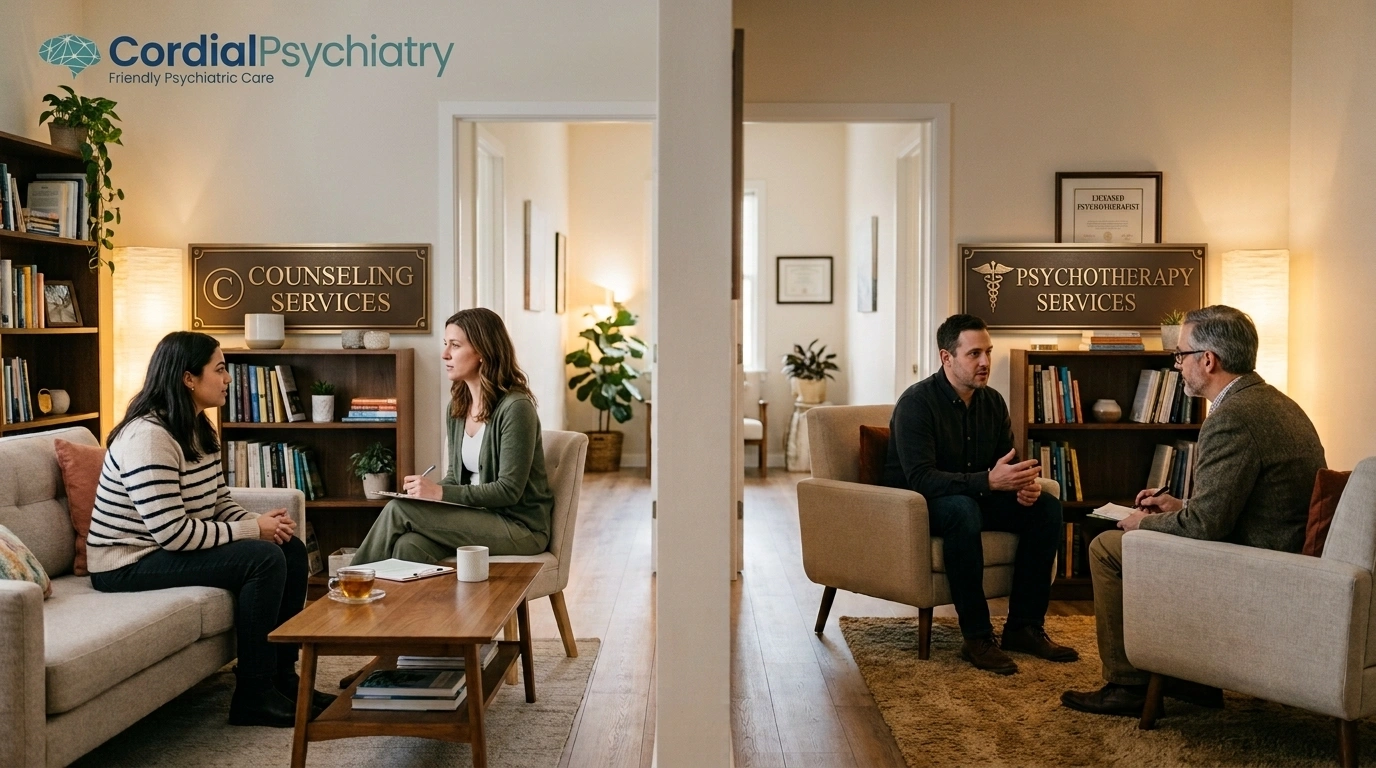
Psychotherapy vs Counseling: What’s the Difference?
Mental health support can take many forms, and two of the most common options are counseling and psychotherapy. Although people often use these terms interchangeably, they are not always the same. Both approaches can help you manage emotional difficulties, improve relationships, and understand your thoughts, but they may differ in focus, duration, and treatment methods.
Understanding the difference between counseling and psychotherapy can help you choose the right type of support based on your concerns, goals, and personal circumstances. Counseling is often focused on current challenges and practical solutions, while psychotherapy may explore deeper emotional patterns, past experiences, and long-term mental health conditions.
This guide explains counseling vs psychotherapy in simple terms, including how each approach works, who may benefit, and what to consider before choosing a mental health professional.
What Is Counseling?
Counseling is a form of professional support that helps people deal with specific emotional, personal, social, or practical difficulties. It is generally focused on present-day concerns and may be provided over a relatively short period.
A counselor creates a confidential and supportive environment where you can openly discuss your feelings, experiences, and concerns without fear of judgment. Rather than simply telling you what to do, a qualified counselor helps you identify your options, understand your emotions, and develop healthier ways to handle challenges.
People may seek counseling for issues such as:
- Work-related stress
- Relationship difficulties
- Grief and bereavement
- Life transitions
- Academic pressure
- Low confidence
- Family conflict
- Mild anxiety
- Decision-making difficulties
One of the main benefits of counseling is that it provides practical emotional support during a difficult period. For example, someone struggling after a job loss may use counseling to process feelings of uncertainty, rebuild confidence, and plan their next steps.
Counseling does not always require a diagnosed mental health condition. Many people attend counseling simply because they feel overwhelmed, confused, emotionally stuck, or in need of professional guidance.
What Is Psychotherapy?
Psychotherapy is a broader and often more in-depth form of mental health treatment. It helps individuals examine emotions, thoughts, behaviors, relationships, and experiences that may be contributing to ongoing psychological difficulties.
Psychotherapy can focus on present problems, but it may also explore childhood experiences, trauma, attachment patterns, beliefs, and unconscious emotional responses. The purpose is not only to reduce symptoms but also to understand why certain patterns exist and how they can be changed.
Psychotherapy may be used to support people experiencing:
- Depression
- Anxiety disorders
- Post-traumatic stress
- Obsessive-compulsive disorder
- Eating disorders
- Personality-related difficulties
- Long-term emotional distress
- Repeated relationship problems
- Childhood trauma
- Self-destructive behavior
Different forms of psychotherapy use different methods. Cognitive behavioral therapy, for instance, focuses on identifying and changing unhelpful thinking and behavior patterns. Psychodynamic therapy may explore early experiences and unconscious emotional conflicts. Other approaches include interpersonal therapy, trauma-focused therapy, humanistic therapy, and family therapy.
For a more detailed explanation of therapy approaches, treatment goals, and what happens during a session, read What is Psychotherapy? Complete Guide to Mental Health Therapy.
What Is the Main Difference Between Counseling and Psychotherapy?
The main difference between counseling and psychotherapy usually involves the depth, focus, and expected duration of treatment.
Counseling commonly addresses a specific challenge that is affecting a person’s current life. It may concentrate on finding practical solutions, learning coping skills, and managing emotions related to a particular situation.
Psychotherapy often explores more complex or long-standing concerns. It may examine how past experiences, emotional wounds, beliefs, and relationship patterns influence a person’s current behavior and mental health.
For example, a person experiencing stress because of a recent divorce may choose counseling to receive emotional support and manage immediate changes. However, someone who repeatedly enters unhealthy relationships and wants to understand the deeper reasons behind that pattern may find psychotherapy more suitable.
These distinctions are not absolute. Some counselors provide long-term, in-depth therapy, while some psychotherapists offer short-term, goal-focused treatment. Professional titles, qualifications, and regulations can also vary depending on the country or region.
Counseling vs Psychotherapy: Key Differences
When comparing counseling vs psychotherapy, it is helpful to consider several important factors.
Focus of Treatment
Counseling usually focuses on a current problem, such as stress at work, grief, relationship conflict, or a major life decision.
Psychotherapy may address current symptoms while also exploring deeper emotional patterns, previous experiences, trauma, and long-term psychological difficulties.
Treatment Duration
Counseling is often short-term and may last for a few weeks or several months. The length depends on the issue, the client’s needs, and the progress made during sessions.
Psychotherapy may continue for several months or longer, particularly when a person is working through complex trauma, recurring emotional patterns, or chronic mental health concerns.
Treatment Goals
Counseling often aims to improve coping skills, solve a specific problem, reduce stress, or support a person through a difficult situation.
Psychotherapy may aim to create deeper and more lasting psychological change. It can help individuals understand the origins of their difficulties and develop healthier emotional and behavioral patterns.
Methods Used
Counselors may use active listening, goal setting, emotional support, problem-solving techniques, and coping strategies.
Psychotherapists may use structured therapeutic models, detailed psychological assessment, behavioral exercises, emotional processing, and exploration of past experiences.
Severity of Concerns
Counseling can be effective for mild to moderate emotional difficulties and temporary life challenges.
Psychotherapy is commonly used when symptoms are more severe, complex, recurring, or connected to trauma or a diagnosed mental health condition. However, the right approach always depends on the individual rather than the label alone.
What Are the Benefits of Counseling?
The benefits of counseling extend beyond solving one immediate problem. Counseling can provide a safe space where people feel heard, understood, and respected.
A trained counselor can help you express difficult emotions that may be hard to discuss with friends or family members. This professional relationship can offer a more objective perspective while allowing you to make your own informed decisions.
Common benefits of counseling include:
- Better emotional awareness
- Healthier coping strategies
- Improved communication
- Greater confidence
- Reduced feelings of isolation
- Support during grief or major life changes
- Stronger problem-solving skills
- Improved relationship boundaries
- Better stress management
- Increased self-understanding
Counseling may also help prevent a temporary emotional difficulty from becoming more serious. Receiving support early can make it easier to recognize warning signs, manage stress, and build healthier habits.
What Are the Benefits of Psychotherapy?
Psychotherapy can help people understand patterns that may have developed over many years. These patterns may affect relationships, self-esteem, work performance, emotional reactions, or the ability to cope with stress.
Through regular sessions, psychotherapy can help a person recognize how thoughts, emotions, physical reactions, and behaviors are connected. This awareness can support meaningful and lasting change.
Potential benefits include:
- Reduced symptoms of anxiety and depression
- Greater understanding of emotional triggers
- Improved regulation of difficult emotions
- Healthier relationships
- Recovery from traumatic experiences
- Stronger self-esteem
- Improved behavioral patterns
- Better understanding of personal needs
- Greater resilience
- Reduced risk of recurring psychological distress
Progress in psychotherapy is not always immediate. Some people may initially experience discomfort when discussing painful memories or recognizing difficult patterns. A qualified therapist should manage this process carefully, explain the treatment approach, and regularly review whether therapy is meeting the client’s needs.
Should You Choose Counseling or Psychotherapy?
The right choice depends on what you are experiencing and what you hope to achieve.
Counseling may be appropriate when you are facing a specific, recent, or temporary problem. It can also be useful when you need emotional support, practical coping tools, or help making an important decision.
Psychotherapy may be more appropriate when your difficulties are long-standing, severe, recurring, or connected to trauma. It may also be helpful when you understand what is happening but are unsure why the same emotional or behavioral patterns continue.
Consider asking yourself:
- Is my concern connected to one particular situation?
- How long have I been experiencing these symptoms?
- Are the same problems repeating in different areas of my life?
- Is my mental health affecting work, sleep, relationships, or daily functioning?
- Do I want practical support or deeper emotional exploration?
- Have I previously tried short-term support without lasting improvement?
You do not need to make this decision alone. A licensed mental health professional can assess your concerns and recommend a suitable treatment approach. In some situations, counseling may develop into longer-term psychotherapy as new concerns are identified.
How to Find the Right Mental Health Professional
Professional qualifications are more important than the title used. Before beginning treatment, check the practitioner’s education, training, license, registration, and experience with your specific concern.
You may also ask about:
- Their therapeutic approach
- Experience treating similar concerns
- Expected session length and frequency
- Confidentiality policies
- Treatment costs
- Cancellation policies
- How progress will be reviewed
- What happens when treatment ends
A strong therapeutic relationship should feel respectful, safe, and collaborative. You should feel able to ask questions and discuss concerns about the treatment process. However, effective therapy may still involve difficult conversations and emotional discomfort.
If a therapist dismisses your concerns, behaves unprofessionally, breaks boundaries, or makes you feel unsafe, it is reasonable to seek another qualified professional.
Can Counseling and Psychotherapy Be Used Together?
Counseling and psychotherapy are not competing treatments. They can overlap, and some people may benefit from both at different stages of life.
Someone may initially receive counseling after a bereavement and later begin psychotherapy if the experience brings up unresolved trauma. Another person may complete long-term psychotherapy and return for brief counseling during a stressful life transition.
The difference between counseling and psychotherapy should therefore be viewed as a general guide rather than a strict rule. The most effective support is the approach that matches your needs and is provided by a properly qualified professional.
Final Thoughts
The debate around counseling vs psychotherapy is not about deciding which option is better. Both can provide valuable mental health support.
Counseling is commonly focused on present-day challenges, practical coping strategies, and short-term emotional support. Psychotherapy often involves deeper exploration of long-term patterns, trauma, mental health symptoms, and past experiences.
Understanding the difference between counseling and psychotherapy can make it easier to ask the right questions and find appropriate support. The quality of the professional relationship, the therapist’s qualifications, and the suitability of the treatment approach are often more important than the title used.
Seeking help does not mean that you have failed to manage your life. It can be a responsible step toward understanding yourself, improving your well-being, and creating healthier ways of responding to difficult experiences.
Frequently Asked Questions
Is psychotherapy more serious than counseling?
Psychotherapy is often used for complex or long-term mental health concerns, but that does not mean counseling is less important. Counseling can provide valuable support for grief, stress, relationship problems, and life transitions. The most suitable option depends on the individual’s needs.
Can a counselor provide psychotherapy?
Some counselors are trained and licensed to provide psychotherapy, while others focus mainly on short-term support. Qualifications and professional regulations vary by location, so always review the practitioner’s training, license, and area of expertise.
How long does counseling usually last?
Counseling may last from a few sessions to several months. The duration depends on the nature of the concern, the goals of treatment, and how the individual responds to support.
How long does psychotherapy take?
Psychotherapy may be short-term or long-term. Some structured approaches last several weeks or months, while treatment for trauma or long-standing emotional patterns may continue for a year or longer.
Is counseling suitable for anxiety?
Yes. Counseling can help people understand anxiety triggers, develop coping strategies, and manage stress. More severe or persistent anxiety may require structured psychotherapy, medical assessment, or a combination of treatments.
Do I need a mental health diagnosis to attend therapy?
No. You can seek counseling or psychotherapy without having a diagnosed mental health condition. People often attend therapy to improve relationships, understand emotions, manage stress, or support personal growth.
What happens during the first therapy session?
The therapist will usually ask about your concerns, personal history, current circumstances, symptoms, and treatment goals. You can also ask questions about confidentiality, therapy methods, session frequency, and expected outcomes.
How do I know whether therapy is working?
Signs of progress may include improved emotional awareness, better coping skills, healthier relationships, reduced symptoms, and greater confidence in managing difficulties. Progress should be reviewed regularly with your therapist.