

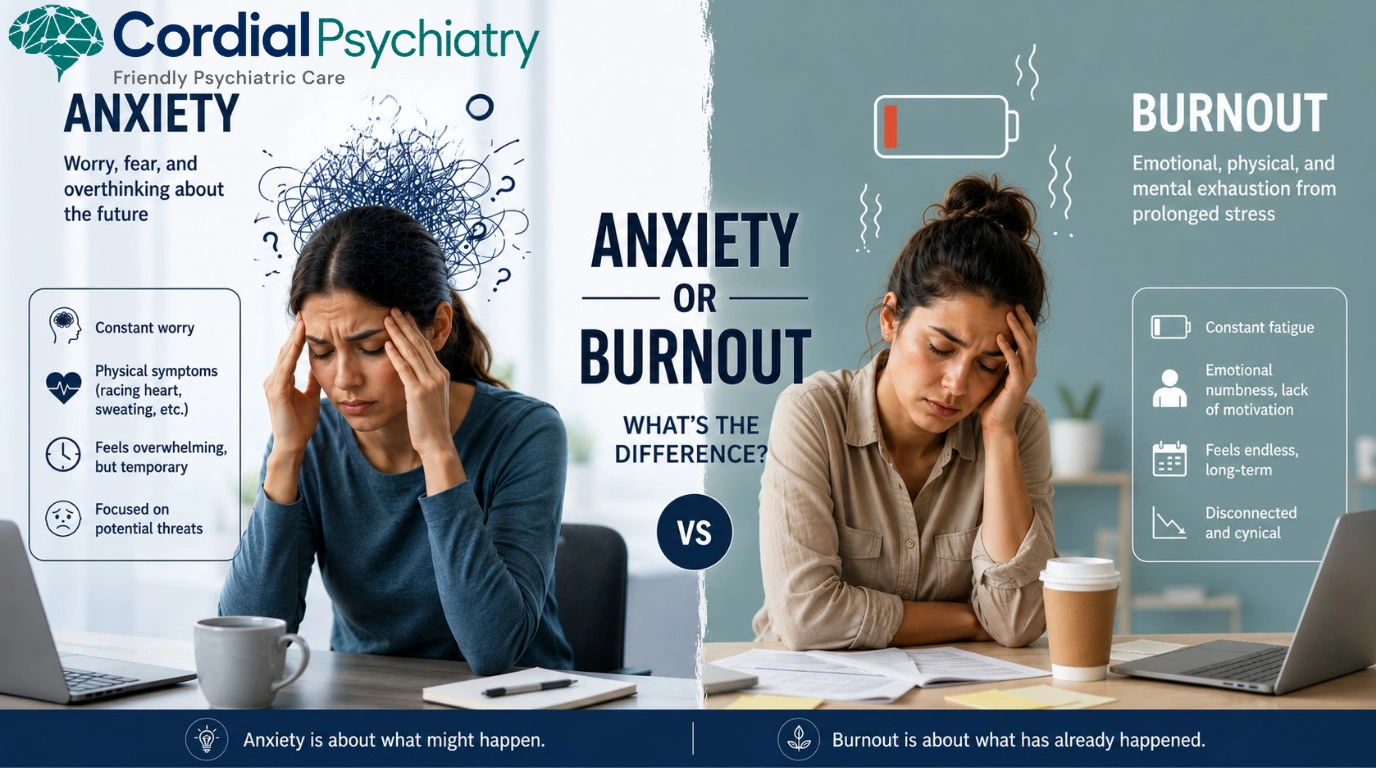
Anxiety or Burnout: What’s the Difference?
Feeling tired, stressed, or overwhelmed is common, especially when life becomes busy. However, constant pressure can sometimes develop into deeper problems that affect your emotions, body, and daily routine. Many people confuse anxiety and burnout because both can cause exhaustion, trouble focusing, and changes in mood.
Understanding the difference between anxiety and burnout can help you identify what you are experiencing and find the right support. While stress, anxiety, and burnout may look similar, they usually come from different causes and need different approaches.
This guide explains stress vs burnout, anxiety vs burnout symptoms, and how to recognize the signs before they start affecting your health and quality of life.
Understanding Stress, Anxiety, and Burnout
Stress is your body’s natural response to challenges. It can happen because of work deadlines, financial concerns, family responsibilities, or major life changes. Short-term stress can sometimes improve focus and motivation.
The problem begins when stress continues for a long time without enough rest or recovery. Ongoing stress can contribute to burnout, anxiety, and other mental health concerns.
Anxiety is different because it often involves excessive worry, fear, or nervousness even when there is no immediate danger. Burnout usually develops after prolonged emotional, mental, or physical exhaustion caused by ongoing demands.
Understanding burnout and anxiety differences starts with recognizing what triggers each condition and how they affect your daily life.
What Is Burnout?
Burnout is a state of extreme physical and emotional exhaustion caused by long-term stress. It often happens when someone feels overwhelmed by responsibilities and does not have enough time to recover.
Burnout is common among people dealing with heavy workloads, caregiving responsibilities, academic pressure, or stressful environments.
Common emotional burnout symptoms include:
- Feeling exhausted even after sleeping
- Losing interest in activities you once enjoyed
- Feeling disconnected from work or personal life
- Becoming easily frustrated or irritated
- Feeling like your efforts are not making a difference
Burnout usually develops slowly. A person may ignore early warning signs until exhaustion becomes difficult to manage.
What Is Anxiety?
Anxiety is a mental health condition that involves strong feelings of worry, fear, or nervousness. Everyone experiences anxiety sometimes, but anxiety disorders involve symptoms that are intense, frequent, or difficult to control.
Anxiety can affect both your mind and body. Some people experience racing thoughts, while others notice physical symptoms.
For example, anxiety may cause symptoms such as:
- Fast heartbeat
- Muscle tension
- Trouble sleeping
- Difficulty concentrating
- Feeling restless
- Constant worry about future situations
Many people also wonder, Can Anxiety Cause Chest Pain? Anxiety can create physical sensations, including chest discomfort, because stress hormones affect the body’s nervous system.
You can also learn more about related symptoms such as Can Anxiety Cause Dizziness? Can Anxiety Cause Headaches?, and Can Anxiety Cause Nausea? when exploring how anxiety affects the body.
Anxiety vs Burnout: Understanding the Key Differences
Although anxiety and burnout can happen together, they are not the same.
The main difference is usually the source of the problem.
Anxiety is often connected to fear, uncertainty, and ongoing worry. A person may feel anxious about many areas of life, including health, relationships, work, or future events.
Burnout is usually connected to prolonged pressure and emotional exhaustion. It often happens when someone feels they have been giving too much energy without enough recovery.
Here is a simple comparison:
| Ansiedad | Burnout |
| Often linked with fear and worry | Often linked with exhaustion and overload |
| Can happen without a clear external cause | Usually develops after ongoing demands |
| Creates nervousness and constant thoughts | Creates emotional and physical exhaustion |
| May involve fear of future situations | Often involves feeling mentally drained |
| Treatment focuses on managing anxiety symptoms | Treatment focuses on recovery and reducing stress |
Understanding anxiety vs burnout symptoms can help you recognize whether your main challenge is worry or exhaustion.
Stress vs Burnout: How Are They Different?
The topic of stress vs burnout is often confusing because burnout usually begins with repeated stress.
Stress is usually temporary. Once the stressful situation improves, your energy and mood may return.
Burnout happens when stress continues for too long and your body does not get enough time to recover.
For example, preparing for an important project may create stress. However, working excessive hours for months without rest may lead to burnout.
Signs that stress may be turning into burnout include:
- Constant tiredness
- Reduced motivation
- Feeling emotionally numb
- Increased frustration
- Avoiding responsibilities
Managing stress early can reduce the risk of developing burnout.
Anxiety vs Burnout Symptoms: How Can You Tell Them Apart?
The symptoms of anxiety and burnout can overlap, which makes them difficult to identify.
People experiencing anxiety may notice:
- Excessive worry
- Fear about future events
- Difficulty relaxing
- Feeling constantly alert
- Physical tension
People experiencing burnout may notice:
- Lack of energy
- Feeling overwhelmed
- Reduced productivity
- Emotional distance
- Loss of motivation
Some people experience both conditions at the same time. For example, a person with burnout from workplace pressure may start worrying constantly about performance, deadlines, or failure.
This is why how to tell anxiety from burnout depends on understanding your personal triggers, symptoms, and daily experiences.
How to Tell Anxiety From Burnout
Ask yourself these questions:
Do I feel mostly worried or exhausted?
If your mind feels busy with fear, negative thoughts, or future concerns, anxiety may be a bigger factor.
If you feel emotionally drained, tired, and disconnected after long periods of pressure, burnout may be more likely.
What happens when I rest?
Burnout symptoms may improve when you take proper breaks and reduce responsibilities. Anxiety may continue even when life becomes calmer.
Some people use an anxiety or burnout quiz to understand their symptoms, but only a qualified mental health professional can provide a proper assessment.
Can Burnout Cause Anxiety?
Many people ask, can burnout cause anxiety? The answer is that long-term burnout can increase the risk of anxiety symptoms.
When your body stays under stress for a long time, your nervous system can remain in a state of high alert. This may lead to excessive worry, nervousness, and difficulty relaxing.
Burnout can also affect sleep, energy levels, and confidence, which may make anxiety symptoms stronger.
If you experience tiredness along with anxiety, you may also want to understand Can Anxiety Cause Fatigue? and how stress affects energy levels.
Burnout vs Anxiety Treatment: What Helps?
The right approach depends on the cause and severity of symptoms.
For burnout, helpful strategies may include:
- Taking regular breaks
- Improving work-life balance
- Setting realistic boundaries
- Getting enough sleep
- Reducing overwhelming responsibilities
For anxiety, treatment may include:
- Therapy approaches such as cognitive behavioral therapy
- Relaxation techniques
- Healthy lifestyle habits
- Medication when recommended by a healthcare provider
Understanding burnout vs anxiety treatment is important because treating only one issue may not fully solve the problem when both conditions are present.
Workplace Anxiety vs Burnout
Work is one of the most common areas where anxiety and burnout appear.
Workplace anxiety vs burnout often depends on the experience a person has at work.
Workplace anxiety may involve:
- Fear of making mistakes
- Worry about meetings or performance
- Stress about judgment from others
Burnout at work may involve:
- Feeling exhausted before starting the day
- Losing interest in tasks
- Feeling emotionally disconnected
- Reduced job satisfaction
Employers and employees can reduce burnout risk by creating healthier schedules, realistic workloads, and supportive work environments.
When Should You Seek Professional Help?
Occasional stress is normal, but ongoing symptoms should not be ignored.
Consider seeking professional support if you experience:
- Symptoms lasting for weeks or months
- Difficulty managing daily responsibilities
- Problems with sleep or relationships
- Strong emotional distress
- Physical symptoms that interfere with life
Final Thoughts
The difference between anxiety and burnout mainly comes down to the source of your symptoms. Anxiety is often connected with fear and worry, while burnout is usually linked with long-term stress and exhaustion.
Learning about stress vs burnout, recognizing signs of anxiety and burnout, and getting support early can help you protect your mental and physical well-being.
If you are unsure whether you are experiencing anxiety, burnout, or both, speaking with a qualified mental health professional can help you understand your symptoms and choose the right path forward.
FAQs
What is the difference between anxiety and burnout?
Anxiety usually involves ongoing worry, fear, or nervous thoughts. Burnout is mainly linked to long-term stress, exhaustion, and feeling emotionally drained.
Can burnout cause anxiety?
Yes, long-term burnout can contribute to anxiety symptoms because constant stress can affect your nervous system and emotional health.
How do you know if you have burnout or anxiety?
Burnout often feels like exhaustion and loss of motivation, while anxiety usually involves excessive worry and fear. Some people experience both.
Can stress turn into burnout?
Yes, continuous stress without proper recovery can develop into burnout over time.
Is burnout treated differently from anxiety?
Yes. Burnout treatment often focuses on rest, boundaries, and reducing stress, while anxiety treatment may include therapy and anxiety management strategies.
Can anxiety and burnout happen at the same time?
Yes. A person can experience burnout from prolonged stress and also develop anxiety symptoms related to work, health, or future concerns.