

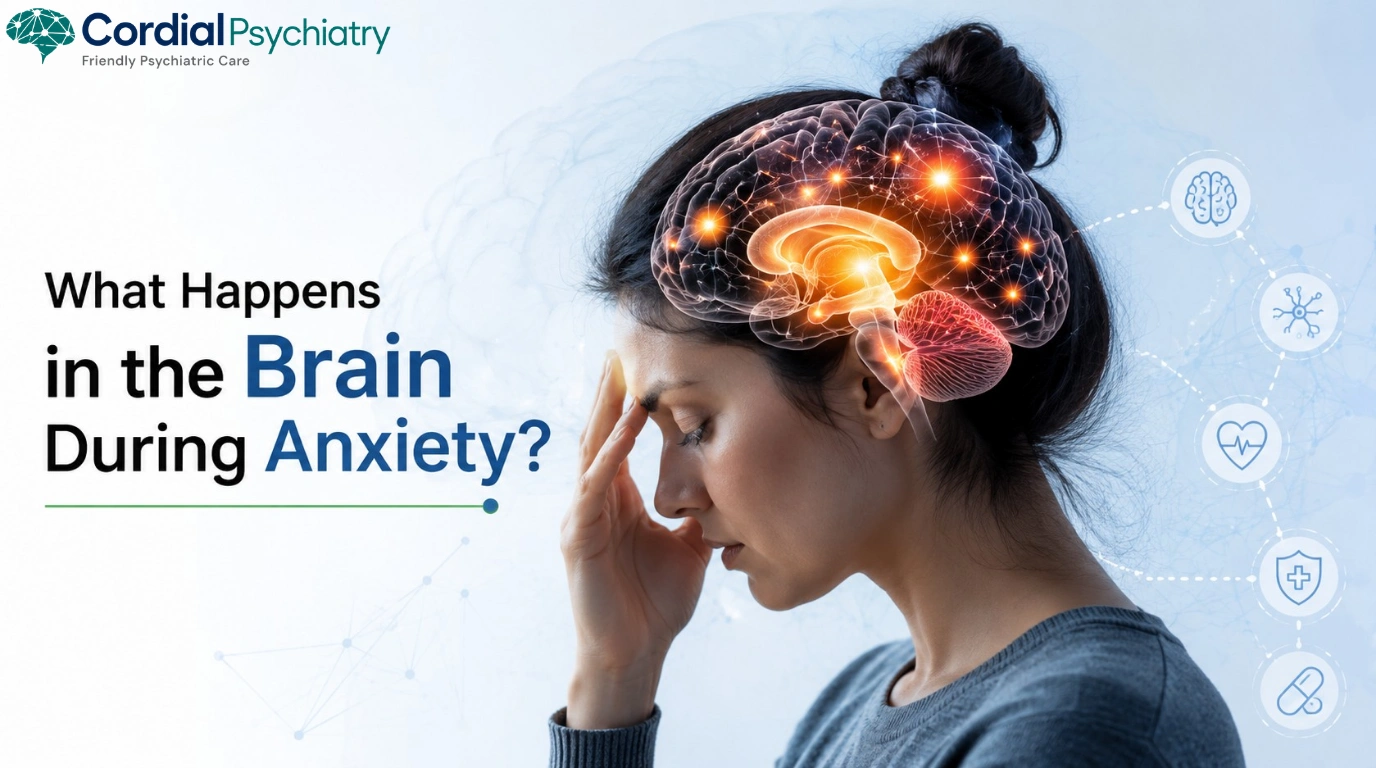
What Happens in the Brain During Anxiety?
Anxiety is more than just feeling worried or stressed. It is a complex response involving different areas of the brain, chemical messengers, and the body’s natural survival systems. When anxiety occurs, the brain enters a heightened state of alertness, preparing the body to respond to a possible threat—even when the danger may not be immediate or obvious.
Many people wonder what causes anxiety in the brain and why anxious thoughts, fear, and physical symptoms can feel so difficult to control. Understanding the relationship between anxiety and the brain can help explain why anxiety affects emotions, concentration, memory, sleep, and daily functioning.
From a psychiatric perspective, anxiety involves interactions between brain structures such as the amygdala, prefrontal cortex, and hippocampus, along with changes in neurotransmitters and stress hormones. While occasional anxiety is a normal part of life, ongoing anxiety can change the way the brain processes fear and responds to stress.
At Cordial Psychiatry, mental health professionals help individuals understand the biological and psychological factors behind anxiety and create personalized treatment plans using evidence-based approaches, including psychotherapy and psychiatric care.
How Does the Brain Create Anxiety?
To understand where does anxiety come from in the brain, it is important to look at how the brain responds to perceived threats.
The brain has a built-in survival system designed to protect us. When the brain detects danger, it activates the “fight, flight, or freeze” response. This system increases alertness, raises heart rate, and prepares the body to react quickly.
However, in anxiety disorders, this protective system can become overactive. The brain may interpret everyday situations, thoughts, or memories as threats, causing repeated fear responses even when there is no immediate danger.
The main areas involved in anxiety include:
The Amygdala: The Brain’s Fear Center
The amygdala plays a major role in detecting threats and processing emotions. It acts like an alarm system that helps the brain recognize danger.
During anxiety, the amygdala can become overly sensitive. Instead of responding only to real threats, it may react strongly to situations such as social interactions, health concerns, uncertainty, or stressful thoughts.
This explains why people experiencing anxiety may feel intense fear or worry even when they understand logically that they are safe.
The Prefrontal Cortex: The Brain’s Reasoning Center
The prefrontal cortex helps regulate emotions, make decisions, and evaluate whether a situation is actually dangerous.
When anxiety becomes intense, communication between the amygdala and prefrontal cortex may become disrupted. The fear response can overpower logical thinking, making it harder to calm anxious thoughts.
This is one reason people often say, “I know I shouldn’t worry, but I cannot stop.”
The Hippocampus: Memory and Anxiety Connection
The hippocampus helps store and recall memories. It allows the brain to learn from previous experiences and recognize patterns.
Stress and anxiety can influence how memories are processed. A person who has experienced trauma or repeated stress may become more sensitive to situations that remind the brain of previous threats.
This connection is especially important in conditions such as PTSD, panic disorder, and certain anxiety disorders.
What Causes Anxiety in the Brain?
The causes of anxiety are usually a combination of biological, psychological, and environmental factors. There is rarely one single cause.
Changes in Brain Chemistry
Brain cells communicate through chemicals called neurotransmitters. These chemical messengers influence mood, emotions, sleep, and stress responses.
Several neurotransmitters are connected with anxiety, including:
- Serotonin: Helps regulate mood, emotions, and feelings of calm.
- GABA (gamma-aminobutyric acid): Helps slow down excessive brain activity.
- Dopamine: Influences motivation, reward, and emotional responses.
- Norepinephrine: Plays a role in alertness and the stress response.
When these systems become unbalanced, the brain may become more reactive to stress, contributing to anxiety symptoms.
The Role of Stress Hormones
During anxiety, the brain activates the hypothalamic-pituitary-adrenal (HPA) axis, which controls the body’s stress response.
The brain signals the release of stress hormones such as cortisol and adrenaline. These hormones increase energy and alertness, helping the body respond to danger.
Short-term activation is useful. However, ongoing stress can keep the brain in a constant state of alertness.
This is one of the major effects of anxiety on brain health because prolonged stress may affect emotional regulation, concentration, and memory.
Genetics and Brain Development
Research suggests that genetics can influence a person’s likelihood of developing anxiety. Some people may naturally have a more sensitive stress response system.
Brain development, childhood experiences, family environment, and exposure to chronic stress can also influence anxiety brain function over time.
For example, someone who experiences ongoing stress during early life may develop stronger fear responses because the brain adapts to survive challenging environments.
How Anxiety Affects the Brain
Understanding how anxiety affects the brain helps explain why anxiety symptoms can feel both emotional and physical.
Anxiety can influence several areas of brain function, including:
Increased Fear and Threat Detection
When the amygdala becomes highly active, the brain may constantly scan for possible threats.
This can lead to:
- Excessive worrying
- Feeling constantly on edge
- Difficulty relaxing
- Strong reactions to stressful situations
The brain becomes focused on preventing danger rather than focusing on normal daily activities.
Problems With Concentration and Decision-Making
One important answer to how does anxiety affect the brain is its impact on cognitive function.
When the brain is focused on fear and stress, fewer resources are available for concentration, problem-solving, and decision-making.
People with ongoing anxiety may experience:
- Trouble focusing
- Racing thoughts
- Forgetfulness
- Difficulty making choices
This happens because the brain prioritizes survival signals over higher-level thinking.
Changes in Memory Processing
Chronic anxiety can affect the hippocampus, which plays a key role in learning and memory.
High levels of stress hormones may interfere with:
- Memory formation
- Information processing
- Emotional regulation
This does not mean anxiety permanently damages the brain in every case. With proper treatment and healthy coping strategies, the brain can adapt and recover.
Long-Term Effects of Anxiety on the Brain
While occasional anxiety is a normal response to stress, ongoing anxiety can affect the way the brain works. Chronic anxiety keeps the brain’s threat detection system activated for longer periods, which may influence emotions, thinking patterns, and stress responses.
The effects of anxiety on brain function can vary from person to person, but prolonged anxiety may contribute to changes in:
- Emotional regulation
- Memory processing
- Concentration and attention
- Sleep patterns
- Stress sensitivity
When the brain repeatedly experiences high levels of stress, it can become more likely to respond strongly to future stressors. This process is sometimes described as increased sensitivity of the brain’s alarm system.
Can Anxiety Change the Brain?
A common question is what anxiety does to the brain over time. Anxiety does not mean the brain is permanently damaged. The brain is highly adaptable and can change based on experiences, behaviors, and treatment.
However, chronic anxiety may influence how certain brain areas communicate.
Increased Activity in the Amygdala
Long-term anxiety may cause the amygdala to become more reactive. When this happens, the brain may identify ordinary situations as potential threats.
For example, someone with social anxiety may experience intense fear during conversations, meetings, or public situations because the brain interprets these experiences as dangerous.
Understanding conditions like social anxiety disorder can help people recognize that these reactions are connected to brain processes rather than personal weakness.
Reduced Emotional Control
The prefrontal cortex helps calm emotional reactions by evaluating situations logically. When anxiety is persistent, communication between the emotional and reasoning parts of the brain may become less effective.
This can make it harder to:
- Challenge anxious thoughts
- Manage fear responses
- Feel calm during stressful situations
This explains why anxiety often continues even when a person understands that their fears may not match reality.
Impact on Sleep and Brain Recovery
Anxiety and sleep are closely connected. The brain uses sleep to restore energy, organize memories, and regulate emotions.
However, anxiety can interfere with sleep by causing:
- Racing thoughts at night
- Difficulty falling asleep
- Frequent waking
- Feeling tired after sleep
Poor sleep can then increase anxiety symptoms, creating a cycle that affects overall brain health.
How Anxiety Affects Brain Function and Daily Life
The relationship between anxiety and the brain can influence many areas of daily life.
Thinking Patterns
Anxiety can change the way the brain processes information. People experiencing anxiety may notice patterns such as:
- Expecting negative outcomes
- Overthinking situations
- Focusing more on possible dangers
- Struggling with uncertainty
These patterns occur because the brain is attempting to protect the person by predicting and avoiding threats.
Emotional Responses
The brain during anxiety may remain in a heightened state of alertness. This can cause emotional symptoms such as:
- Irritability
- Fear
- Restlessness
- Feeling overwhelmed
- Difficulty calming down
For some individuals, anxiety may occur alongside other mental health conditions such as depression, PTSD, or panic disorder. Understanding related conditions, such as panic disorder treatment information, can provide insight into how different anxiety-related conditions affect the brain.
How the Brain Recovers From Anxiety
The good news is that the brain can adapt and develop healthier patterns. This ability is called neuroplasticity.
Neuroplasticity means the brain can create new connections and change how it responds to experiences.
Several approaches can support healthier brain function:
Psychotherapy and Brain Changes
Psychotherapy is one of the most effective approaches for many anxiety conditions because it helps the brain learn new ways of responding to fear and stress.
Cognitive Behavioral Therapy (CBT)
CBT helps individuals identify unhelpful thoughts and replace them with healthier thinking patterns.
Through repeated practice, CBT can help reduce overactivity in the brain’s fear system and strengthen emotional regulation.
Many people benefit from learning more about cognitive behavioral therapy guide because CBT is commonly used for anxiety, panic symptoms, and stress-related concerns.
Other Therapy Approaches
Different therapy methods may be helpful depending on a person’s needs.
For example:
- Exposure therapy helps the brain gradually reduce fear responses by safely facing anxiety triggers.
- Talk therapy provides emotional support and helps explore thoughts, feelings, and experiences.
- Integrative psychotherapy combines different therapeutic approaches based on individual needs.
People interested in understanding treatment options can explore topics such as how psychotherapy works step by step to learn how therapy supports mental health improvement.
Medication and Psychiatric Support
For some individuals, anxiety symptoms may be severe enough to require medication support. A psychiatrist can evaluate symptoms, consider medical history, and recommend appropriate treatment options.
Medication does not change who a person is. Instead, certain medications may help regulate brain chemicals involved in anxiety, making it easier to participate in therapy and daily activities.
A qualified mental health professional can determine whether psychiatric care, therapy, lifestyle changes, or a combination approach is most suitable.
Lifestyle Habits That Support Brain Health
Healthy daily habits can also influence anxiety brain function and emotional regulation.
Helpful strategies include:
Regular Physical Activity
Exercise can support brain health by reducing stress hormones and increasing chemicals associated with improved mood.
Mindfulness and Relaxation Techniques
Practices such as breathing exercises, meditation, and mindfulness can help calm the brain’s stress response.
Balanced Nutrition
The brain requires proper nutrients to function effectively. A balanced diet supports overall mental and physical health.
Healthy Sleep Routine
Consistent sleep schedules help regulate emotions and improve the brain’s ability to handle stress.
Lifestyle changes are often recommended alongside professional treatment. Understanding the role of lifestyle changes in mental health treatment can help individuals develop long-term strategies for emotional wellness.
When Should You Seek Help for Anxiety?
Occasional worry is normal, but professional support may be helpful when anxiety:
- Interferes with work, school, or relationships
- Causes frequent panic symptoms
- Affects sleep or daily activities
- Feels difficult to control
- Leads to avoiding important situations
A psychiatrist or mental health professional can help identify the causes of anxiety and create a personalized treatment plan.
Cordial Psychiatry provides support for individuals experiencing anxiety symptoms by connecting them with appropriate mental health care and evidence-based treatment options.
Conclusion
Anxiety is a complex brain response involving emotions, thoughts, body reactions, and chemical processes. Understanding what causes anxiety in the brain helps explain why anxiety symptoms can feel overwhelming and why professional support can make a meaningful difference.
The brain is capable of change. With evidence-based treatment, healthy lifestyle choices, and appropriate support, many people can reduce anxiety symptoms and improve their quality of life.
If anxiety is affecting daily activities, relationships, or emotional well-being, seeking guidance from a qualified mental health professional can be an important step toward recovery.
FAQs
1. What part of the brain causes anxiety?
Anxiety involves multiple areas of the brain, especially the amygdala, prefrontal cortex, and hippocampus. The amygdala detects threats, while the prefrontal cortex helps control emotional responses.
2. What causes anxiety in the brain?
What causes anxiety in the brain includes a combination of genetics, brain chemistry changes, stress hormones, past experiences, and environmental factors. Anxiety usually develops from several influences rather than one single cause.
3. How does anxiety affect the brain?
How anxiety affects the brain by increasing activity in the brain’s threat system, affecting emotional control, influencing memory, and making it harder to manage stress responses.
4. Can anxiety permanently damage the brain?
Anxiety does not usually cause permanent brain damage. The brain can adapt and recover through treatment, healthy habits, and stress management strategies.
5. Why does anxiety make it hard to think clearly?
During anxiety, the brain focuses more on detecting threats. This can reduce attention available for reasoning, concentration, and decision-making.
6. Can therapy change the way the brain responds to anxiety?
Yes. Therapy can help the brain develop healthier thought patterns and emotional responses. Treatments such as CBT are designed to improve how people respond to anxiety triggers.
7. Where does anxiety come from in the brain?
Where does anxiety come from in the brain involves communication between several brain regions, including areas responsible for fear, memory, and emotional control.