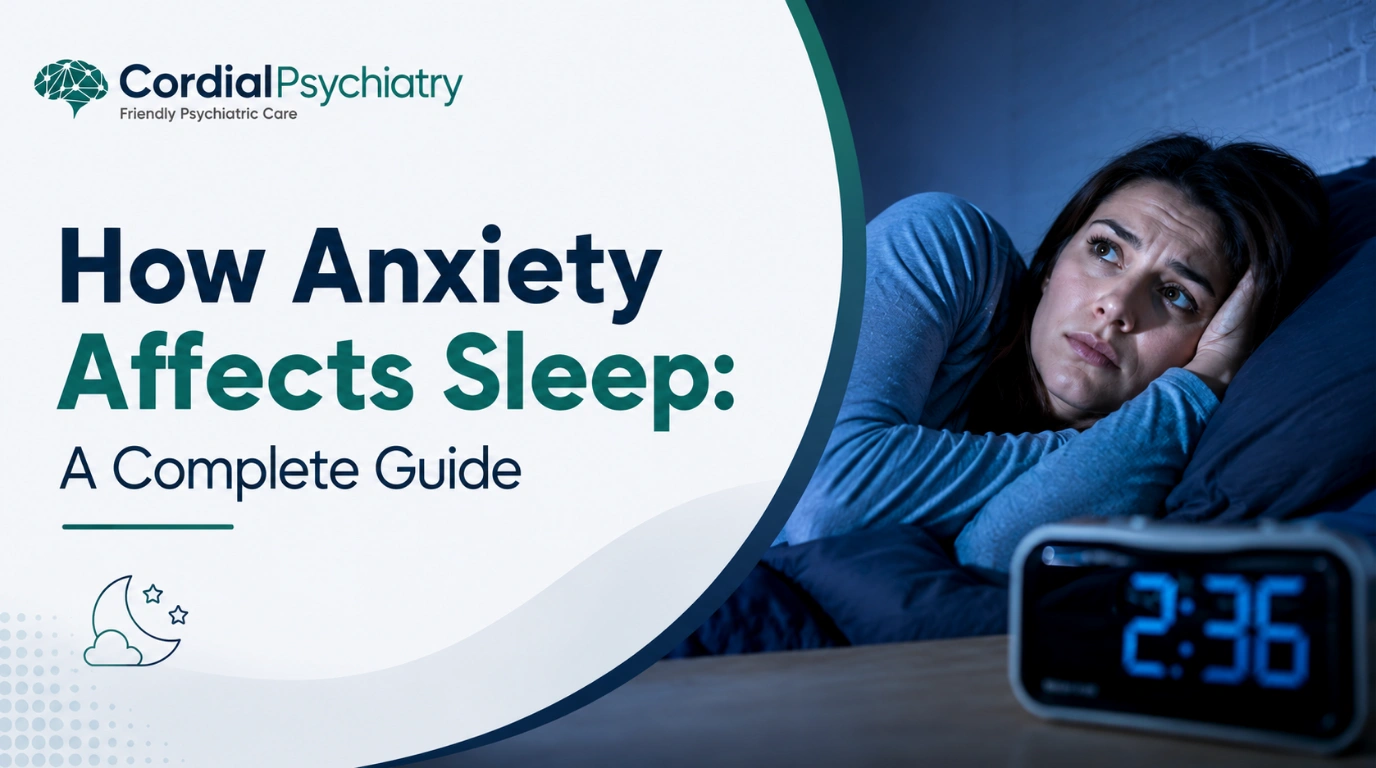
How Anxiety Affects Sleep: A Complete Guide
A good night’s sleep allows your body and mind to recover, but anxiety can make restful sleep difficult. Many people lie awake at night with racing thoughts, constant worries, or physical tension that prevents them from relaxing.
Understanding how anxiety affects sleep can help you identify the connection between your mental health and sleep patterns. Anxiety does not only affect your emotions; it can also change how quickly you fall asleep, how often you wake up, and how refreshed you feel the next day.
Research shows that anxiety and sleep problems often occur together. People experiencing anxiety may struggle with falling asleep or staying asleep, while poor sleep can increase anxiety symptoms and create a difficult cycle.
This guide explains can anxiety cause sleep loss, can anxiety cause insomnia, and why anxiety causing sleep problems is a common concern for many people.
What Is the Connection Between Anxiety and Sleep?
Anxiety is the body’s natural response to stress, danger, or uncertainty. It activates the brain’s alert system, preparing you to respond to a perceived threat.
While this response can be helpful in certain situations, ongoing anxiety can keep your nervous system active even when your body needs rest. Instead of entering a calm state before bedtime, your brain may remain focused on worries, possible problems, or negative thoughts.
This is one of the main reasons how anxiety affects sleep is closely connected to increased mental activity at night.
People with anxiety may experience:
- Difficulty falling asleep
- Frequent waking during the night
- Restless sleep
- Nighttime worrying
- Feeling tired even after sleeping
- Fear about not getting enough sleep
According to mental health experts, anxiety disorders involve persistent worry or fear that can interfere with daily activities, including sleep quality.
Can Anxiety Cause Sleep Loss?
Yes, can anxiety cause sleep loss is a common question, and the answer is yes. Anxiety can reduce both the amount and quality of sleep a person gets.
When you feel anxious, your brain may release stress hormones such as cortisol. These hormones increase alertness and make it harder for the body to transition into a relaxed sleep state.
For example, someone experiencing anxiety may:
- Replay stressful events from the day
- Worry about future situations
- Think repeatedly about problems
- Check the time frequently while trying to sleep
Over time, these patterns can reduce total sleep hours and lead to daytime problems such as low energy, difficulty concentrating, and irritability.
Sleep loss can also make anxiety symptoms stronger. When the brain does not receive enough restorative sleep, managing emotions and stress becomes more difficult. This creates a cycle where anxiety affects sleep, and poor sleep increases anxiety.
Can Anxiety Cause Insomnia?
Many people ask, can anxiety cause insomnia? Anxiety is one of the common factors linked with insomnia.
Insomnia means having difficulty falling asleep, staying asleep, or getting good-quality rest even when you have enough time to sleep.
Anxiety-related insomnia often happens because of:
Racing Thoughts Before Bed
One of the biggest reasons anxiety interferes with sleep is overthinking. When your mind continues analyzing problems, your brain stays active instead of preparing for rest.
Increased Physical Tension
Anxiety can cause muscle tension, rapid heartbeat, and restlessness. These physical symptoms can make it harder to feel comfortable in bed.
Fear About Sleep
Some people develop anxiety about sleep itself. They worry:
- “What if I cannot sleep tonight?”
- “How will I function tomorrow?”
- “Will I wake up again?”
This fear can increase stress and make sleep even more difficult.
People with anxiety disorders frequently experience insomnia symptoms, and research shows that anxiety and sleep disturbances often influence each other.
How Anxiety Causes Sleep Problems at Night
Anxiety causing sleep problems is often related to the way the brain processes stress during nighttime.
During the day, distractions such as work, conversations, and responsibilities can reduce awareness of anxious thoughts. At night, when everything becomes quiet, worries may feel stronger.
Common nighttime anxiety symptoms include:
1. Racing Thoughts
Your mind may jump between different concerns, making it difficult to switch off mentally.
2. Difficulty Relaxing
Even when you are physically tired, anxiety can keep your body in a state of alertness.
3. Nightmares or Disturbed Dreams
Anxiety can affect sleep patterns and may contribute to unpleasant dreams or frequent awakenings.
4. Waking Up During the Night
Some people fall asleep easily but wake up after a few hours because anxious thoughts return.
If anxiety is affecting your daily life, understanding different treatment approaches can help. Many people benefit from professional support, including therapy options discussed in resources about anxiety treatment and management.
Why Does Anxiety Feel Worse at Night?
Nighttime anxiety is common because the brain has fewer external distractions. When you are lying quietly in bed, unresolved worries can become more noticeable.
Other factors that may increase nighttime anxiety include:
- Irregular sleep schedules
- High stress levels during the day
- Excessive screen use before bed
- Caffeine consumption late in the day
- Previous negative experiences with poor sleep
The relationship between anxiety and sleep is often described as a cycle:
Anxiety → Poor Sleep → Increased Stress → More Anxiety
Breaking this cycle usually requires improving both sleep habits and anxiety management.
Ways to Improve Sleep When Anxiety Is Affecting Rest
Improving sleep with anxiety often requires small but consistent lifestyle changes.
Create a Relaxing Bedtime Routine
A predictable routine signals your brain that it is time to slow down.
Helpful activities include:
- Reading a calming book
- Taking a warm shower
- Practicing relaxation exercises
- Listening to quiet music
Reduce Mental Overthinking Before Bed
Writing down worries or tasks before sleeping can help clear your mind. Instead of trying to solve problems in bed, create a habit of processing them earlier.
Keep a Consistent Sleep Schedule
Going to bed and waking up around the same time helps regulate your body’s internal clock.
Limit Stimulants
Avoid caffeine, excessive screen exposure, and stressful activities close to bedtime.
Seek Professional Support When Needed
If anxiety continues to affect your sleep for weeks or months, speaking with a mental health professional can be helpful.
Approaches such as cognitive behavioral therapy (CBT) are commonly used to address anxiety patterns and sleep difficulties.
You can also explore more information about mental health conditions and psychiatric care to understand available support options.
When Should You Get Help for Anxiety and Sleep Problems?
Occasional sleepless nights are normal, especially during stressful periods. However, professional guidance may be useful if:
- Sleep problems continue for several weeks
- Anxiety affects work, relationships, or daily activities
- You frequently feel exhausted during the day
- You avoid activities because of anxiety
- Worry feels difficult to control
A qualified mental health professional can help identify whether anxiety, insomnia, or another condition is affecting your sleep.
Final Thoughts
Understanding how anxiety affects sleep is an important step toward improving both mental health and rest. Anxiety can contribute to sleep loss, insomnia, and nighttime discomfort, but these problems can often improve with the right strategies and support.
If you are experiencing anxiety causing sleep problems, focus on creating healthy sleep habits, managing stress, and seeking professional advice when symptoms continue. Better sleep and reduced anxiety often work together to improve overall well-being.
Frequently Asked Questions
Can anxiety cause sleep problems every night?
Yes, ongoing anxiety can cause regular sleep problems. Persistent worry, physical tension, and increased alertness can make falling asleep and staying asleep difficult.
Can anxiety cause insomnia?
Yes, anxiety can contribute to insomnia. When the brain remains focused on worries and stress, it may become difficult to relax enough for sleep.
How does anxiety affect sleep quality?
How anxiety affects sleep depends on the person, but common effects include trouble falling asleep, waking frequently, restless sleep, and feeling tired after waking.
Why does anxiety get worse when I try to sleep?
Anxiety may feel stronger at bedtime because there are fewer distractions. Quiet environments can make worries and racing thoughts more noticeable.
What helps anxiety-related sleep problems?
Relaxation techniques, healthy sleep habits, therapy, stress management, and professional support can help reduce anxiety-related sleep problems.
How long does anxiety-related insomnia last?
The duration varies. Some people experience short-term sleep problems during stressful periods, while others may need professional treatment for ongoing anxiety or insomnia.